Why AI Visibility Matters for Intelligent Document Processing and AP Automation Vendors

Published: June 16, 2026
The way buyers discover business software is changing rapidly.
For years, companies selling intelligent document processing (IDP), accounts payable automation, and process automation solutions focused on traditional SEO strategies to attract prospects through search engines. Ranking on Google for terms such as "AP automation software," "document processing automation," or "intelligent data capture" was often enough to generate awareness and drive qualified traffic.
Today, that approach alone is no longer sufficient.
An increasing number of finance leaders, operations managers, and digital transformation teams are turning to AI-powered search experiences such as ChatGPT, Perplexity, Claude, and Google's AI Overviews to evaluate vendors, compare solutions, and build shortlists before ever visiting a company website.
When a potential buyer asks an AI assistant, "What are the best accounts payable automation platforms?" or "How does intelligent document processing improve invoice processing?" the AI generates an answer based on the information it can find, understand, and trust. If your company is not included in that response, you may be invisible to a buyer long before traditional search rankings have an opportunity to influence the decision.
This emerging challenge is known as AI visibility, and it is quickly becoming one of the most important factors shaping B2B software discovery and demand generation.

Manual invoice handling slows finance operations and reduces visibility. InvoiceAction combines intelligent document processing and AI automation to capture and process invoices with precision.
Accelerate approvals and lower the cost of accounts payable.
AI visibility refers to how often, how prominently, and how accurately your brand, products, or services are referenced when large language models (LLMs) and AI-powered search engines respond to relevant queries.
Unlike traditional search rankings, AI visibility focuses on whether your company becomes part of the generated answer itself.
When a user asks ChatGPT, "What are the leading intelligent document processing platforms for invoice automation?" or "Which solutions help automate accounts payable workflows?" the AI evaluates information from a variety of sources and generates a synthesized response. Whether your brand appears in that answer depends on how well AI systems understand your expertise, your market position, and the authority of the content associated with your company.
The concept is often referred to as Answer En in gine Optimization (AEO), Generative Engine Optimization (GEO), or AI search optimization. Regardless of the terminology, the goal remains the same: ensure that when AI systems generate answers related to your industry, your company is recognized as a trusted source and relevant solution provider.
Recommended reading: How AP Automation Strengthens Business Process Management
Traditional SEO was built around a retrieval model. Users searched for information, search engines ranked pages, and visitors clicked through to websites.
AI search operates differently.
Rather than presenting a list of links, AI systems increasingly synthesize information from multiple sources and generate a direct answer. In this environment, the winner is not necessarily the website ranked first but the company whose expertise is referenced within the generated response.
This shift has significant implications for vendors in the intelligent automation market.
AI-generated summaries can reduce click-through rates, even when organic rankings remain strong. If an AI assistant answers a prospect's question directly, there may be less incentive to visit multiple vendor websites.
Brand perception is also increasingly influenced by AI-generated recommendations. If a finance executive asks an AI assistant which AP automation solutions to evaluate and your competitors appear repeatedly while your company is absent, that impression is formed before your sales team ever enters the conversation.
For vendors in intelligent document processing, invoice automation, and financial process automation, AI visibility is becoming a critical part of the buyer journey.
Enterprise software purchases rarely happen overnight. Buyers typically spend weeks or months researching technologies, comparing vendors, reviewing analyst reports, and gathering stakeholder input before requesting a demonstration.
AI assistants are increasingly becoming part of that research process.
When buyers use AI tools to learn about invoice processing automation, ERP integration, data capture technologies, or document workflow optimization, the vendors that appear consistently in generated responses gain an advantage early in the evaluation cycle.
Organizations that establish strong AI visibility can influence awareness, credibility, and consideration before prospects engage directly with marketing or sales teams.
Strengthen Intelligent Document Processing Performance
Limited visibility starts with inconsistent information. docAlpha applies AI-driven intelligent document processing to capture, classify, and process business documents with exceptional accuracy. Improve data quality and build a stronger foundation for automation and growth.
Book a demo now
Understanding how AI systems determine which brands to reference is the first step toward improving visibility.
Large language models learn from a vast collection of online content. Information published and cited by trusted industry sources carries greater influence than isolated content on a company's website.
Industry publications, analyst reports, customer success stories, technology reviews, and expert commentary all contribute to how AI systems understand your company and market position.
AI systems tend to favor organizations that demonstrate deep expertise within a specific subject area.
For intelligent automation vendors, this means consistently publishing valuable content about:
Depth and consistency often matter more than content volume.
Recommended reading: The Growing Role of Artificial Intelligence in AP Automation
AI systems process information more effectively when content is organized clearly.
Schema markup, FAQ sections, product pages, glossary content, and well-structured educational resources help AI models understand what your solutions do, who they serve, and how they differ from alternatives.
Backlinks remain important, but AI systems also benefit from seeing your brand referenced across a wide range of credible sources.
Industry events, podcast appearances, contributed articles, analyst mentions, customer reviews, and partner content all help establish a stronger digital footprint that AI systems can recognize and interpret.
Many AI-powered search experiences now incorporate live retrieval systems that access current web content.
This means technical SEO, site performance, crawlability, structured data, and content freshness continue to play an important role in determining whether your content can be surfaced in AI-generated responses.

Manual order entry creates the same challenges found in invoice processing. OrderAction leverages intelligent document processing and AI automation to transform customer orders into structured ERP-ready data. Improve responsiveness and increase operational efficiency.
One of the biggest challenges surrounding AI visibility is measurement.
Traditional SEO platforms can show where you rank in search results, but they cannot fully reveal how often your company appears in AI-generated answers or how prominently competitors are being recommended.
Fortunately, a new generation of monitoring tools is beginning to fill this gap. Platforms such as SE Visible AI Visibility Tool, Peec AI, and similar emerging tools allow marketers to track brand presence across AI-generated responses, benchmark share of voice against competitors, and identify the query categories where they are winning or being overlooked.
Beyond specialized platforms, organizations can also conduct their own monitoring by regularly testing high-value industry queries across ChatGPT, Perplexity, Claude, and Google's AI search experiences. Tracking which vendors appear, how they are described, and which sources are cited can provide valuable insights into competitive positioning.
Recommended reading: What Makes AI-Powered AP Automation Different
Start by evaluating how major AI platforms describe your company.
Search for your brand name, product names, and core solution categories. Identify inaccuracies, missing information, and areas where competitors dominate the conversation.
This establishes a baseline for future improvement.
AI systems frequently surface content that directly addresses user questions.
Develop comprehensive educational resources around topics such as:
The clearer and more useful the content, the more likely it is to become part of AI-generated answers.
Mentions in respected publications, analyst research, industry blogs, and technology media provide benefits that extend beyond traditional SEO.
These sources help shape the information ecosystem from which AI systems learn and retrieve information.
Implement schema markup consistently across your website.
Organization, product, FAQ, and article schema help search engines and AI systems better understand your business and content.
A company that exists only on its own website has fewer opportunities to influence AI systems.
Thought leadership articles, webinars, conference presentations, podcasts, videos with transcripts, customer case studies, and partner content all create additional signals that reinforce expertise and authority.
Reduce Exceptions Across Accounts Payable
Manual intervention can delay payments and create costly errors. InvoiceAction applies intelligent document processing to automate invoice workflows and improve data accuracy. Achieve faster processing and measurable productivity gains.
Book a demo now
AI systems occasionally produce incomplete or inaccurate descriptions of products and services.
The most effective response is to publish clear, authoritative content that accurately explains your capabilities, differentiators, and use cases. Over time, these corrections can improve how retrieval systems and future model updates represent your organization.
AI visibility is not distributed equally.
Companies that invest early in building authority, expanding their digital footprint, and optimizing content for AI search can establish a lasting competitive advantage.
For intelligent automation providers, the opportunity is particularly significant. Buyers researching document processing automation, intelligent data capture, invoice automation, and AP automation increasingly rely on AI-generated summaries to identify potential solutions.
The vendors that consistently appear in those answers will shape buyer perceptions earlier, generate stronger brand awareness, and create more opportunities to enter purchasing conversations.
As AI adoption continues to grow, these advantages may become increasingly difficult for competitors to overcome.
Recommended reading: Best AP Automation Software Checklist: Features, Pricing, and Benefits
For intelligent automation providers, AI visibility represents more than a marketing trend. It is becoming a critical component of how buyers discover, evaluate, and compare solutions.
Organizations exploring accounts payable automation, intelligent document processing, and data capture technologies increasingly rely on AI-generated answers to understand available options and identify potential vendors. Companies that establish strong topical authority, publish high-quality educational content, and ensure their expertise is easily understood by AI systems will be better positioned to influence those conversations.
As search evolves from delivering links to generating answers, visibility within AI platforms will become as important as visibility within traditional search engines. The companies that invest now in building both will be best positioned to earn attention, trust, and consideration in the next generation of digital discovery.
The question is no longer whether AI search will influence software buying decisions. The question is whether your company will be visible when those decisions begin.
 AI Search Optimization: Why Visibility Now Depends on AI
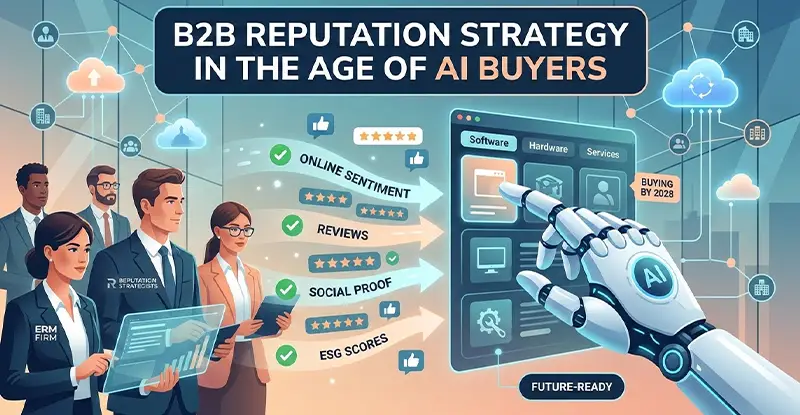 AI-Driven B2B Buying and Reputation Management Trends
 AI-powered AP Automation
 Best AP Automation Software: Features, Benefits & How to Choose
 How IDP Converts Business Documents Into Actionable Data
 All About Intelligent Document Processing
