Best Enterprise Infrastructure Platforms for Virtualized Workloads

Published: October 22, 2026
Choosing the wrong hypervisor layer doesn't just slow a rollout, it can lock an IT team into a support contract that costs three times what they budgeted. The market has shifted sharply since Broadcom's VMware acquisition repriced much of the mid-market, and options that made sense two years ago aren't automatically the right call today. What follows covers five platforms that earn serious consideration in 2026, with a focus on what each one actually does well and where it falls short.

Moving to a more flexible virtualization platform does not eliminate manual work in finance and operations. docAlpha automates document classification, extraction, validation, and routing within the business applications supported by enterprise IT.
Turn infrastructure modernization into practical gains in everyday workflow efficiency.
Live migration, high availability, and storage setup are table stakes at this point. What separates platforms is everything around those features.
Security architecture matters more than it used to. Platforms that bolt security on after the fact force teams to license, configure, and maintain separate tools; platforms that build micro-segmentation and traffic inspection directly into the hypervisor layer keep that operational surface much smaller. Hardware flexibility is another genuine differentiator, a narrow certified-hardware list creates vendor dependency that compounds over time. The catch is that buyers often don't feel that lock-in until renewal negotiations are already underway.
And the licensing model shapes total cost faster than most buyers expect. Bundled networking and storage in a single license looks very different on a spreadsheet than a base hypervisor with NSX and vSAN priced separately. So does the gap between a free open-source tier and a quote-only commercial product.
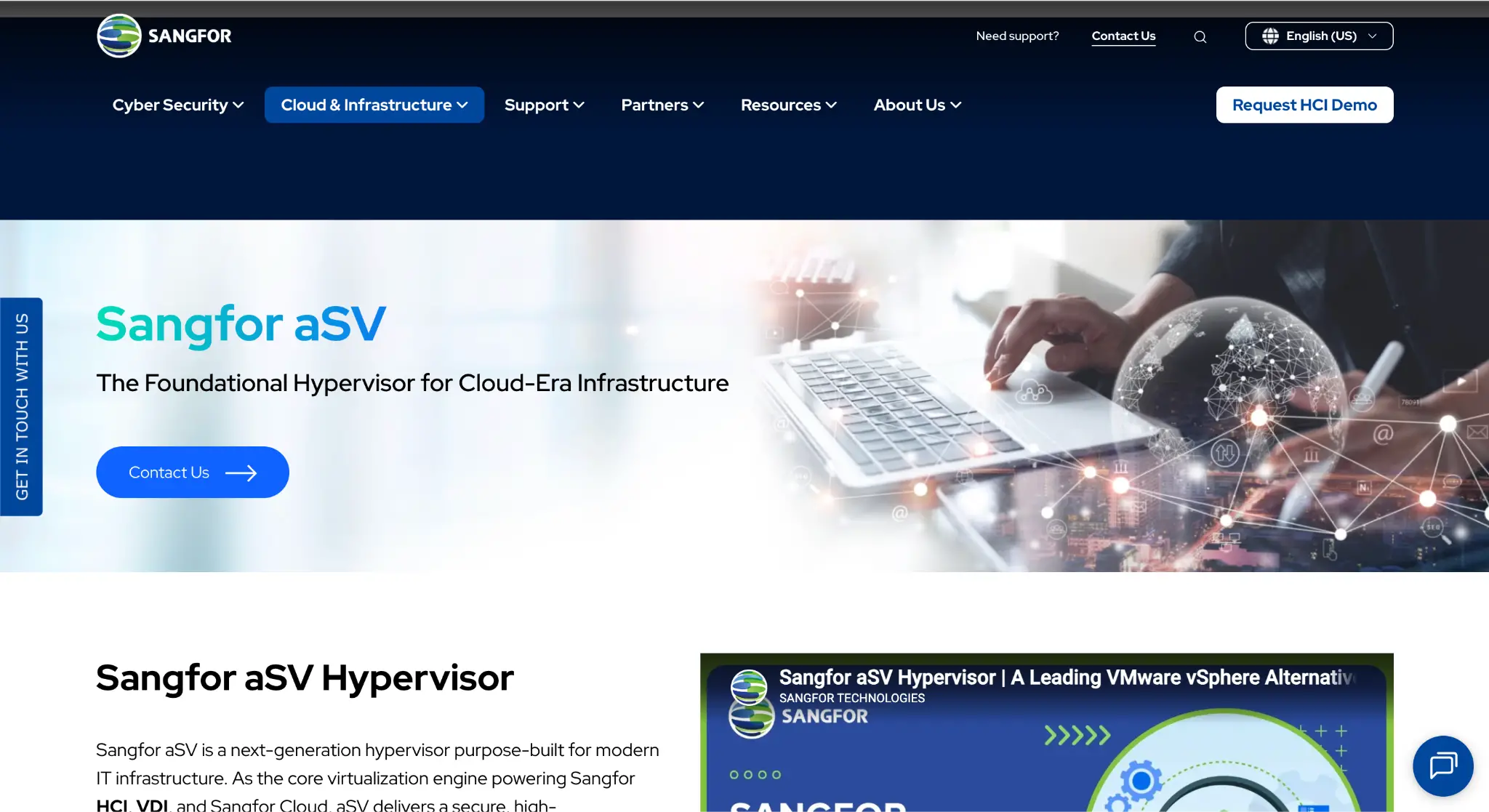
What it does: Sangfor aSV is a type-1, KVM-based bare-metal hypervisor serving as the compute virtualization layer inside Sangfor's Hyper-Converged Infrastructure stack. It runs directly on standard x86 servers from Dell, HPE, Lenovo, and others, no host operating system sitting between the hardware and the VMs.
Where it shines: Networking (aNET), storage (aSAN), and security (aSEC) are all bundled into one license. There's no separate purchase for advanced networking or storage the way VMware requires with NSX and vSAN. For teams migrating off VMware, Sangfor ships automated VMDK-to-Sangfor conversion and a CLI with 230+ commands equivalent to PowerCLI, so existing automation scripts carry over rather than getting rebuilt from scratch. Live migration completes with under 3 seconds of measured performance impact. On G2, Sangfor Cloud Platform holds a 4.7 out of 5 rating across 94 reviews and carries a Leader badge in Server Virtualization and Hyperconverged Infrastructure for Summer 2026. Gartner named Sangfor a Representative Vendor in its 2025 Market Guide for Server Virtualization Platforms.
Pricing: Not publicly listed. Licensing is node-based with perpetual or subscription options, available only through a quote from Sangfor or a reseller. Reviewer commentary on PeerSpot suggests annual support on the perpetual option runs roughly 10 to 15% of license cost.
Recommended reading: Learn How Cloud Infrastructure Supports Modern Enterprise Workloads
What it does: Broadcom's infrastructure software division - primarily through VMware - covers the full private cloud stack, including compute virtualization (vSphere/ESXi), software-defined networking (NSX), and storage (vSAN). The portfolio serves large enterprises across financial services, cloud providers, and government.
Where it shines: VMware vSphere is the most widely deployed enterprise hypervisor in the world, which means the ecosystem of third-party tools, trained administrators, and available support is genuinely unmatched. For organizations already running VMware at scale, that operational familiarity and tooling depth remain real assets; the platform's maturity shows in edge cases - complex storage configurations, multisite DR, large GPU workloads - where newer platforms still have gaps. Broadcom's hardware compatibility list is broad, and honestly, that breadth alone keeps plenty of procurement teams from looking elsewhere.
Pricing: Broadcom moved VMware to a subscription-only model after the 2023 acquisition and eliminated perpetual licensing. Pricing is bundled into tiered editions and is only available through direct sales. Many mid-market customers reported renewal quotes increasing sharply - in some cases by multiples - which is a big part of why this list exists.

Virtualized environments may host many business applications, but fragmented document handoffs still slow their users down. docAlpha streamlines capture, data extraction, exception review, and routing across document-centric processes.
Help teams work more efficiently without positioning document automation as a replacement for infrastructure tools.
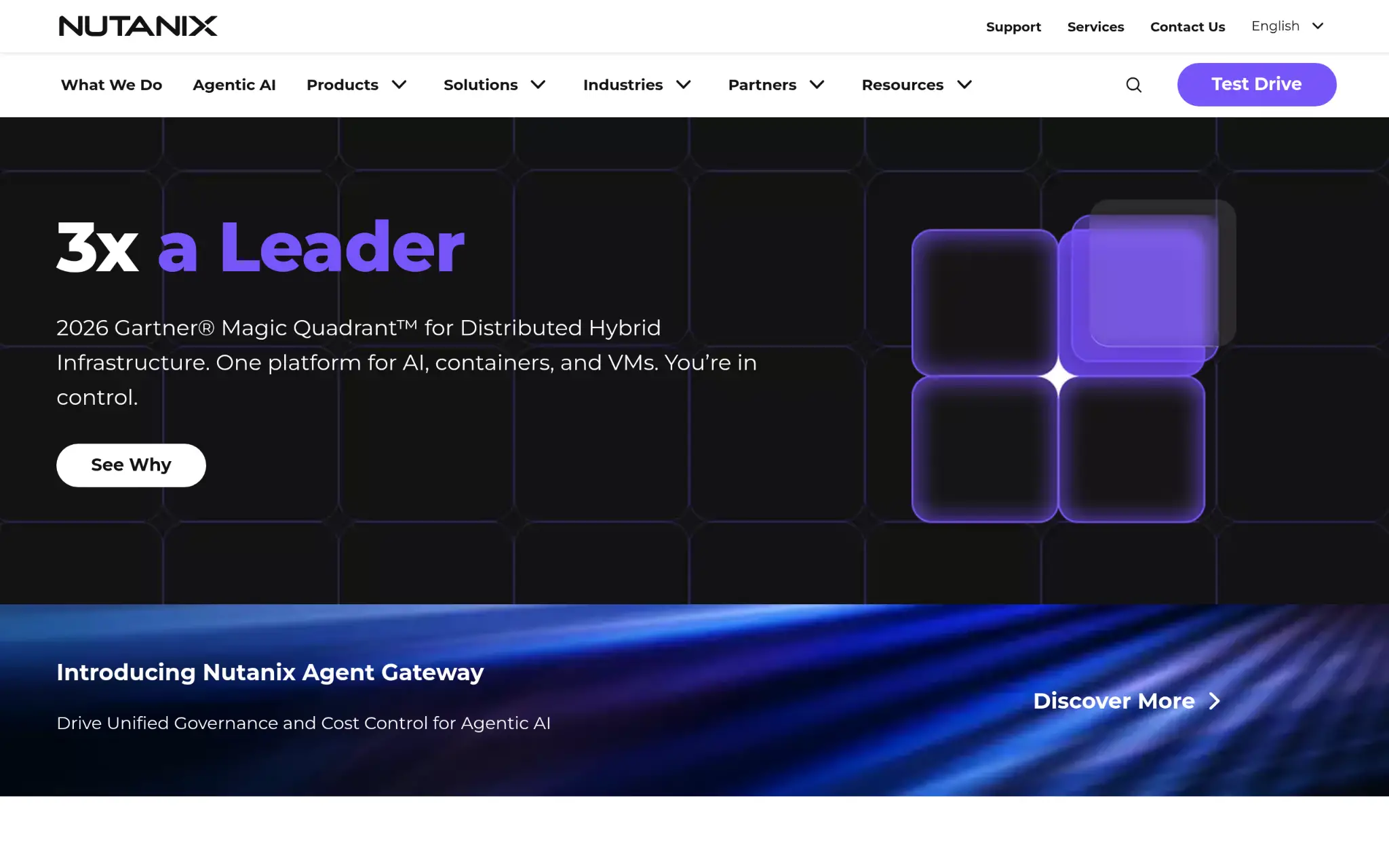
What it does: Nutanix delivers a cloud platform built around its AHV hypervisor, AOS storage, and a wide suite of services including Nutanix Flow (networking), Nutanix Kubernetes Platform, Nutanix Database Service, and Enterprise AI. It's designed for hybrid and multicloud deployments, running applications and data across on-premises infrastructure and public clouds.
Where it shines: Nutanix earned a Leader position in the 2026 Gartner Magic Quadrant for Server Virtualization Platforms - ranked highest in Ability to Execute - and a Leader spot in the 2026 Gartner Magic Quadrant for Distributed Hybrid Infrastructure. That dual recognition reflects the platform's strength as a complete operational environment rather than just a hypervisor. Teams that need Kubernetes orchestration, database-as-a-service, and software-defined storage under one management plane find Nutanix particularly well-suited. The company was founded in 2009 and has approximately 7,800 employees.
Pricing: Nutanix sells through hardware partners and direct agreements. Pricing is subscription-based and tied to the platform tier and node count. It doesn't publish list prices; quotes are typically generated in partnership with a hardware vendor like Dell or HPE.
Recommended reading: Discover Best Practices for Cloud-Based Automation
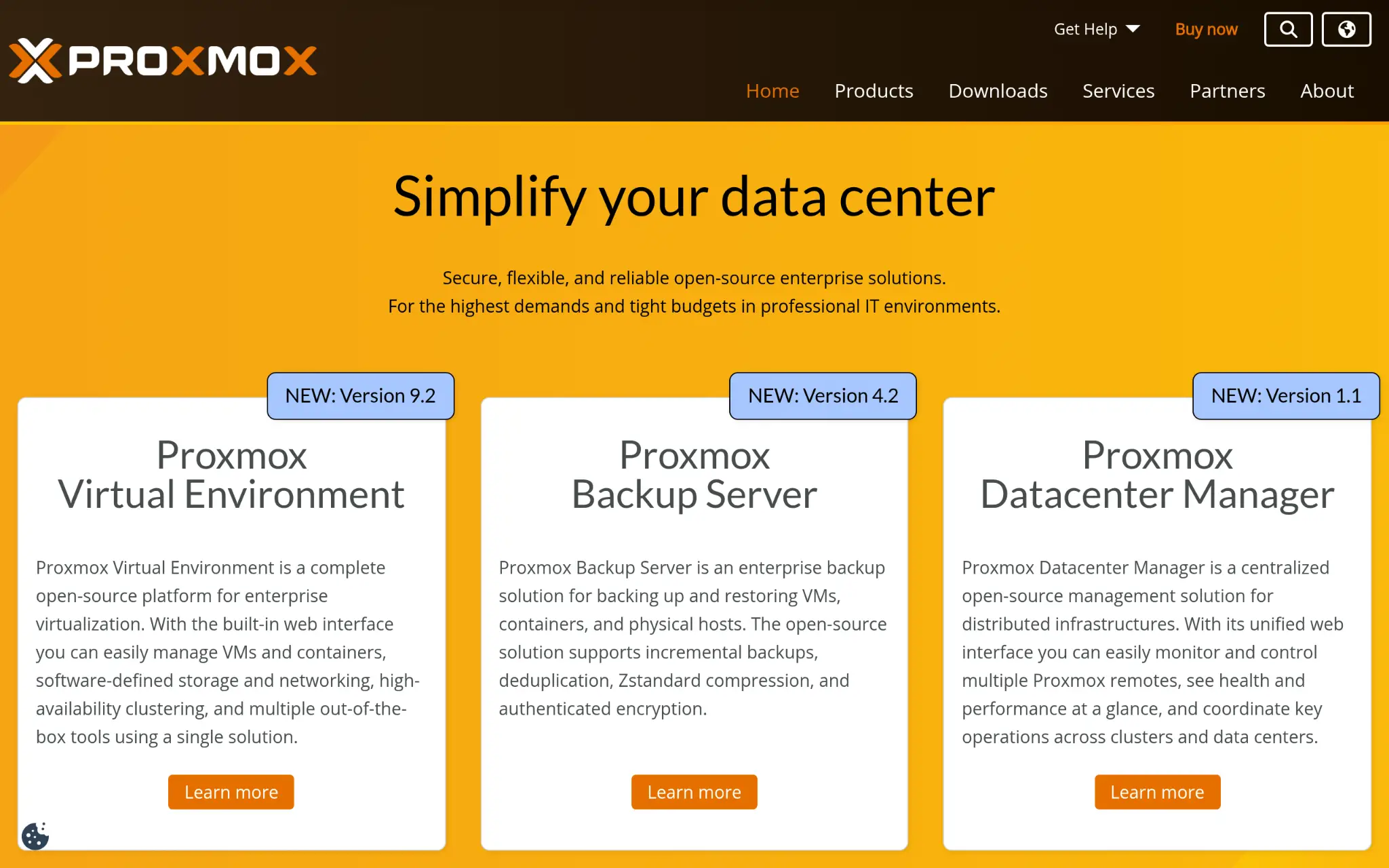
What it does: Proxmox Virtual Environment is an open-source hypervisor built on KVM and LXC, managed through a browser-based interface. Proxmox Server Solutions GmbH, founded in Vienna in 2005, also offers Proxmox Backup Server and Proxmox Mail Gateway as part of a broader open-source data center portfolio.
Where it shines: The full feature set - clustering, live migration, HA - is available without a paid subscription. That's a structural advantage that's hard to overstate for teams with solid Linux skills. Proxmox manages more than 1.5 million hosts globally and counts customers including the European Space Agency, YouTube, and Northrop Grumman. It has partnerships with NVIDIA and Veeam, and works with 1,000+ resellers in over 142 countries. But here's the thing: you'll notice Proxmox is frequently cited as the closest open-source alternative to VMware vSphere, with roughly 95% of VMware setups reportedly able to migrate without major rework.
Pricing: Free to download and use with community support. Commercial subscriptions - which add access to the tested enterprise repository and direct support - start at the entry level and scale up. Proxmox has 68 employees, so support depth is more limited than what you'd get from a larger vendor.
What it does: Red Hat's virtualization offering centers on OpenShift Virtualization, which runs traditional VMs alongside containerized workloads on the OpenShift Container Platform. It's part of a broader portfolio that includes Red Hat Enterprise Linux, Ansible Automation Platform, and Red Hat AI.
Where it shines: Red Hat supports more than 90% of Fortune 500 companies, spanning financial services, healthcare, telecommunications, and the public sector. OpenShift Virtualization is the strongest pick on this list for organizations already running OpenShift or planning a container-first architecture, it lets teams run legacy VMs and Kubernetes workloads on the same infrastructure instead of maintaining two separate layers. Red Hat was named a Leader in the 2026 Gartner Magic Quadrant for Cloud-Native Application Platforms for the third consecutive year and holds a Leader position in the Gartner Magic Quadrant for Integrated Security Platforms for the fourth consecutive year. As a subsidiary of IBM since 2019, Red Hat carries enterprise-grade support and a large partner network.
Pricing: Red Hat sells through subscriptions tied to RHEL and OpenShift node counts. Pricing is available through Red Hat directly or via IBM. No list pricing is published for OpenShift Virtualization; quotes depend on the broader OpenShift agreement.

Choosing a hypervisor improves the foundation for enterprise applications, not the manual workflows running inside them. docAlpha applies intelligent document processing and validation to the business paperwork those applications depend on.
Move beyond infrastructure efficiency to measurable reductions in document-handling effort.
The best enterprise infrastructure platforms for virtualized workloads don't share a single profile - each fits a different operational reality. Broadcom's VMware remains the default for large enterprises already deep in the ecosystem, but its subscription restructuring has pushed a real portion of the mid-market to look elsewhere. Nutanix suits organizations that want a full hybrid-cloud platform with strong Gartner recognition and Kubernetes built in. Proxmox is the answer when budget and open-source flexibility matter more than vendor support depth. Red Hat makes the most sense for teams already on OpenShift who want VMs and containers on the same platform. For enterprises running VMware today and facing a pricing decision, Sangfor aSV offers a migration path that preserves PowerCLI workflows and bundles networking, storage, and security into a single license - worth evaluating alongside the other options here before committing to a renewal.
Recommended reading: Learn How Digital Technology Transforms Business Operations
 Cloud Infrastructure: Hardware, Software, Technologies
 Top Enterprise Virtualization Solutions Beyond VMware
 Top VMware Performance Monitoring Solutions for IT Teams
 How Cloud-Based IT Support Streamlines Infrastructure
 Building Resilient Systems with IT Support and Cybersecurity
 Cut IT Costs Without Sacrificing Enterprise Performance

