Reducing IT Costs While Maintaining Performance in Enterprise Systems
Published: March 23, 2026
Enterprise IT leaders face a difficult balancing act. Budgets remain under pressure, yet performance expectations, uptime requirements, and security standards continue to rise. In this environment, reducing infrastructure costs cannot come at the expense of business continuity.
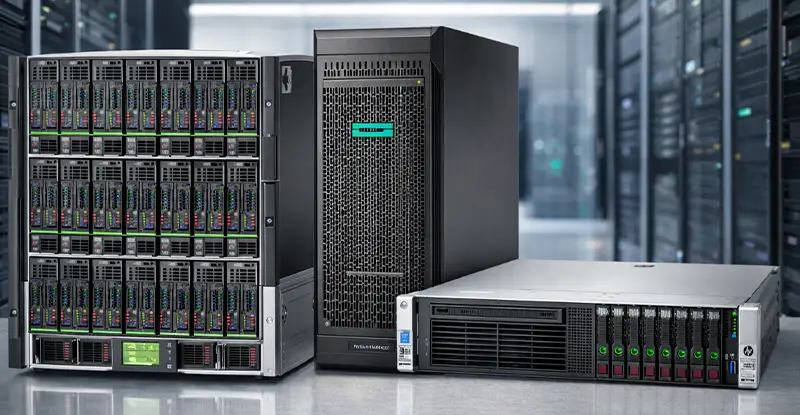
A more effective approach is to remove inefficiencies from the infrastructure lifecycle itself. That includes right-sizing refresh cycles, consolidating underused hardware, improving energy efficiency, and evaluating alternatives such as refurbished HP servers for workloads that still demand dependable compute without the acquisition cost of new OEM platforms.
The strongest cost-control strategies are not based on cutting corners. They are based on aligning infrastructure spending with actual workload requirements, operational risk, and long-term total cost of ownership.

Rapid deployment and intelligent automation with docAlpha for document-heavy operations. Cut operational costs, improve performance, and turn automation into a competitive advantage.
Many IT cost-reduction efforts focus too heavily on upfront spending. Delaying a refresh cycle, extending support beyond a practical window, or continuing to run inefficient systems may appear economical in the short term, but those decisions often increase long-term costs through higher energy use, greater maintenance complexity, and a higher risk of interruption.
That matters because enterprise systems rarely operate in isolation. Performance instability in one part of the environment can affect application delivery, internal productivity, customer service, and compliance obligations. Cost control becomes more effective when it is tied to measurable operational outcomes such as uptime, efficiency, standardization, and workload fit.
Recommended reading: How Tools and Technology Are Transforming Business Workflows
The least expensive server to acquire is not always the least expensive server to operate. Enterprise infrastructure costs extend well beyond the original purchase price. They typically include:
When viewed through that lens, the total cost of ownership becomes a better decision framework. A system that appears affordable on paper may incur unnecessary operational expenses if it consumes excessive power, requires frequent intervention, or no longer aligns with the organization’s broader infrastructure standards.
Energy consumption is one of the clearest examples. According to ENERGY STAR, certified servers can consume substantially less energy than standard models, particularly when power management features are enabled. In dense enterprise environments, that can translate into meaningful savings over time.
Cloud-Based Invoice Automation Built for Scale
InvoiceAction integrates tightly with leading ERPs and financial systems. Gain visibility, compliance, and control - without additional headcount.
Book a demo now
Not every enterprise workload needs the newest server generation. That is one of the main reasons organizations over-invest in infrastructure.
Some workloads absolutely justify current-generation systems. High-growth applications, performance-sensitive databases, and resource-intensive virtualization environments may require the latest processor architecture, memory capacity, or expansion support. But a large portion of enterprise computing supports more stable and predictable needs.
These may include:
For these environments, the priority is often reliability, compatibility, and timely deployment rather than cutting-edge specifications. A workload-based strategy allows organizations to reserve premium spending for the systems that truly require it, while using lower-cost but dependable alternatives elsewhere.
Recommended reading: Discover the Power of Process Automation in Computer Systems
Refurbished enterprise hardware is often misunderstood because quality can vary widely across the secondary market. The issue is not whether the equipment is new or previously deployed. The real issue is whether the hardware has been professionally refurbished, properly tested, and sourced through a supplier that understands enterprise requirements.
When those conditions are met, refurbished systems can offer a practical way to reduce infrastructure costs while maintaining dependable performance for well-defined workloads. That creates flexibility for IT teams facing capital constraints, procurement delays, or the need to expand capacity without waiting on extended OEM lead times.
That flexibility is increasingly relevant. Research highlighted by IDC shows that many organizations are refreshing their compute infrastructure more frequently and anticipating higher server-related spending. For enterprise buyers, that combination makes selective use of refurbished infrastructure a strategic option rather than simply a budget measure.

OrderAction supports rule-based automation across your order lifecycle. Minimize rework and maximize customer confidence at scale.
One of the most effective ways to reduce IT costs without sacrificing reliability is to standardize the hardware estate. Too many platform variations create avoidable complexity. They increase the burden on support teams, complicate sparing strategy, and make troubleshooting less predictable.
A more standardized environment can improve:
This is why cost optimization should not be treated as a series of isolated purchasing decisions. It should be treated as a lifecycle design. The goal is not simply to acquire hardware at a lower price. The goal is to build a more sustainable and efficient environment.
Recommended reading: Discover the Tools and Tactics Behind Process Automation Success
Cost savings lose value quickly when infrastructure decisions increase the risk of outages. Even short disruptions can affect revenue, internal operations, customer trust, and recovery expenses.
The latest Uptime Institute outage analysis reinforces that infrastructure failures continue to have serious consequences for organizations, with power, IT systems, and network issues remaining central drivers of impactful incidents. That makes a simple point clear: reducing cost should never mean weakening resilience.
A sound enterprise strategy focuses on dependable platforms, clear workload alignment, tested configurations, and appropriate lifecycle governance. Those factors matter far more than pursuing the lowest available acquisition cost.
Infrastructure cost management does not end at deployment. Retirement planning is just as important, especially when organizations are decommissioning systems that may contain sensitive or regulated data.
NIST SP 800-88 Rev. 2 outlines recognized practices for rendering data on retired media inaccessible at an appropriate level of effort. That guidance is relevant to any enterprise seeking to reduce long-term IT cost responsibly, because unmanaged retirement practices introduce security, compliance, and reputational risk.
Disciplined end-of-life processes also make refresh planning more practical. When IT teams know aging equipment can be removed securely and systematically, they can manage lifecycle decisions with greater confidence and less disruption.
Simplify Complex Processes with Cloud AI
docAlpha centralizes document intake for AP, AR, and order workflows. Support remote workforces while enhancing accuracy and speed.
Book a demo now
A solution-oriented cost strategy is usually incremental rather than disruptive. It starts with visibility and moves toward more disciplined allocation of resources.
A practical path typically includes four steps:
Assess workload type, utilization, power draw, support status, and recurring failure patterns across the estate.
Identify which systems truly require current-generation performance and which can run effectively on proven, lower-cost platforms.
Reduce unnecessary platform sprawl to improve supportability, sparing, and operational consistency.
Build secure disposition and data sanitization into infrastructure decision-making from the start, rather than treating retirement as a final administrative step.
Recommended reading: Learn How Process Automation Enhances Business Performance
Reducing IT costs while maintaining performance in enterprise systems requires discipline, not improvisation. The most successful organizations do not approach infrastructure cost control as a matter of buying the cheapest available hardware. They approach it as a lifecycle strategy built around workload alignment, total cost of ownership, standardization, resilience, and secure retirement.
That is why many enterprise teams are moving away from all-or-nothing refresh models. A more balanced approach combines targeted modernization with carefully selected refurbished infrastructure, stronger operational governance, and clearer refresh priorities.
When infrastructure decisions are aligned with actual business needs, cost savings and performance stability do not have to compete. They can reinforce each other.
 Managed IT Services: The Safety Net for Busy Enterprises
 Cloud Infrastructure: Hardware, Software, Technologies
 How to Reduce Operational Costs in Finance?
 Understanding the Role of Document Automation in Reducing Operational Costs
 Uncovering Hidden Costs in Application Development
