How AI Actually Changes Software Modernization - and Where It Doesn’t
Published: October 16, 2026
No. An audit requires understanding business context, ownership, and risk across systems that AI has no visibility into on its own.
Without review against a system's real behavior, AI-generated changes can quietly break dependencies that were never documented.
Tasks that are repetitive and easy to verify: generating tests for untested modules, refactoring code with known behavior, and documenting logic nobody wrote down. Each output can be checked against how the system is supposed to work.
By tracking delivery metrics before and after adoption. DORA metrics, such as lead time for changes and deployment frequency, show whether AI shortens the path to production or simply moves the bottleneck to code review.
It shouldn't be, and it's worth asking any vendor directly. In a well-governed setup, AI tools are vetted by technical and legal teams, covered by internal security policies, and configured so that no project data is used to train external models.
Every vendor conversation about legacy systems now includes a slide about AI. The problem is that “we use AI” answers the wrong question. What matters is which tasks it touches, and which ones still need a person who understands the business behind the code.
In modernization work specifically, the clearest wins show up in test coverage and refactoring - the two areas where legacy systems are chronically weakest and where AI-generated suggestions are easiest to check against existing behavior. A well-structured approach to legacy software modernization treats AI as one input among several rather than a shortcut around discovery. One software development company, Merixstudio, reports gains of 10 to 25 percent on tasks like these, measured through DORA metrics - and any vendor making a similar claim should be able to show how it was measured.

Legacy software modernization does not always require replacing every application. Sometimes, the greatest opportunity is eliminating the manual document processing that surrounds existing business systems. docAlpha combines AI-powered document processing, intelligent business rules, validation, and workflow automation to connect incoming business information with downstream operations.
Reduce manual data entry and modernize document-intensive workflows while continuing to use your existing business applications.
The tasks AI cannot do are the ones that decide whether a modernization project actually succeeds. Deciding which module carries genuine business value and which one is a candidate for retirement is a judgment call, not a pattern match. The same goes for compliance: GDPR, HIPAA, and similar requirements need to be designed into the architecture from the start, and no model flags that on its own. Employee resistance to a new system, sometimes called baby duck syndrome, is a people problem that AI has no bearing on whatsoever.
Nobody has a complete map of every dependency an old system relies on - that's often the whole reason it's being modernized in the first place. So an AI-suggested change gets checked the same way any refactor would: against acceptance criteria set before the change was made, signed off by an engineer who can trace it back to how the system actually behaves in production, and run through tooling that never sends client code out to train an external model. Spec-driven development makes this systematic: every task starts with a validated specification, so the acceptance criteria exist before any code is generated. Some teams call the wider model AI-augmented delivery: AI woven into the workflow under governance, rather than left to a case-by-case call by whoever happens to be writing the code that day.
The filter comes down to one question: is the task repetitive and independently verifiable? If yes, AI assistance is worth applying and measuring. If the task requires understanding why a piece of legacy logic exists, it stays with the engineering team.
Recommended reading: Learn How AI Automation Works, and Where Human Oversight Still Matters
One of the least visible costs of a legacy system is the time engineers spend reading it before they can change it. The original authors have often moved on, the documentation describes a version of the system that no longer exists, and the business rules live in conditionals scattered across modules. AI tools help here in a narrow but practical way: they can summarize what a function does, trace which parts of the codebase call it, and draft documentation that a developer then corrects.
What you get is a draft - useful, but still a draft. A generated explanation of a pricing routine or an approval workflow gives the team a starting point for a conversation with the people who use the system every day - and that conversation is where the real answer comes from. A model can describe what the code does. Only the business can say whether it still should. Treating AI output as a hypothesis to confirm, rather than a finding to act on, keeps the speed benefit without importing its blind spots into the audit.
Speed in one part of the pipeline tends to expose the slowest stage downstream. When AI shortens the time it takes to write a refactor or a test suite, the number of changes waiting for review grows, and review becomes the new bottleneck. A team that doesn't plan for this ends up with either a queue of unmerged work or, worse, rushed approvals.
Generated tests carry a subtler risk. In legacy work, tests are often written to capture how the system behaves today, so that later changes can be checked against that baseline. AI produces these quickly, but it has no way of knowing whether the current behavior is correct. If a calculation has been wrong for years, a generated test will faithfully lock the error in place. That's why coverage numbers alone say little about quality: an engineer still has to decide which behaviors are intended, which are accidental, and which the business has simply learned to work around.
There's also consistency. Code produced by different people prompting different tools in different ways drifts in style and structure - one of the things that turned the old system into a problem in the first place. Shared conventions and the review discipline described above matter more as output volume goes up.

Modernizing legacy systems is only part of improving business operations. Manual document entry, disconnected approvals, and repetitive validation can continue to create bottlenecks even when core applications remain functional. docAlpha uses AI-powered document processing, intelligent rules, and automated workflows to streamline document-intensive operations.
Extend modernization beyond software infrastructure and reduce the manual work surrounding existing enterprise systems.
AI changes the cost structure of a modernization project less than vendor pitches suggest. Those gains apply to selected tasks - test generation, refactoring, debugging - not to the project as a whole. Code analysis during the audit can move faster, but discovery workshops, architectural decisions, data migration planning, stakeholder alignment, and user onboarding are largely unaffected, because they depend on people and decisions rather than on typing speed.
In practice, this means an estimate should show where the time savings come from. A quote that applies a flat discount to the whole project because “the team uses AI” suggests the savings were assumed rather than measured. A more credible estimate identifies the phases where AI assistance applies, explains how its impact will be tracked, and leaves workshops and decision-making at their full size. The same logic works in reverse: if the audit reveals that most of the effort lies in untangling business rules rather than rewriting code, the expected gains shrink accordingly.
What AI does shift is where the team spends its attention. Hours saved on repetitive work can go into the tasks legacy projects usually shortchange - deeper review of high-risk modules, better documentation for whoever maintains the system next, and more time with end users during the transition. That reallocation, rather than a lower invoice, is often the more meaningful return.
Recommended reading: Discover How Artificial Intelligence Creates Business Value
The most reliable way to find out what AI will contribute to a specific modernization project is to measure it on a limited scope before committing to it across the board. Choose a well-contained module, record baseline delivery metrics, apply AI assistance to the verifiable tasks within it, and compare the results after a few sprints. DORA metrics such as lead time for changes and change failure rate give a neutral reference point, because they show whether work reached production faster and whether it broke more often along the way.
A pilot like this also answers questions that matter beyond speed: how much extra load falls on reviewers, whether generated tests caught real regressions, and whether the team trusts the output enough to keep using it. If the numbers hold, the approach extends to the next part of the system with evidence behind it. If they don't, the project has lost a few weeks of experimentation instead of a quarter. Either way, you're deciding based on your own system's numbers.
AI adoption should deliver more than impressive demonstrations or promises of productivity gains. docAlpha applies intelligent document processing, data validation, business rules, and workflow automation to repetitive document-driven tasks.
Reduce manual processing, improve workflow consistency, and create measurable opportunities for operational efficiency.
AI does not replace a modernization strategy - it accelerates the parts of execution that are repeatable and checkable. The gains are real but bounded, up to 25% on selected tasks, and they only hold when engineers stay the architects and reviewers of the work AI produces.
Recommended reading: Learn How to Evaluate AI Software, Tools, and Use Cases
 AI Automation: What It Is and How It Works in 2026
  What is AI? Artificial Intelligence in Business
  How Website Modernization Improves Digital Business Workflows
  How Legacy Business Software Increases Costs and Operational Risk
 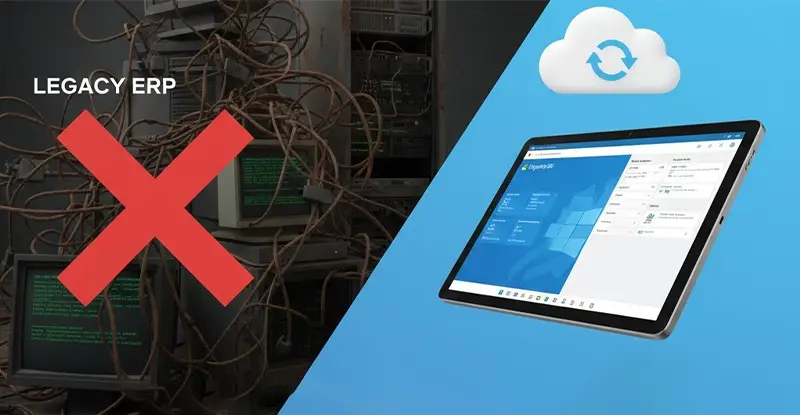 When Legacy ERP Slows Growth, Move to Microsoft Dynamics 365
  How an AI Center of Excellence Drives Enterprise AI Success
