How AI & Intelligent Document Processing Improve ELISA Lab Workflows
Published: April 06, 2026
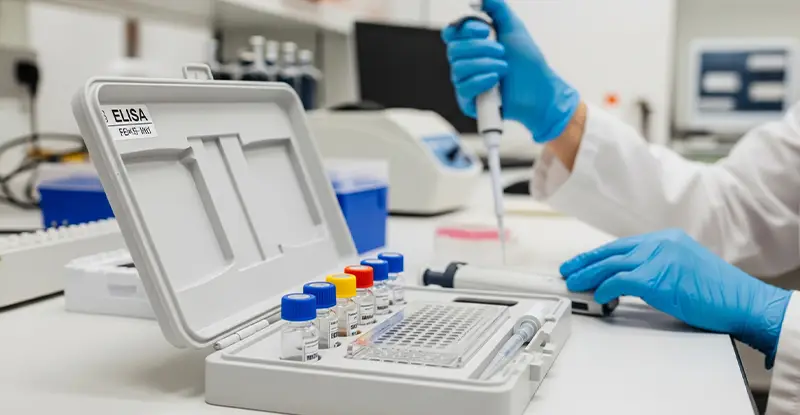
If you’re working in a lab, you already know how hectic things can get. There’s pressure to deliver faster results, stay compliant, and manage endless data, all at once. And if you’re handling ELISA tests regularly, it probably feels even more intense. The testing itself has improved a lot, but the paperwork? Still mostly manual.
That’s where AI and intelligent document processing can really start to help.
If you’ve worked with ELISA tests, you know the real work doesn’t stop at the experiment. There’s a long list of documentation to manage; logs, data sheets, quality checks, and everything needs to be audit-ready. Most labs still depend on manual systems like spreadsheets today.
That’s when little mistakes start taking place, files become harder to find, and no one’s quite sure which version is the latest. And when the audit time comes, it becomes hard and stressful to find records.
That’s exactly why intelligent document processing becomes important. It reads your documents, gathers the right information, and organizes everything so you don’t have to look for it.

docAlpha uses AI-powered Intelligent Process Automation to capture, classify, and process documents with high accuracy. Eliminate manual work and gain full control over data-driven operations at scale.
The biggest improvements tend to show up in three places.
First, getting data out of instruments. Plate readers spit out results in all sorts of formats depending on which machine you are using. AI tools can read all of these different files, clean up the numbers, apply the right calculation model, and hand you structured data ready for analysis. No reformatting, no copy-pasting.
Second, catching problems early. Instead of finding out during a post-run review that something went wrong, machine learning can flag issues in real time. If a calibration curve is drifting, if a control well looks off, or if your sample replicates are not agreeing with each other, the system tells you right away rather than letting the problem sit.
Third, putting compliance documents together. Regulatory submissions need specific records bundled in a specific way. AI can pull together lot numbers, calibration certificates, analyst sign-offs, and check everything against the required template before it ever gets submitted. It is a lot faster and a lot less likely to miss something.
Recommended reading: How Automated Document Processing Software Transforms Business Workflows
This is the question most lab managers ask first, and it is a fair one. Nobody wants to rip out their existing setup just to try something new.
The good news is that most modern AI platforms are built to work alongside your current LIMS or electronic lab notebook rather than replace them. They connect through standard integrations and pull documents from wherever your team already stores them (shared drives, email attachments, instrument folders) and push clean data back into your existing system.
This becomes especially important when assay volume grows. Whether a team is running a standard in-house protocol or working with custom-made ELISA kits built for specific research targets, documentation needs grow with every additional run. Automation means that growth does not automatically translate into more hours spent on admin work.
Bring Intelligence to Every Document Workflow
docAlpha combines AI, machine learning, and automation to streamline complex document-driven processes. Improve efficiency, visibility, and consistency across your operations.
Book a demo now
Full automation is not the right move for every lab right away. A smarter approach is to look at where errors happen most often and where staff time disappears the fastest. Even one simple tool can save you hours.
Quick Tip: Make sure you give priority to privacy. Decide who can see your data, where it’s stored, and how it’s monitored.
Labs that have sorted out their paperwork say the same thing: their staff finally have time to focus on the actual work. If your team works with special reagents, like custom ELISA kits, keeping records correct is really important. Tight deadlines and unique tests leave almost no room for mistakes.
These smarter ways of managing documents aren’t just ideas for the future. They’re already being used in labs and helping a lot. So, focus on the tasks that slow you down the most, and go from there.
Recommended reading: 7 Benefits of Document Processing Automation
 Life Science Software Development: From Data Management to AI-Driven Insights
 Integrating AI for Efficient Healthcare Document Processing
 How Technology Is Transforming the Healthcare Industry
 Effective Strategies for Managing Healthcare Documents
 AI for Document Processing: How IDP Turns Documents Into Usable Business Data
 Computer Vision in Healthcare: Transforming Diagnostics and Patient Care
