5 Inventory Tasks You Can Automate With an AI Agent

Published: September 30, 2026
Ask anyone who runs inventory for a living what actually eats their week, and you will rarely hear about strategy. You will hear about checking. Checking the stockroom against the system, checking which sizes sold out over the weekend, checking whether the report from last month still resembles reality. None of it is difficult. All of it is relentless.
Relentless is the part software has always handled badly. A dashboard shows numbers, but a person still has to open it. An alert fires, but a person still has to decide whether the alert deserves attention. An agent is different in one specific way: it does not wait to be opened, it works through the same comparisons you would make, and it hands back something already partly decided.
So instead of the usual promises about transformation, here are five ordinary inventory tasks an agent can take off your plate today, plus what genuinely changes in the day once it does.
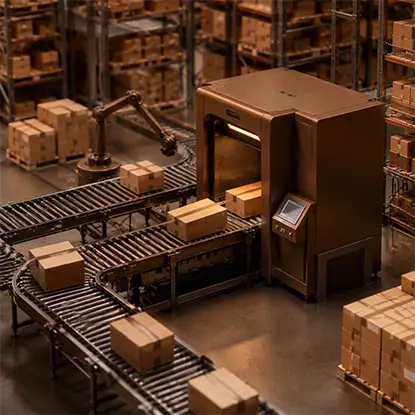
AI agents can help inventory teams monitor stock and respond faster to changing demand, while OrderAction automates another critical part of the process - capturing incoming customer POs, validating order information, and creating ERP-ready sales order data.
Reduce manual order entry while giving downstream operations faster access to accurate transaction data.
The first job is the least glamorous and the easiest win. Somebody on your team refreshes a screen several times a day to see where quantities stand, and that habit exists because stock moves faster than anyone's memory of it. An agent watches continuously instead, pulling from the same records your point of sale and warehouse already write to, and it flags only the movements that break a pattern. A well-built inventory management AI agent will tell you a bin count drifted, then tell you which transaction pushed it.
The accuracy underneath this matters more than the automation. Agents reason over item identifiers, and if two systems disagree about what a product even is, the output is confident nonsense. Clean identification, of the kind the GTIN standard describes, does the quiet structural work here.
Reorder points look tidy in a spreadsheet and behave terribly in practice, because a single threshold treats a slow winter cardigan the same as a shirt that sells forty units a week. An agent can carry a different threshold for every SKU and adjust it as velocity shifts, which is the difference between an alert list of two hundred items and a list of nine you can act on before lunch. Small shops feel this fastest, since a buyer juggling thirty problem styles in her head can hand that watch list over and stop carrying it.
Recommended reading: Discover How Automated Workflows Improve Inventory Management
Most inventory reporting fails on distribution rather than on math. The numbers are right, the file sits somewhere in a shared drive, and nobody past the operations team ever opens it. Ask an agent for a weekly summary and you get prose with the exceptions on top: what moved, what stalled, where the physical count and the book number parted ways. That framing sits closer to how loss is measured now, since asset protection teams have pushed past a single shrink percentage toward a total retail loss view that treats inventory inaccuracy as one input among many.
Trend tracking is where agents stop saving time and start making money. A person reads sales by style because that is what fits on a page, while demand actually lives in the style-color-size matrix, and a size run that sells out unevenly stays invisible at the style level. An agent will compare weeks, notice that the medium in one colorway carries the whole style, and say so in plain language. You get the micro-trend while it is still useful, rather than in a monthly report that lands after the reorder window already closed.

Automating stock monitoring is valuable, but inventory efficiency also depends on how quickly and accurately customer demand enters the business system. OrderAction transforms incoming purchase orders into validated, ERP-ready sales order data.
Connect smarter inventory operations with faster, more scalable order processing.
The last task pulls the other four together. Given current stock, sell-through, lead times, and open commitments, an agent can produce a reorder proposal line by line with its reasoning attached, and your job shrinks to reviewing judgment calls instead of assembling arithmetic. Keep approval human, especially early on, because the agent does not know that a supplier is quietly six weeks behind or that a wholesale account is about to double an order. Treat it as a tireless analyst who drafts, and treat yourself as the one who signs.
None of this requires ripping out what you run today. Pick the task that annoys you most, usually monitoring or low-stock alerts, connect the agent to real data, and run it alongside your existing process for a couple of weeks so you can see where it agrees with you and where it does not. Trust gets earned on your own numbers, never on a demo.
It is worth noticing how quickly this stops feeling novel. Tools that watch on our behalf reshape ordinary routines faster than anyone expects, a shift parents have been working through with screens and devices for years. The same adjustment happens in a stockroom, and it ends in the same place: fewer hours spent checking, more attention on the decisions that need a human.
Start with one task. Measure the hours it gives back, keep the human on approvals, and let the agent take the checking. That is a trade almost every inventory team should be willing to make.
Recommended reading: Learn How AI and Automation Improve Demand Planning
 Inventory Management: Harnessing the Power of Automated Workflows
  What Is Demand Planning & How AI, Automation Transform It
  How IoT and AI Are Revolutionizing Inventory Tracking Systems
  How Automation Improves Retail Orders and Inventory Management
  AI Agents vs Traditional Business Automation Solutions
  Transform Warehouse Operations Management With AI Automation
