How to Prepare Business Documents and Data for AI-Ready Workflows

Published: August 28, 2026
Serving AI with raw, unpolished data is a beginner’s mistake. For one, it likely lacks the organization AI models need to understand it. In addition, the data might contain material you would prefer to keep private, such as your personal or even clients’ details. Lastly, another common occurrence is that feeding AI with flawed data is expensive, overusing tokens and leading to quickly hitting your limits. So, how should you prepare documents and information before feeding them to teach AI or a daily prompt? Let’s take a look at a few insights.
The most obvious answer for AI training resources is documents, manuals, documentation, reports, and other information. In other words, written content. However, many resources often go to waste, such as knowledge bases consisting of things like FAQs and Wikis. Furthermore, databases and images can also be a part of your AI training, and each brings something new for AI to study. Hence, if you personally or as a business employee are considering AI training, many resources can be put to use.
After all, it is easy to skip certain resources as not useful, similarly to how very few people know that they can sell internet data and earn money. Services like Honeygain make it possible, paying users who share their unused internet resources. If you require a more flexible Claude or ChatGPT plan, such efforts could also help you cover some of the cost without any additional effort.

Raw documents can introduce incomplete, inconsistent, and unstructured information into AI-driven processes. docAlpha transforms document content into validated, structured business data.
Improve AI workflow reliability while reducing manual document preparation and data correction.
Now, let’s go through the critical steps of preparing your data to be shared with AI. If you’re struggling to gather and prepare information yourself, consider using AI data collection tools that can help ensure models have the best-quality training data.
Your first task is to go through the data manually, checking whether it is complete and accurate and does not misrepresent certain concepts. Review the structure of the information, ensuring that everything is neatly divided and contains the necessary metadata.
Ensure that there’s no duplicate information and remove all sensitive information. This also helps AI remove unnecessary details that do not assist in understanding or solving the issue at hand.
If you plan to use AI for content generation, do not forget to upload information on your preferred writing styles. Additionally, you can specify different requirements, such as using certain formatting, if you want to generate documents that are publication-ready faster.
Recommended reading: AI Automation: What It Is and How It Works
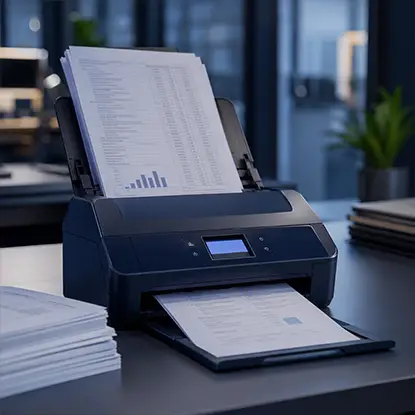
Manually reviewing and structuring documents before they reach AI systems slows automation and increases operating costs. docAlpha automates document capture, classification, extraction, and validation.
Move accurate business data into downstream workflows faster while reducing repetitive manual effort.
Provide more general details on your problem or topics to AI, too. Additionally, if you’re training AI to work as a customer support assistant or chatbot, be specific that it mainly focuses on the data you served. Hence, it shouldn’t invent or hallucinate. When generating prompts, also be specific about whether AI should only use the files you uploaded or whether it can rely on information it can find online.
The data you upload initially will likely require changes and updates. Hence, make it a regular process of reviewing and fixing the data you have uploaded. AI can also help you simplify this process if you prepare a prompt and run it to automate this process.
When you’re in doubt about how to proceed with AI, the best course of action is to consult it first. Be clear about what you want to achieve and describe the current data resources you want to use. You'll likely get tips and recommendations fully tailored to your situation, without leaving anything to chance or error.
Recommended reading: How AI Algorithms Transforming Intelligent Process Automation
If you’re feeding AI raw data, it is expensive. The better option is to judge what it needs critically, and only upload the essentials. Furthermore, be wary when uploading that certain file types are heavier, meaning AI will use more tokens to analyze them. For example, instead of uploading PDFs with user manuals of your products, download those files as .md files. If there are any images, you will see the relevant tags with long texts. Remove them to reduce token usage as well.
AI automation is only as dependable as the information feeding it. docAlpha intelligently extracts and validates data from invoices, orders, forms, and other business documents.
Create a stronger data foundation for scalable AI-powered process automation.
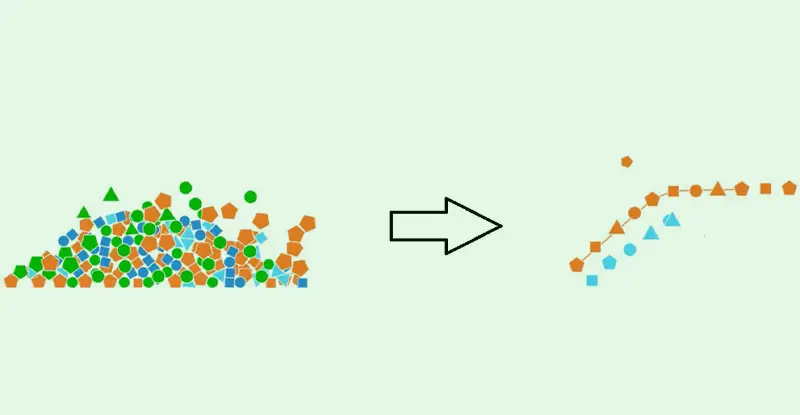
All in all, taking your time to prepare data before feeding it to AI makes it more convenient, organized, and less expensive. Furthermore, it will yield better results and cause fewer issues or hallucinations.
 Behind the Scenes: The AI Algorithms that Drive Invoice Data Extraction
 AI Automation: What It Is and How It Works in 2026
 AI Algorithms in Intelligent Process Automation (2026 Guide) | Artsyl
 Build Better AI Automation with Smarter Data Collection
 Essential Data Prep for Machine Learning and AI Projects
 AI Works Better with Clean Data: Tidy Up Your Documents and Images
