Predictive Maintenance and Process Automation: A Winning Combination for Manufacturers
Published: June 12, 2026
Historically, industrial maintenance was designed to be implemented in reaction to an issue. Engineers and plant managers typically performed “catch-up” repairs on malfunctioning equipment after it had caused a complete halt of the production schedule. This type of maintenance strategy is very costly due to downtime from unexpected failures and the hardware and labour required to repair failed equipment.
However, in today’s industrial environment, a change is taking place. Precedence Research indicates that by 2032, the global market for industrial predictive maintenance (PdM) will be larger than $32.4 billion, which clearly identifies a shift in the direction of the industry towards smarter operational solutions. One of the important components for achieving that vision is merging predictive maintenance and process automation systems to convert raw data from the manufacturing process into real-time operational responses.
So, how can predictive maintenance and process automation help manufacturers?
Manual processes slow decision-making and limit operational agility. docAlpha automates data capture, validation, and workflow execution to help manufacturers respond faster to changing production demands. AI-powered automation with greater accuracy and process control. Increase efficiency while minimizing operational complexity.
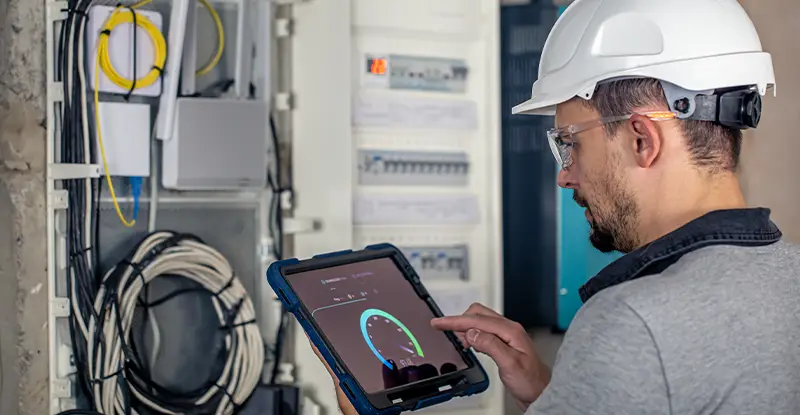
When your machines fail - either unexpectedly or not - your revenue potential drops drastically due to reduced manufacturing output. PdM maintenance utilises IoT sensors to track and monitor machine conditions such as temperature, vibration, and sound, and generate real-time data on each monitoring parameter. The data is further evaluated by using data analytics techniques to pinpoint measurement anomalies before you experience a physical machine failure.
These insights can be combined with process automation to create immediate benefits. For example, the systems can capitalise on the next scheduled downtime by redirecting production processes, thereby lessening loads on machines, taking advantage of the next already-scheduled downtime, and creating maintenance orders automatically, etc. This seamless synchronization maximises production continuity through pre-emptive identification of minor slip-ups before they escalate to more costly failures.
Recommended reading: Discover How Accounts Payable Automation Helps Manufacturers
Traditionally, manufacturers have used preventative maintenance as a way to avoid unnecessary interventions that may result from early or excessive component changes. However, using preventative maintenance often results in unnecessary wear and tear on equipment, as well as wasted resources.
Based on real-time performance data, equipment is serviced exactly when it is required. These interventions are carried out effectively and without interruption to operations thanks to automation. This results in an increase in Overall Equipment Effectiveness (OEE) of up to 11% and in the improvement of the life of the equipment. Companies can then be able to maximise production lines running consistently and reliably through higher performance and reduced failure rates.
Closed-loop systems are among the many ways that predictive maintenance and process automation have changed our approach to business. They not only identify the problems through predictive maintenance, but once identified, take action to resolve the problem without needing human effort to execute the fix.
For example, should a predictive maintenance system identify that a component is degrading, the automation of the process will modify the speed at which the machines run or will change the operating condition to mitigate further damage to the machine that is exhibiting problems. The automated enterprise integration systems will automatically create and mail purchase orders for parts or schedule maintenance to be performed, thus ensuring that maintenance is conducted in a timely and efficient manner.
This degree of automation reduces risk in operations and creates a more sustainable production environment where smaller issues can be resolved before they become larger ones.

Production schedules depend on timely supplier payments and accurate invoice processing. InvoiceAction automates invoice capture, validation, and approvals to keep financial workflows aligned with manufacturing requirements. AI-powered AP automation with seamless ERP integration. Reduce delays and maintain stronger supplier relationships.
Predictive maintenance and process automation have a profound impact in improving the way manufacturers improve the efficiency of their manufacturing processes. Today, manufacturers are under tremendous pressure to optimise the performance of their operations and reduce their costs. As a result, the convergence of these two technologies creates a significant competitive advantage for a manufacturer. By acting on data in real time, organisations can reduce the amount of unplanned downtime; extend the useful life of the assets; and build smarter, more adaptable production environments that are ready to meet tomorrow's needs.
Recommended reading: How Order Processing Drives Manufacturing Efficiency
 Reduce Manufacturing Rework With Smart Automation
 IoT-Driven ERP Strategies to Transform Manufacturing in 2025
 How Digital Transformation Is Changing Facility Operations
 How Intelligent Automation Powers Smart Manufacturing
 Lean Manufacturing Meets Automation for Smarter Operations
 Predictive Purchasing with Intelligent Process Automation
