Intelligent Automation in Music Video Production Workflows
Published: March 06, 2026
Music video production has always demanded a specific kind of precision. Every cut has to land on beat, every visual choice has to reinforce an artist's identity, and the storytelling has to hit in under four minutes. That combination of creative and technical pressure makes the AI video workflow conversation in this space worth having on its own terms.
Today, intelligent automation tools are showing up across the full video production workflow, from early concept development through post-production. What follows is a practical look at where those tools fit into music video pipelines, what they handle well, and where human direction still matters most.

docAlpha applies AI-driven document capture, validation, and workflow orchestration across ERP and cloud environments. Reduce manual processing, improve data accuracy, and accelerate enterprise-wide efficiency.
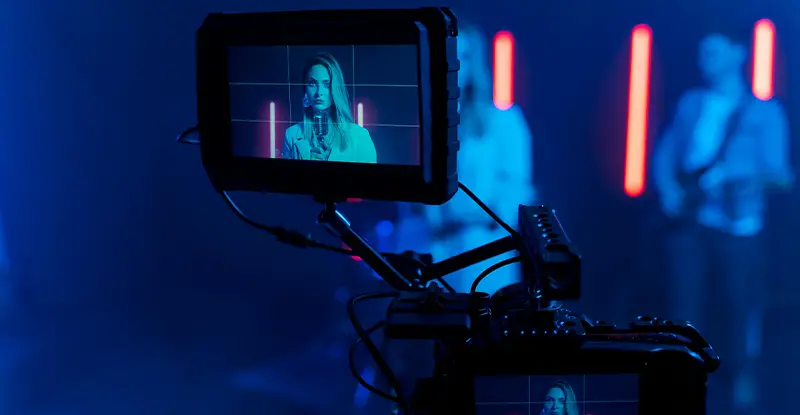
Intelligent automation touches nearly every stage of music video production, though the way it shows up varies depending on the phase. In pre-production, tools now assist with storyboarding, shot list generation, and scheduling. During production, automated camera rigs and real-time CGI overlays help capture footage that would have required larger crews just a few years ago. In post-production, AI-driven editing, color grading, and VFX compositing handle repetitive tasks at scale.
What makes music videos distinct from corporate or narrative video is the creative criteria. Automation in this space has to respect beat sync, visual rhythm, and an artist's stylized branding. A tool that works well for a product demo may fall flat when the edit needs to match a tempo shift at the bridge.
The broader market reflects growing confidence in these capabilities. The AI in filmmaking market was valued at $3.24 billion in 2024 and is projected to reach $23.54 billion by 2033. That growth tracks with how quickly creative teams are folding automation into real workflows.
Artists and directors now draw from a range of options, including intelligent automation principles applied to editing pipelines, template-based music video maker platforms, and tools designed to help creators use an easy video maker to streamline production without sacrificing creative direction. Each fills a different role depending on budget and creative goals. For example, you can create videos with Google Veo and other AI models, automating video production and multimedia content generation quickly rather than building each asset manually.
The planning phase is where intelligent automation has gained the most traction in music video production, and for good reason. Pre-production involves a high volume of organizational and conceptual work that benefits directly from speed without necessarily sacrificing creative intent.
Directors can now generate storyboards with AI, visualizing full shot sequences mapped to a song's structure, including beat timing, tempo changes, and mood shifts. Rather than sketching frames manually or describing them in paragraphs of text, a director can generate visual references that reflect the track's energy at each section. This makes it easier to communicate a vision to crew members, choreographers, and artists before a single camera rolls.
On the scriptwriting side, automation handles the grunt work of building shot lists, scene descriptions, and treatment drafts. Directors still shape the final product, but they start from a structured draft rather than a blank page. For smaller teams working under tight turnaround, that difference translates directly into saved hours.
Scheduling is another area where AI-driven workflow solutions reduce friction. Coordinating crew availability, location permits, and equipment logistics across compressed timelines is a known pain point, especially for independent productions. Automated scheduling tools handle the admin layer so that creative leads can stay focused on decisions that actually shape the final video.
One important constraint separates music video pre-production from other formats: every visual decision ties back to the track's tempo, mood, and narrative arc. Tools like Synthesia, often used as a text-to-video generator, can produce placeholder visuals during early concepting. However, those outputs serve as starting points for refinement, not finished creative choices.
Recommended reading: Document Processing Guide: Transforming Your Business with Intelligent Automation
Accelerate AP Performance with Intelligent Processing
InvoiceAction eliminates manual invoice entry through AI-driven capture, PO matching, and automated approvals. Shorten payment cycles and increase
operational efficiency.
Book a demo now
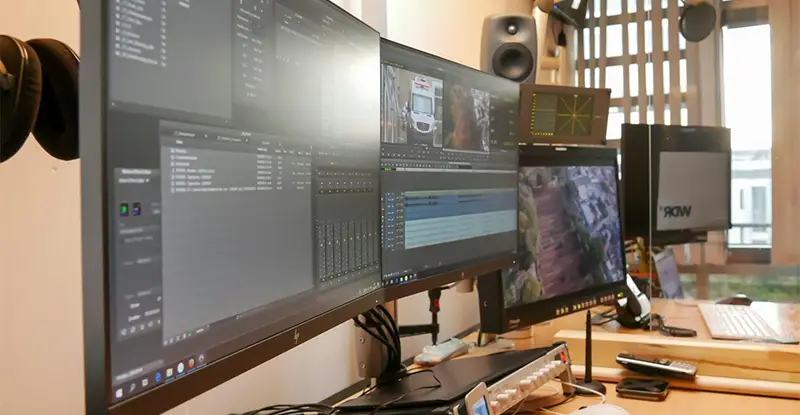
Post-production is where automation delivers the most measurable impact on both quality and turnaround time in music video workflows. The tasks here are repetitive, technically demanding, and tightly bound to the rhythm of the track, which makes them well suited for AI-assisted tools.
Tools like Descript and Runway now automate rough cuts, clip selection, and transition timing. They handle the initial assembly that editors used to build manually from scratch. For music videos specifically, the most relevant feature is automatic beat detection and cut synchronization.
Rather than scrubbing through a timeline and placing each cut by hand, AI-powered editing tools analyze the audio waveform and align visual transitions to downbeats, snare hits, or tempo shifts. This gives editors a working assembly in minutes instead of hours, freeing them to focus on pacing refinements and storytelling choices that require a human ear.
Color grading automation, particularly within DaVinci Resolve, adds another layer of efficiency. Consistent mood palettes can be applied across an entire video editing timeline, matching the tonal arc of a track without manually grading each scene. When a video shifts from warm, saturated verses to cooler, desaturated choruses, automated grading maps those transitions to the music's emotional structure.

docAlpha leverages machine learning and advanced capture technology to automate high-volume document workflows. Strengthen compliance, eliminate bottlenecks, and drive measurable ROI.
VFX workflows in music videos have traditionally required frame-by-frame manual effort, especially for motion tracking on performers, particle effects, and background replacement. Automated CGI integration tools now handle much of that labor.
Dance sequences, lip sync shots, and live instrument performances all involve complex movement. Motion tracking automation follows an artist through choreography, enabling particle overlays, environment swaps, and stylized compositing without the painstaking keyframing that once defined these tasks.
These post-production tools compress timelines from weeks to days. Still, creative direction remains the deciding factor in whether the final output feels intentional or simply processed.
Recommended reading: Intelligent Automation: What Is It?
For all the efficiency gains covered in earlier sections, automation in music video production carries real constraints that no tool update is likely to resolve. The most significant is creative interpretation.
AI tools can generate dozens of visual options, suggest edits, and apply stylistic presets, but they cannot interpret a song's emotional arc the way a director does. Deciding that a chorus needs visual restraint rather than spectacle is a judgment call rooted in artistic instinct.
Label requirements add another layer of complexity. Artist branding, release strategies, and visual identity standards all impose creative boundaries that automation tools have no awareness of unless a human translates those constraints into specific parameters. A tool does not know that an artist's label has mandated a particular color palette or that a visual motif conflicts with an upcoming campaign.
There is also a real risk of sameness. When multiple teams rely on the same automated workflows without strong creative oversight, the output starts to blur together. The most effective production teams treat automation as infrastructure, handling logistics, rough assembly, and repetitive tasks while keeping artistic direction firmly in human hands.
Digitize Order Processing with Intelligent Automation
OrderAction uses AI-powered document capture and ERP integration to eliminate manual sales order entry. Improve turnaround time while ensuring data accuracy across systems.
Book a demo now
The most effective music video teams already treat automation this way: as infrastructure that handles logistics so directors and artists can focus on the decisions that shape a final product. Across pre-production scheduling, beat-synced editing, and VFX compositing, an AI video workflow accelerates output without replacing the human creative layer.
The strongest results come from pairing automated tools with clear artistic direction. For teams looking to start, the simplest approach is identifying the phase where the most manual hours stack up and automating there first.
 Top AI Video Creation Tools for Smarter Content
 Animated Explainer Video for SaaS
 How Video Speeds Up Process Documentation and Team Adoption
 Boost Efficiency with Meeting Transcription & Process Automation
 The AI Revolution in Document Workflow Automation
 Designing AI Workflows That Support Human Productivity
