How Businesses Can Increase Conversions With Interactive Pop Up Mailers

Published: May 21, 2026
Businesses are under pressure to make campaigns work harder. Digital ads are crowded, inboxes are overloaded, and even strong promotions can disappear before the right person pays attention.
That is why physical campaign formats still matter. One effective option is pop up mailers, a dimensional direct mail format that turns a flat printed piece into an interactive brand experience.
Instead of asking recipients to simply read a message, these mailers invite them to open, unfold, reveal, scan, display, and respond.
For businesses trying to increase conversions, that interaction matters. The value is not just the pop-up effect. It is the way tactile engagement captures attention, improves recall, elevates perceived value, and creates a clearer path to action.

docAlpha connects document processing, workflow automation, and AI-based data extraction into one intelligent process automation platform. Reduce operational bottlenecks while improving marketing execution and visibility.
Most conversion problems begin before the offer is considered. A prospect cannot respond to a campaign they ignored, deleted, skimmed, or forgot.
Interactive pop-up mailers help solve that first problem. They create a physical moment that interrupts routine behavior. The recipient must engage with the piece by hand.
That simple interaction slows the experience down. It gives the campaign message more time to land.
In a marketing environment shaped by digital fatigue, physical engagement can become a useful advantage. Forbes has noted that direct mail’s tangible qualities can help businesses cut through digital noise.
That does not mean a mailer guarantees conversion. No format can rescue a weak offer. But a well-designed interactive mailer can create conversion momentum: the recipient notices the piece, interacts with it, understands the offer, and is guided toward a measurable next step.
Recommended reading: How Corporate Marketing Aligns with Business Process Automation
Interactive pop-up mailers turn a passive message into an active experience. The recipient may pull a tab, open a folded structure, reveal a hidden panel, or watch the mailer transform into a 3D object.
That motion changes how the message feels.
A standard postcard may say, “Here is our promotion.” A dimensional mailer says, “This message was worth building something around.”
That difference matters for brands selling premium services, event experiences, B2B solutions, or higher-value products where trust and perception influence response.
Tactile interaction also creates a stronger memory cue. A sales team following up after a dimensional mailer has a better opening than another cold email.
Instead of saying, “Just checking in,” a rep can ask whether the recipient received the pop-up piece and use that moment to reopen the campaign conversation.
The mailer not only delivers a message. It creates a follow-up asset.
A useful way to think about interactive pop-up mailers is to view the mailer as a physical interface.
A landing page has a headline, supporting points, visual hierarchy, and a call to action. A good pop-up mailer can do something similar in physical form.
The opening reveal acts like the headline. The panels or cube faces carry the supporting message. The QR code, personalized URL, promo code, or booking link becomes the conversion point.
A conversion-focused pop-up mailer should answer five questions:
When those elements work together, the mailer becomes more than a creative print piece. It becomes a bridge between offline attention and online response.
Accelerate Marketing Vendor Invoice Processing
InvoiceAction automates invoice capture, validation, and ERP integration for marketing agencies, campaigns, and promotional operations. Reduce manual AP workload while improving financial visibility and payment accuracy.
Book a demo now
Interactive pop-up mailers work best when they are part of a coordinated campaign. They can support email, landing pages, retargeting, sales outreach, events, and follow-up sequences.
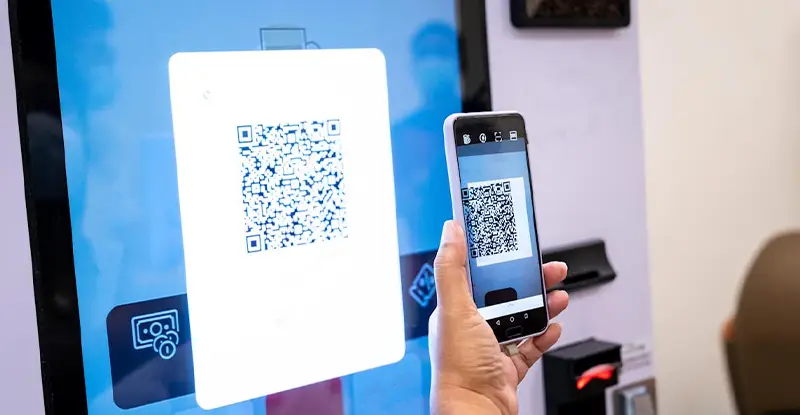
A campaign might begin with a teaser email. Then the pop-up mailer arrives at the prospect’s office. The mailer may include a QR code that leads to a personalized landing page.
From there, the recipient can book a consultation, claim an offer, register for an event, or request a sample. Sales can follow up based on campaign timing, account priority, or scan activity.
This hybrid approach matters because direct mail and digital can reinforce each other. USPS Promotions and Incentives include tactile, sensory, and interactive mail promotions, while PostalPro describes these programs as a way to increase engagement and response rates through high-value mailpieces.
Physical mail captures attention in the real world. Digital tools capture the response data. Together, they give marketers both brand impact and measurable campaign movement.
Recommended reading: How Intelligent Automation Is Transforming Marketing Technology
Interactive pop-up mailers are not ideal for every campaign. They make the most sense when the value of the conversion justifies a more considered physical touchpoint.
B2B companies can support account-based marketing by helping sales teams reach high-value prospects. One booked meeting with the right account can justify a targeted dimensional campaign.
For event marketers, pop-up mailers can turn invitations into keepsake-style experiences. A dimensional invitation can feel more exclusive than a standard email.
For product launches, the reveal mechanism can dramatize the launch message. The recipient opens the mailer and discovers the new product, offer, or campaign concept in a memorable format.
For customer reactivation, a pop-up mailer can help win back dormant customers who have stopped responding to email.
For retail and promotional campaigns, the format can elevate seasonal offers, VIP previews, loyalty rewards, and limited-time promotions.
Conversion improves when the recipient feels the message is relevant. Personalization should be built into the campaign strategy, not added as decoration.
McKinsey reports that personalization can reduce customer acquisition costs by up to 50 percent, lift revenue by 5 to 15 percent, and improve marketing ROI by 10 to 30 percent.
For interactive pop-up mailers, personalization may include segmented messaging, industry-specific versions, location-based offers, account-level creative, unique QR codes, personalized landing pages, or campaign codes tied to individual recipients.
The goal is not to make the mailer feel gimmicky. The goal is to make the recipient feel the message was meant for them.

docAlpha transforms disconnected marketing processes into intelligent automated workflows with AI-driven extraction and validation. Improve process consistency, reduce manual effort, and support scalable campaign operations.
A pop-up mailer can earn attention, but attention alone does not create revenue. The campaign still needs a clear call to action.
Weak CTAs include vague phrases such as “learn more” or “visit our website.” Stronger CTAs are specific and outcome-driven:
The CTA should be visible, simple, and tied to the campaign goal.
If the business wants booked demos, the mailer should lead to a booking page. If the goal is event registration, it should drive to a registration form. If the goal is sample requests, the next step should be frictionless.
Recommended reading: Why Account-Based Marketing Works for Intelligent Process Automation
Businesses also need to measure whether the campaign is working. Interactive pop-up mailers can support attribution when they include trackable response mechanisms.
Useful tracking methods include QR codes, personalized URLs, campaign landing pages, promo codes, call tracking numbers, CRM tagging, and segmented mailing lists.
Performance can then be measured through scan rate, landing page visits, form completions, booked meetings, sample requests, event registrations, sales-qualified leads, conversion rate, and revenue influenced.
This makes the campaign commercially defensible. The business is not only investing in a creative object. It is investing in a measurable conversion path.
Accelerate Customer Response With AI Order Automation
OrderAction reduces manual document handling tied to marketing promotions, sales requests, and customer fulfillment operations. Support faster processing and better customer experiences with intelligent automation.
Book a demo now
The biggest advantage of interactive pop-up mailers is that they combine attention, interaction, brand perception, and response within a single format.
They make the campaign feel more valuable before the recipient reaches the offer. They give the brand a physical presence. They create a tactile memory. They also give sales teams a stronger follow-up hook.
In crowded markets, that matters.
Businesses do not need more disposable promotions. They need campaign assets that earn attention, communicate value, and guide people toward the next step.
For brands serious about increasing conversions, the opportunity is not just to send something different. It is to create a physical interaction that makes the offer harder to ignore, easier to remember, and more likely to generate a response.
 Stronger Marketing Outcomes with Process Automation
 Custom Marketing Technology Software: Boost Campaign Performance
 ABM Success in Intelligent Process Automation Markets
 Boost Results with Smart Integrated Marketing Strategies
 QR Codes in Tech: From Convenience to Core Workflow
 Predictive CRM: Next Evolution in Customer Relationship Management
