How ERP Integrations Reduce Manual Data Entry Across Business Systems
Published: August 28, 2026
Manual data entry quietly eats away at your operations, causing hidden financial leakage and operational friction across your entire stack. Typical unintegrated enterprise systems generate 200 data entry mistakes every day.
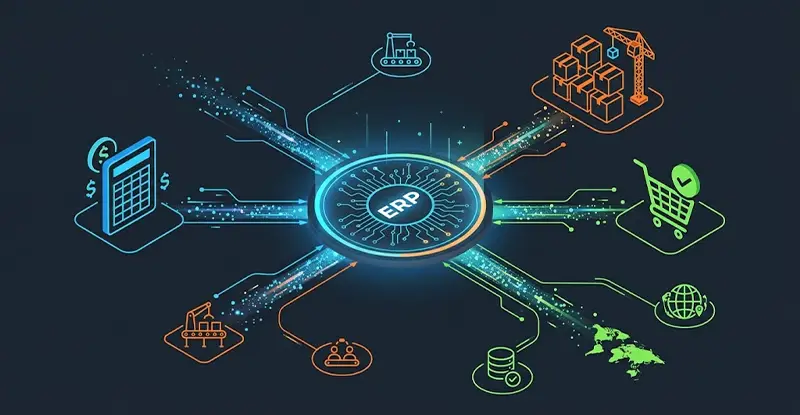
Every transposed digit or missed invoice entry trickles down into delayed shipping schedules, incorrect inventory levels, and distorted financial reporting. Connecting your software applications directly through automated ERP pipelines eliminates these human-error vectors at the source, turning isolated databases into a single cohesive network.

docAlpha combines AI-powered document processing with business rules and ERP integration to capture, understand, validate, and route unstructured information automatically.
Extend ERP automation upstream and eliminate manual data bottlenecks before they reach core business processes.
When core business platforms operate in isolated silos, employees end up working as human copy-paste middleware. Staff spend valuable working hours shifting figures between customer management tools, inventory spreadsheets, and core accounting software.
This operational drag directly harms your bottom line. Unintegrated workflows suffer from data entry error rates that reach up to 40% per record, creating massive downstream reconciliation overhead. When finance teams spend days hunting down discrepancies between warehouse counts and financial ledgers, critical strategic initiatives stall.
Siloed platforms force managers to make time-sensitive inventory and purchasing decisions based on stale data. Real-time updates eliminate this lag, ensuring every department operates from a single source of truth.
Recommended reading: Manual Invoice Processing vs Automated Invoice Processing
Automated integration workflows create direct, bi-directional communication channels between your enterprise resource planning system and third-party software. Orders placed on an e-commerce platform automatically update central inventory levels, generate picking lists, and create corresponding customer invoices without human intervention.
Companies deploying direct business integrations for Acumatica replace fragile manual imports with resilient, automated API connections. Eliminating hand-entered data ensures that order details, customer addresses, and line-item prices match across every department instantly.
Modern integration platforms systematically eliminate repetitive manual steps across core business operations:
Connecting disparate platforms gives teams back the time they used to lose to tedious data verification. Modern systems integration delivers over 99% order accuracy while cutting overall order processing cycles to a fraction of their original duration. Operations teams shift their focus from fixing typos to driving strategic business growth.

InvoiceAction uses AI to capture supplier invoice data, validate transactions, automate PO matching and approvals, and transfer accurate information into ERP processes.
Reduce AP touchpoints, prevent costly data-entry errors, and move invoices from receipt to posting faster.
Removing manual data bottlenecks delivers financial returns far beyond standard labor savings. Automated workflows lower overhead costs while vastly improving data integrity across your entire organizational infrastructure.
Executives gain immediate visibility into operational performance instead of waiting for end-of-month manual reporting rollups. Clean, real-time data flows mean supply chain management, sales forecasting, and financial planning rely on verified operational metrics. The ultimate benefit of integrating your ERP is establishing a scalable digital foundation that grows seamlessly with your transactional volume.
For additional strategies on optimizing core software architectures, explore our blog resources on enterprise automation techniques. We have advice and guides on a range of software types and integration options, so if you have particular procurement challenges or operational needs, they’re sure to be met by our coverage.
Recommended reading: How AP Integration with ERP Systems Works
 Accounting Software: The Ultimate Guide for 2026
 Reduce Manual Data Entry: 7 Simple Fixes That Save Time
 How ERP and AI Work Together to Streamline Business Systems
 Automate Acumatica Invoice and Order Workflows with AI
 Intelligent Process Automation | Data Availability to Microsoft Dynamics 365
 Invoice Processing Automation: 2025 ROI Formula Guide
