How Freight Management Software Improves Shipment Tracking and Reporting
Published: July 01, 2026
In today's complex global supply chains, businesses need powerful tools to stay competitive. Freight management solutions have become essential platforms that help companies streamline every aspect of moving goods from origin to destination. At their core, these systems provide a centralized hub for managing carrier relationships, tracking shipments, processing freight invoices, and generating actionable reports.
A robust freight management system connects shippers, carriers, brokers, and third-party logistics providers (3PLs) within a single digital environment. Rather than relying on disjointed spreadsheets and manual processes, organizations can leverage automation and real-time data to make smarter decisions across the shipment lifecycle from initial freight procurement to final-mile delivery and invoice reconciliation.

Transportation teams need accurate information to make faster decisions. docAlpha transforms unstructured freight documents into structured business data using intelligent AI automation. Improve shipment visibility while enabling faster, more informed logistics operations.
Consumer expectations for delivery speed and transparency have risen sharply. Whether you operate in retail, manufacturing, or healthcare, customers and partners demand real-time updates on where their goods are at any given moment. This shift has made adopting shipment tracking software a top priority for logistics teams worldwide.
Without a centralized transportation visibility solution, businesses are left reacting to problems rather than preventing them. Missed deliveries, unexpected carrier delays, and compliance failures all carry costly consequences. Adopting the right technology is no longer optional - it is a strategic imperative for any company serious about supply chain optimization.
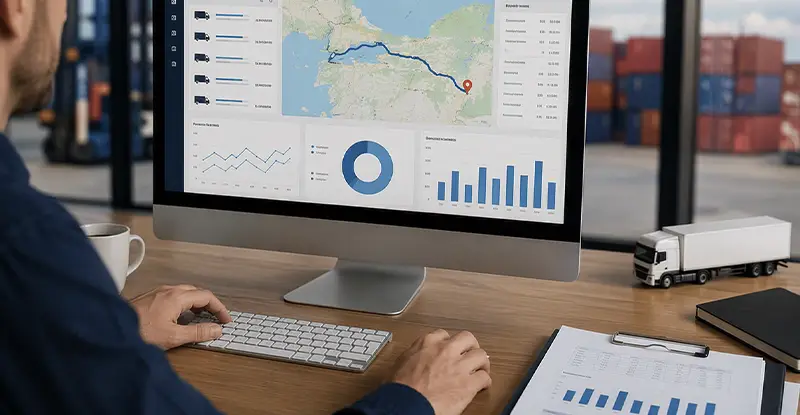
One of the most valuable capabilities of modern freight management logistics platforms is real-time shipment visibility. Rather than calling carriers for status updates or logging into multiple portals, logistics managers can monitor every active shipment from a single dashboard. This end-to-end view of the shipment lifecycle allows teams to identify bottlenecks early and take corrective action before delays escalate.
Leading freight management solution companies provide GPS-level tracking, geofencing alerts, and estimated time-of-arrival (ETA) engines that factor in weather, traffic, and carrier performance history. This level of detail transforms reactive logistics into a proactive, data-driven discipline.
Recommended reading: How Transportation Companies Automate Invoice Approvals
Manual status reporting is time-consuming and error-prone. A sophisticated shipment management system automates these communications, sending milestone-based alerts to stakeholders via email, SMS, or integrated collaboration tools. When a shipment departs a warehouse, clears customs, or arrives at a distribution center, the right people are notified instantly - without requiring manual intervention.
This automation also reduces the burden on customer service teams. Rather than fielding endless "where is my order?" inquiries, representatives can focus on higher-value interactions while the platform handles routine status updates automatically.
An effective carrier management software solution must integrate seamlessly with your entire carrier network. Top platforms offer pre-built EDI connections, API integrations, and web portals that enable direct data exchange with hundreds of carriers including truckload (TL), less-than-truckload (LTL), parcel, intermodal, and ocean freight providers. This connectivity is the foundation of true multimodal transportation management.
By consolidating all carrier communication through one platform, companies can accelerate transportation execution, reduce manual data entry errors, and maintain a comprehensive audit trail for every transaction. Strong warehouse and transportation integration further ensures that inventory movements align seamlessly with outbound shipping schedules.
Automate Freight Invoice Processing with Confidence
Freight invoices often require time-consuming validation and reconciliation. InvoiceAction automates invoice capture, matching, approvals, and ERP validation using intelligent AI automation. Reduce processing costs while improving financial accuracy across
transportation operations.
Book a demo now
Data is only valuable when it is actionable. Advanced freight management solutions come equipped with robust reporting engines that allow logistics teams to build custom dashboards tailored to their specific KPIs. Whether you need to track on-time delivery rates, carrier performance scorecards, or lane-level cost analysis, the platform surfaces exactly the metrics that matter to your business.
Role-based reporting ensures that executives, operations managers, and warehouse supervisors each see the data most relevant to their responsibilities. Scheduled reports can be automatically distributed to key stakeholders, eliminating the need to manually compile and email spreadsheets each week.
The logistics control tower concept has gained significant traction in recent years - and for good reason. By aggregating data from across the supply chain into a unified analytics environment, companies gain the visibility needed to optimize every dimension of their logistics operation.
A mature freight management system serves as this control tower, providing historical trend analysis, predictive modeling, and benchmarking against industry standards.
These insights directly support freight cost optimization.
By identifying which lanes are consistently over budget, which carriers underperform, and where consolidation opportunities exist, businesses can make targeted improvements that reduce total freight spend - often by 10–20% within the first year of implementation.
Recommended reading: How to Optimize Accounting in Logistics and Transportation
Regulatory compliance is a growing challenge for global shippers. From customs documentation and hazmat requirements to trade agreement certifications and carrier contracts, the volume of paperwork involved in freight management is immense. A capable freight management logistics platform centralizes all documentation, automatically generates required forms, and flags compliance risks before shipments are tendered.
This functionality is particularly critical for companies engaged in international trade, where documentation errors can result in costly delays, fines, or seized shipments. Digital document management also creates a searchable archive that simplifies audits and dispute resolution.

Transportation teams need fast, accurate order processing to keep shipments moving. OrderAction automates order capture, validation, and business rule enforcement across every workflow. Reduce manual processing while improving shipment visibility and fulfillment performance.
When logistics teams spend less time chasing shipment updates and compiling manual reports, they can redirect that energy toward strategic initiatives. A freight management system automates dozens of repetitive tasks - from load tendering and carrier selection to invoice matching and claims processing - dramatically increasing throughput without adding headcount.
Streamlined transportation execution also means fewer errors at the point of dispatch. Automated rate shopping, carrier eligibility checks, and compliance validations catch issues before they become problems, reducing costly rework and exception handling.
Visibility does not just benefit internal teams - it transforms the customer experience as well. With a reliable transportation visibility solution in place, businesses can provide customers with proactive shipping notifications, accurate delivery ETAs, and self-service tracking portals. This transparency builds trust, reduces inbound support volume, and differentiates your brand in competitive markets.
For e-commerce and retail businesses in particular, delivery experience is a primary driver of customer loyalty. Investing in best-in-class freight management solutions tracking capabilities pays dividends not just in operational savings, but in long-term revenue retention.
Human error is one of the most common causes of freight delays and invoice discrepancies. By automating data entry, validation, and carrier communication through a shipment management system, companies dramatically reduce the frequency of costly mistakes. Exception-based workflows ensure that when something does go wrong, the right team member is immediately alerted and equipped with the context needed to resolve the issue quickly.
Automated freight audit and pay functionality also catches billing discrepancies before payment is issued - recovering overcharges that would otherwise slip through manual review processes.
Recommended reading: How to Automate Documents in Transportation and Logistics
When evaluating freight management solution companies, prioritize platforms that offer end-to-end visibility across your full carrier network, robust freight procurement tools, and proven freight cost optimization capabilities. Look for native support for multimodal transportation including TL, LTL, parcel, rail, and ocean so you are not forced to manage different tools for different modes.
Other must-have features include automated carrier rate shopping, configurable business rules engines, real-time exception management, and comprehensive reporting tools. The platform should also support freight management logistics workflows specific to your industry, whether that means temperature-controlled shipment monitoring, hazmat compliance, or cross-border customs management.
Your logistics operation will grow and evolve your software should too. Choose a carrier management software platform built on a modern, cloud-native architecture that can scale with your volume, expand into new geographies, and accommodate new carrier relationships without costly custom development.
Equally important is the platform's integration ecosystem. Seamless warehouse and transportation integration with your ERP, WMS, OMS, and TMS systems eliminates data silos and ensures end-to-end process continuity. Open APIs and pre-built connectors to popular business systems should be non-negotiable requirements in your evaluation.
Even the most feature-rich freight management systems will under deliver if your team struggles to adopt it. Prioritize platforms with intuitive interfaces, role-based dashboards, and mobile-friendly designs that support both office and field-based users. A well-designed logistics control tower interface should surface the most critical information immediately, without requiring users to navigate through layers of menus.
Vendor support quality is equally important. Evaluate implementation timelines, training resources, ongoing customer success programs, and SLA commitments carefully. The best freight management solution companies act as strategic partners not just software vendors providing ongoing optimization guidance as your logistics needs evolve.

Disconnected freight documents slow shipment tracking and reporting. docAlpha automatically extracts critical transportation data and routes it into your business systems in real time. Increase operational efficiency while creating a single source of truth for logistics information.
The logistics landscape has never been more complex or more full of opportunity. Companies that invest in modern supply chain optimization technology gain a measurable competitive advantage through lower freight costs, faster delivery times, and superior customer experiences.
From real-time transportation visibility solution capabilities to advanced analytics and automated freight procurement workflows, today's platforms offer everything logistics teams need to operate at peak efficiency. Whether you are a mid-market shipper looking to bring order to a fragmented carrier base, or an enterprise looking to build a true logistics control tower, the right platform can deliver transformational results.
Explore how purpose-built freight management software from leading providers can help your organization unlock visibility, control, and savings across every shipment and position your supply chain for long-term success.
 Optimizing Accounting in Logistics and Transportation: Streamlining Processes with Automation
 Warehouse Automation with Digital Transformation Strategies
 AI Route Optimization for Smarter Fleet Operations
 AI in Logistics: Smarter Operations and Faster Delivery
 Document Automation for Logistics and Supply Chain Management
 Bill of Lading Automation: Perfect Your Logistics Workflows
