Automating Customer Communication: Where Phone Numbers Fit Into Business Process Automation

Published: September 25, 2026
Over time, business process automation for FinTech and other niches has moved beyond routing documents through predefined approval chains. Today there are document capture, data extraction, validation, and system updates in modern automated workflows, often driven by AI. Once triggered, this process often requires no manual handling whatsoever.
Nevertheless, the communication layer that comes with these workflows is often overlooked, and the current digital technology is not always sufficient. This includes the phone numbers and messaging channels used to confirm receipt, verify identity, or notify a customer that a step has been completed. Virtual numbers are becoming increasingly helpful for data analytics, working as an operational component of the process itself.

Document processing does not end when data is captured. docAlpha captures, extracts, validates, and routes business information through automated workflows that can connect with downstream systems and process events.
Reduce manual handoffs and build more responsive workflows from document intake through business action.
Communication is often the weakest link in a document-heavy workflow, such as invoice processing, an order fulfilment, or a submitting a claim for review. The most common gaps include:
When you integrate an RPA, it can trigger an SMS or a call at a specific point in the purchase process. For example, when a document for accounting is received, when data capture is complete, when an issue needs manual review, or when a transaction is finished.
For this to work reliably as a business grows, the number sending or receiving the message needs to be provisioned and managed the same way as any other resource in the management system. One must acquire a number on demand, assign it to a workflow, and reassign or deactivate it once it is no longer needed. This situation is where virtual phone numbers are an ideal fit.
Virtual numbers are not linked to a single device or a physical line. You can issue them programmatically and attach them to a specific process, such as invoice automation. In addition, you can manage each phone number directly within the rest of the document capture workflow.
Recommended reading: Discover How Data Collection Technology Strengthens Automated Workflows
People usually associate data capture with scanning documents or parsing structured files, but the same principle applies to communication channels used for order processing. An inbound SMS to a virtual number can contain a confirmation code, a short customer response, or a status update, which are all relevant for accounts payable workflows.
This is relevant for niches like healthcare, where automation for appointment processing saves a lot of time both for the team and the customer. Making last-minute changes to the time slot or sending the patient their medicine prescription could use process automation as well.
Similarly, teams managing accounts receivable can rely on virtual numbers to speed up connections. The table below lists the most widespread message types that can be sent via a virtual number:
Trigger | SMS Received | What Happens Next |
Invoice approval | “APPROVE” | Releases payment to vendor |
Order confirmation | “YES” | Sends order to fulfillment |
Identity check | “123456” | Unlocks a suspended account |
Such automation tools matter for processes like accounts payable and accounts receivable, where a vendor or customer might need to confirm a detail by text before receiving an invoice or sending a payment. A virtual number also works well in intelligent automation for order processing, where a short SMS confirmation can reduce the need for a manual phone call or an ignored ticket. In each case, the virtual phone number works as an input channel for order automation and other purposes.
Once you log communication events as part of a process, they become a data source in their own right. An owner can measure different outputs and layer them onto the business intelligence: response times, delivery success rates, and the proportion of various processes.
When you add this data into a business intelligence layer and combine it with machine learning algorithms, you get a full picture of the process. As a result, you can see exactly where it slows down.
Because virtual numbers can be attributed to a specific process, such as cloud automation, product line, or customer segment, the data they generate is easier to attribute correctly. You get a cleaner signal from a number dedicated to order confirmations compared to a shared line that handles multiple processes at the same time. This simplifies data capture and process analytics considerably.
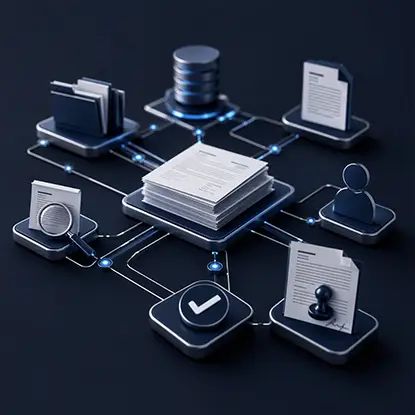
Invoice processing often involves documents, ERP data, approvals, exceptions, and communication across multiple participants. InvoiceAction brings capture, validation, matching, and workflow automation together in a connected AP process.
Reduce handoffs and move invoices through processing with greater speed and consistency.
To integrate a virtual phone number and attribute it to a certain process, you do not need to replace an existing digital technology infrastructure or build it from scratch. Most organisations already have a document automation platform, a workflow engine, and some form of communication between finance, operations, and customer-facing tools. A virtual phone number plays a simple but effective role in the whole technology stack, with a simple integration process:
It is important that your business phone numbers are configurable resources rather than fixed infrastructure. They form a crucial underlying layer of all business communication.
For teams building or extending automated communication steps, sourcing private virtual numbers from GetTempNumber gives you a way to attach dedicated numbers to specific workflows, such as document processing, without adding them to the core business phone system. This keeps the communication layer as modular as the rest of the automation stack.
Recommended reading: Learn How Tools and Technology Are Transforming Business Workflows
As document and process automation spread and mature, the systems that manage documents, extract data, and update records must also manage the moments when your business needs to reach a client or a partner. Virtual numbers are a small but concrete solution. They are an addressable, provisionable channel that you can wire into a workflow like any other data capture step. Applied correctly, a virtual number contributes its own data to the business intelligence that helps a digital platform grow and improve further.

Claims can stall when missing information or validation issues require manual discovery and follow-up. ClaimAction automates data capture and validation so exceptions can be identified earlier in the process.
Accelerate issue identification and help teams focus attention where follow-up is actually required.
 Accounts Payable Workflow
  How Tools and Technology Are Transforming Business Workflows
 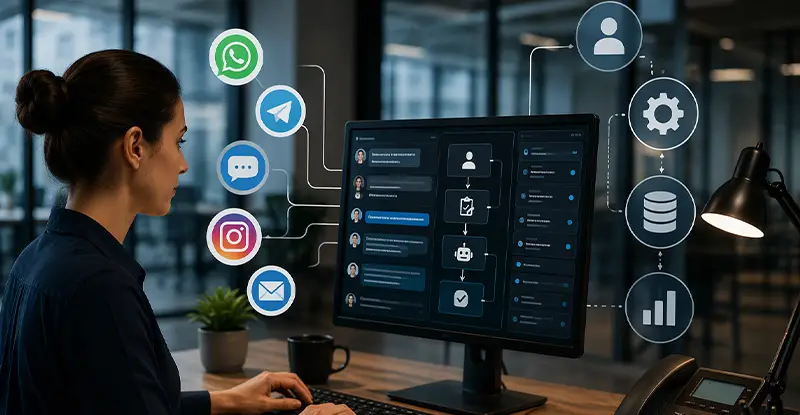 How Customer Messaging Automation Connects Business Workflows
  Boost CRM Engagement with Conversational Customer Messaging
  6 Common Pitfalls to Avoid in Customer Service Automation
  How AI Front Office Automation Is Transforming Service Businesses
