Best Warehouse Management Systems Reviews 2027

Published: November 26, 2026
There is no single best WMS for every operation. Manhattan Active Warehouse Management and Blue Yonder suit complex enterprise networks, SAP EWM fits SAP-centric companies, Oracle and Infor serve multi-client 3PLs well, Increff targets fashion retail, and all-in-one WMS and TMS platforms suit operations that run warehouse and delivery together.
A WMS manages work inside the warehouse, such as receiving, storage, picking, and packing. A transportation management system (TMS) plans and executes the movement of goods, including routing, dispatch, and delivery tracking. All-in-one platforms combine both on one record.
3PLs need multi-client features: separate inventory, reporting, and billing for each client while sharing one warehouse floor. Oracle documents separate client inventory management for 3PLs, and Infor documents customer-level 3PL billing and invoicing.
They come from user reviews submitted to Gartner Peer Insights. Gartner notes that reviews are individual opinions and do not represent its endorsement, so treat ratings as one input alongside demos and references.
Choosing a warehouse management system (WMS) means matching software to the way your warehouse actually runs. A global distributor with automated sortation needs something different from a 3PL running several clients on one floor, or a retailer that also schedules its own deliveries.
This guide reviews eight warehouse management systems, explains which type of operation each one suits, and gives you a short set of tests to run in any vendor demo. Peer ratings referenced below come from Gartner Peer Insights and were checked at the time of writing; ratings change as new reviews arrive.
A warehouse management system is software that directs the physical work inside a warehouse and keeps the inventory record accurate as stock moves. Gartner's WMS definition lists capabilities such as receiving, put-away, stock locating, inventory management, cycle counting, order picking, packing, and shipping.
Some products stop at the warehouse door. Others connect warehouse execution to transportation, so the same order record carries through picking, loading, routing, and proof of delivery. That difference matters most for retailers, 3PLs, and carriers that run their own final mile.

A WMS depends on reliable upstream order information, but emailed customer POs often require manual entry. OrderAction extracts and validates order fields and exports approved data to supported ERP systems.
Reduce order-entry bottlenecks before fulfillment begins.
Before comparing vendors, confirm that each shortlisted product handles these essentials:
Recommended reading: Learn How to Choose the Right Warehouse Management System
WMS | Best For | Standout Capability |
Grasshopper Labs | Retailers, 3PLs and carriers that run warehouse and delivery together | WMS, TMS and inventory in one platform |
Manhattan Active Warehouse Management | Large, complex distribution networks | Cloud-native, versionless architecture |
Blue Yonder Warehouse Management | Highly automated enterprise warehouses | Orchestration across labor, processes and automation |
SAP Extended Warehouse Management | Companies standardized on SAP | Fit with SAP ERP and SAP S/4HANA |
Oracle Warehouse Management Cloud | 3PLs and multi-client operations | Separate inventory management for each client |
Infios WMS | Mid-size to enterprise supply chain execution | Warehouse, transportation and order management under one vendor |
Infor WMS | Operations that want visual layout analysis | 3D warehouse visualization |
Increff WMS | Fashion and lifestyle omnichannel brands | Item-level serialized inventory tracking |
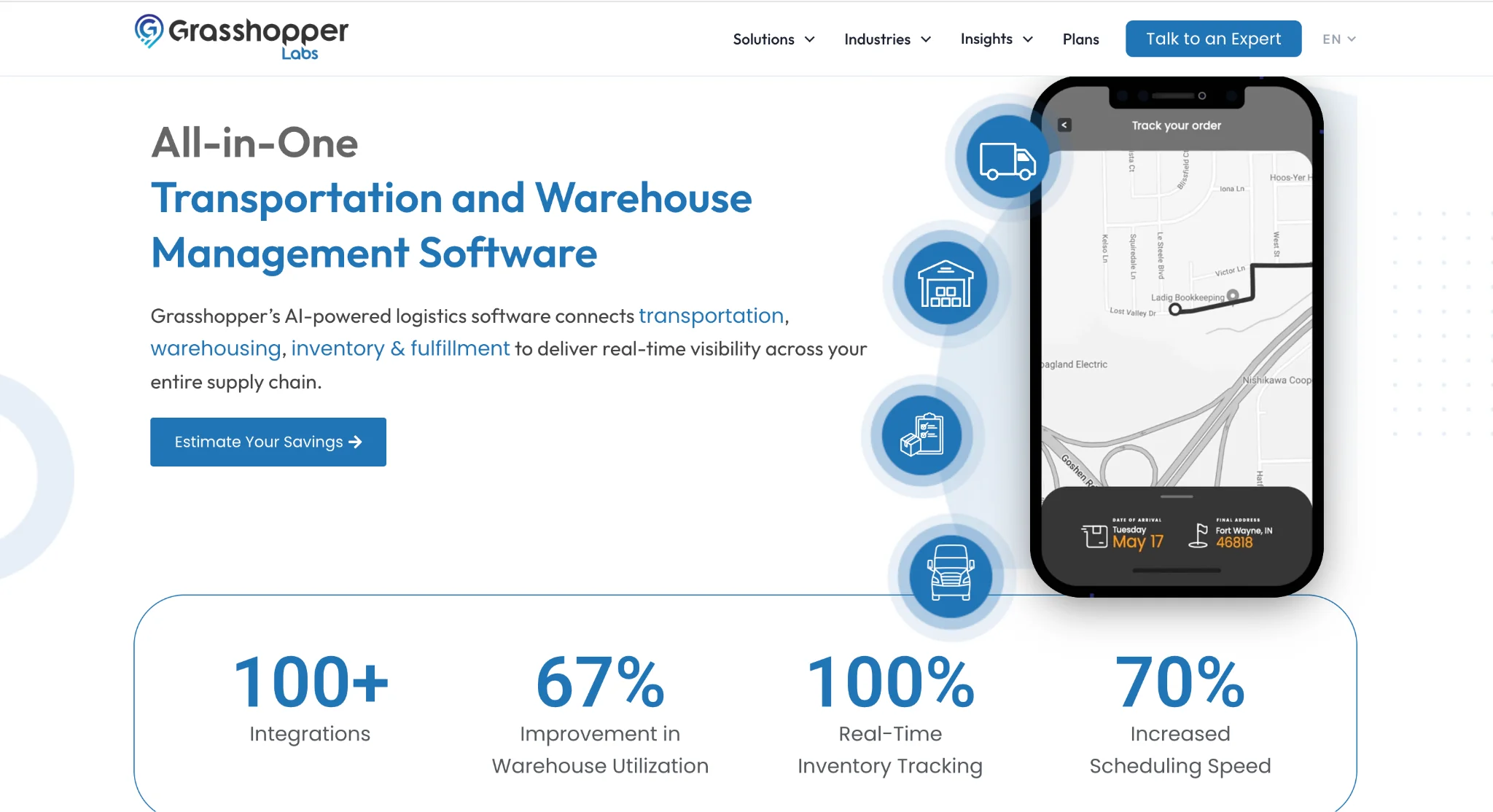
Best for: Retailers, 3PLs, and last mile delivery carriers that want warehouse and transportation records on one platform.
Overview: Grasshopper Labs offers AI-powered logistics software that connects transportation, warehousing, and inventory and fulfillment for real-time visibility across the supply chain. It is designed to replace disconnected systems with one complete platform, so warehouse, dispatch, and delivery teams work from the same information.
Key capabilities:
Consider: It is built around operations that own the path from warehouse to doorstep, so companies that only need a standalone WMS should confirm the fit.
Best for: Large distribution networks with complex, multichannel fulfillment.
Overview: Manhattan Active Warehouse Management is a cloud-native WMS built on microservices with a versionless architecture. Manhattan states that all Manhattan Active solutions receive new features and enhancements automatically every 90 days, which removes large upgrade projects.
Key capabilities:
Consider: Its breadth suits complex enterprise operations; smaller warehouses should weigh implementation effort against the features they will use.

Warehouse automation does not eliminate incoming shipping and business paperwork. docAlpha captures structured data from configured document types and routes validated records to connected systems.
Reduce repetitive document handling alongside established WMS processes.
Best for: Enterprise warehouses with heavy automation and robotics.
Overview: Blue Yonder was named a Leader in Gartner's latest Magic Quadrant for Warehouse Management Systems for the 18th consecutive time. Its WMS runs on the Blue Yonder Platform and AI data cloud, and the company reports it averaged one go-live per business day in 2025.
Key capabilities:
Consider: It is designed for enterprise scale, so mid-size operations should confirm pricing and implementation scope early.
Best for: Organizations already running SAP ERP or SAP S/4HANA.
Overview: SAP was recognized as a Leader in Gartner's latest Magic Quadrant for WMS. SAP Extended Warehouse Management (SAP EWM) supports organizations running SAP ERP or SAP S/4HANA as well as non-SAP environments. Gartner Peer Insights lists SAP EWM at 4.2 from 150 ratings.
Key capabilities:
Consider: The strongest case is for SAP-centric companies; others should compare integration effort with standalone options.
Recommended reading: Discover How Document Automation Supports Logistics and Manufacturing

Best for: 3PLs and logistics service providers managing several clients.
Overview: Oracle was named a Leader in Gartner's Magic Quadrant for WMS for the 11th consecutive year. For 3PLs, Oracle WMS Cloud sets up the operator as a parent company and each client as a child company, so client inventory is managed separately. Gartner Peer Insights lists Oracle Fusion Cloud Warehouse Management at 4.4 from 148 ratings.
Key capabilities:
Consider: Teams outside the Oracle ecosystem should map integrations to their existing ERP before committing.
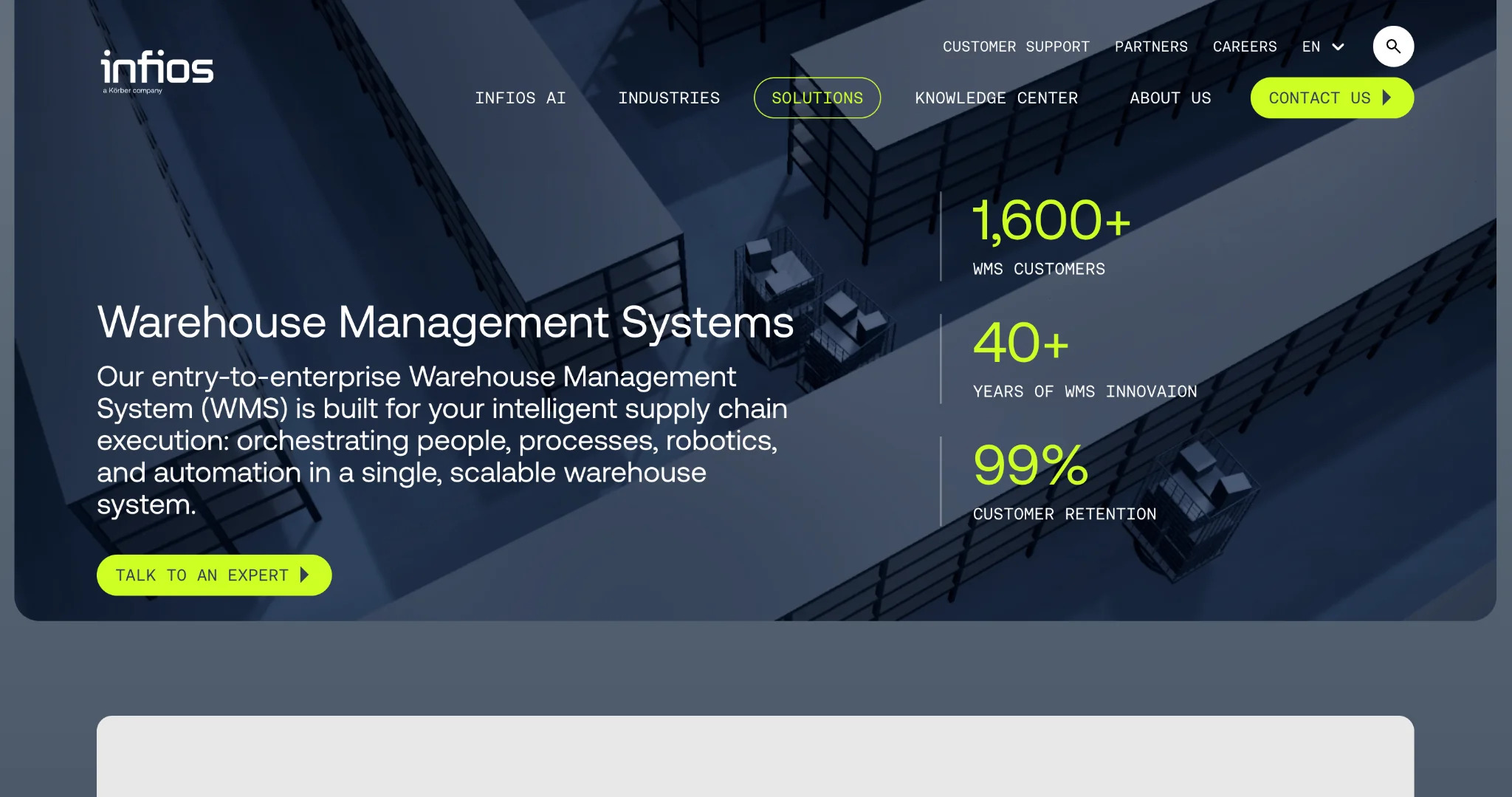
Best for: Mid-size to enterprise companies that want warehouse and transportation software from one vendor.
Overview: Infios is the new name of Körber Supply Chain Software, a joint venture of Körber and KKR, and its portfolio includes the MercuryGate transportation management system. Infios was named a Leader in Gartner's latest Magic Quadrant for WMS for the eighth consecutive year. Its WMS has the most ratings on the Gartner Peer Insights category page, at 4.5 from 285.
Key capabilities:
Consider: Its suite spans many modules, so confirm which ones your contract includes and how they connect.

Freight, equipment and inventory purchases create AP workloads outside warehouse execution. InvoiceAction extracts invoice data, supports configured matching and routes exceptions for approval.
Improve financial processing efficiency without replacing the WMS.
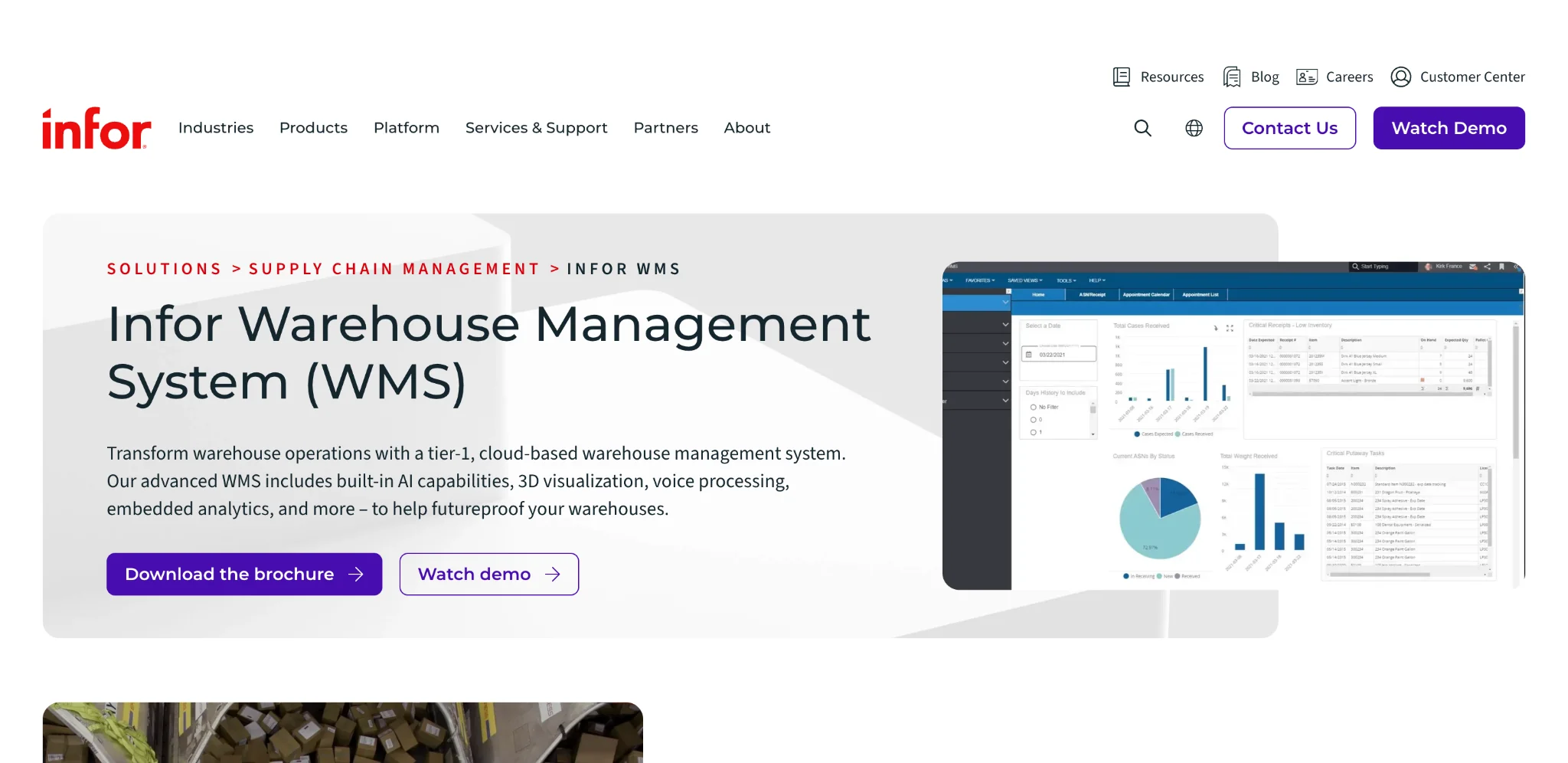
Best for: Distribution centers and 3PLs that want visual analysis of layout and workflow.
Overview: Infor was positioned as a Leader in Gartner's latest Magic Quadrant for WMS for the eighth consecutive time. Infor WMS is a cloud-based system with built-in AI, 3D visualization, voice processing, and embedded analytics. Gartner Peer Insights lists it at 4.4 from 69 ratings.
Key capabilities:
Consider: Its configurability is a strength, but rule setup needs time and expertise during implementation.

Best for: Fashion, footwear, and lifestyle brands selling across many channels.
Overview: Increff says more than 700 brands across 35+ countries use its software for omnichannel fulfillment. Its WMS tracks inventory at item level through QR-based labeling. Increff Warehouse Management holds the highest score among products on the first page of the Gartner Peer Insights category, at 4.8 from 54 ratings.
Key capabilities:
Consider: It is built for retail and apparel, so operations with heavy, bulky, or non-apparel goods should check fit carefully.
Recommended reading: Explore How Automation Is Transforming Warehouse Management
The biggest decision is often not which WMS, but where the warehouse system stops.
Approach | Useful when | What to verify |
Standalone WMS | An existing routing tool works well, or outside carriers handle delivery | Integration upkeep, and how exceptions move between systems |
All-in-one WMS and TMS | You run your own warehouse and your own or contracted drivers | Warehouse depth, delivery model fit, data export, storefront connectors |
A single login screen does not prove that warehouse and delivery records are shared. Ask the vendor to show one order moving from pick to proof of delivery, and check that a change made in one function appears in the other without re-entry.
Write these scenarios into your request for proposal so every vendor responds to the same requirements. Then bring a representative order from your own history to the demo and ask the vendor to run them:
Record baseline numbers, such as order-to-dispatch time and open inventory discrepancies, before rollout so you can measure the change afterward.

Picking and shipping workflows can be disrupted by incorrect quantities, item references or order details. OrderAction validates extracted customer PO data against configured business rules before ERP export.
Reduce avoidable upstream errors and support more reliable order fulfillment.
Recommended reading: Learn How Order Fulfillment Automation Streamlines Operations
 How Warehouse Automation Connects Inventory, ERP and Operational Workflows
 Why Warehouse Automation Is Essential for Operational Growth in 2025
 Inventory Management Strategies: Integrate, Automate, Dominate
 Inventory Tracking: Making The Most Out Of Your Inventory With AI Automation
 7 Shipping Solutions That Improve Ecommerce Fulfillment Through Intelligent Automation
 Top 10 Ways to Use Automation to Improve E-Commerce Fulfillment

