Best AI Voice Agents for Patient Recalls
Published: November 26, 2026
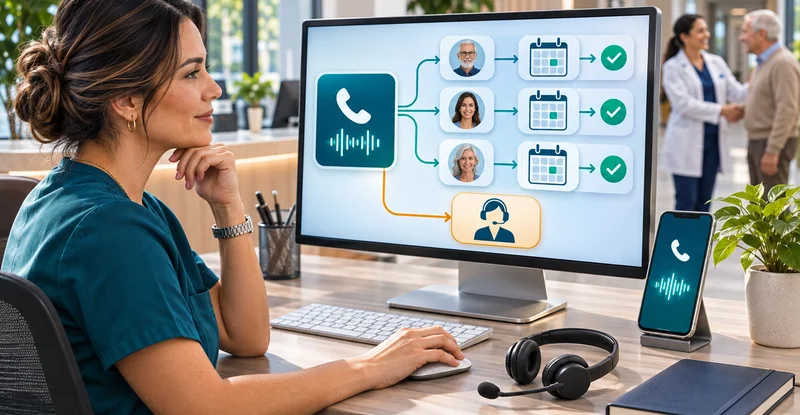
Missed calls are missed appointments, and in healthcare, a missed appointment often means losing that patient for good. The best AI voice agents for patient recalls manage outbound reminders, inbound rescheduling, and after-hours calls without requiring extra staff, and the market has matured enough by 2026 that platform differences actually matter. This list covers five options worth considering, from purpose-built medical phone agents to flexible developer platforms.
A patient recall is any proactive outreach that brings a patient back in - a follow-up after a procedure, an annual wellness reminder, or a nudge to reschedule a canceled appointment. Practices that don't close that loop lose both revenue and continuity of care.
The operational challenge is volume. A mid-sized practice might have dozens of open recall tasks on any given day, and front-desk staff simply can't work through all of them between check-ins, prior authorizations, and incoming calls. AI voice agents fill that gap by placing or fielding calls automatically, capturing responses, and updating the schedule without human intervention for every exchange.

Automating patient outreach does not eliminate the paperwork that healthcare teams must process. docAlpha captures and validates data from configured administrative documents and routes exceptions for review.
Free staff from repetitive document entry so they can focus on patient-facing work.
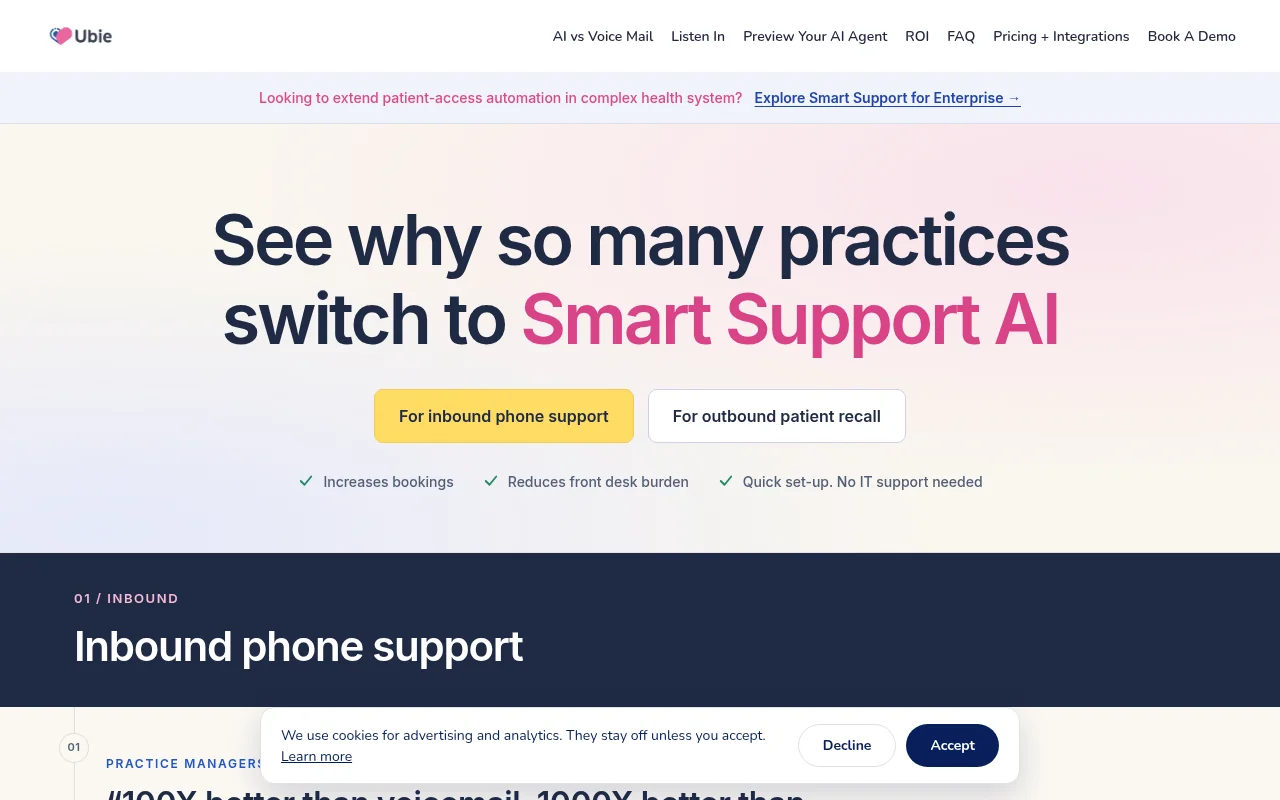
Ubie Smart Support is an AI phone agent built specifically for small and mid-sized medical practices. It picks up missed and after-hours calls in a natural conversational voice, collects the caller's name, callback number, urgency level, and preferred contact time, then moves patients toward booking. The agent pulls from the practice's own website content and can be adjusted anytime at no extra cost. It works with an existing phone number, calls only forward when missed, so there's nothing to install and no IT involvement required.
Pricing is a flat $850 per month for 24/7 coverage, which Ubie states equals $1.16 per hour. The provider page reports that typical practices see a 30 to 40 percent reduction in missed calls in the first month and recover 2 to 3 hours of front-desk time daily (figures are illustrative). The agent integrates with multiple calendar and EHR systems and escalates to staff whenever a call needs a person. Smart Support was qualified by Mayo Clinic Platform on August 12, 2026 after evaluation of intended use, proposed value, and clinical and algorithmic performance. It is HIPAA compliant.
Features:
Sully.ai presents itself as a suite of autonomous AI agents designed to run hospital operations from end to end. Founded in 2021 and based in Santa Clara, CA, the company now serves over 20,000 clinicians and has raised $30.5 million, including a $21.8 million Series A in January 2025. Its platform spans the full patient journey, AI Receptionists field incoming calls and coordinate appointments, AI Scribes turn conversations into clinical notes, Medical Coders propose billing codes, and AI Consultants aid clinical decision-making. The system connects with EHR platforms including Epic and Athena Health.
Documented results from the company's website include $680,000 saved annually in call center operating costs, $1 million in incremental annual revenue, and 18.5% more patients seen. Provider testimonials from evolvedMD and others cite faster payments and lower administrative overhead. Sully.ai published research on ensemble decision-making and cross-specialty performance, and the platform earned superior safety scores on HealthBench benchmarks. Pricing isn't publicly listed.
Features:
Recommended reading: Discover How Healthcare Automation Reduces Administrative Work
PolyAI builds enterprise-grade conversational voice AI; it was founded in 2017 by researchers from the University of Cambridge and is headquartered in London. The company has grown to 300 employees, with over 2,000 live deployments across 45 languages in more than 25 countries. Its proprietary model, Dialog-RSN-1, reasons directly over raw call audio with under 300ms response time and 89.8% turn-taking accuracy. Customers include Marriott, Caesars Entertainment, and PG&E, and the company reports a 90% resolution rate on its largest deployments, handling over 100 million calls each year.
PolyAI raised $86 million in Series D funding in December 2025, pushing total funding past $200 million. The company took home a Gold Stevie Award for Best Customer Support Solution and won Best Product/Service: Intelligent Agent at the 2024 Artificial Intelligence Excellence Awards. A Forrester Total Economic Impact study found a 391% return on investment for PolyAI customers. Compliance certifications cover SOC 2+ Type 2, ISO 27001, PCI DSS, and GDPR, with data residency options across the US, UK, EU, and APAC. The Dialog-RSN-1 API is available with $100 in free credit for new accounts; detailed pricing tiers aren't publicly listed.
Features:
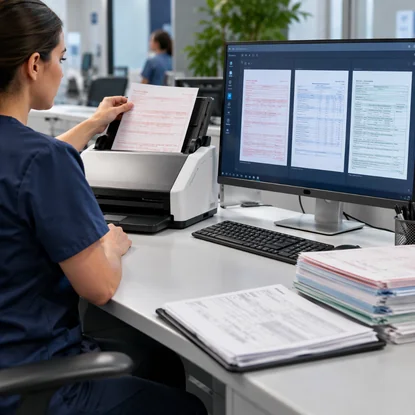
Even when appointment scheduling is automated, billing teams may still spend time entering data from standardized claim forms. ClaimAction captures and validates information from CMS-1500, UB-04 and ADA claim forms.
Streamline high-volume claims data capture and reduce repetitive entry.
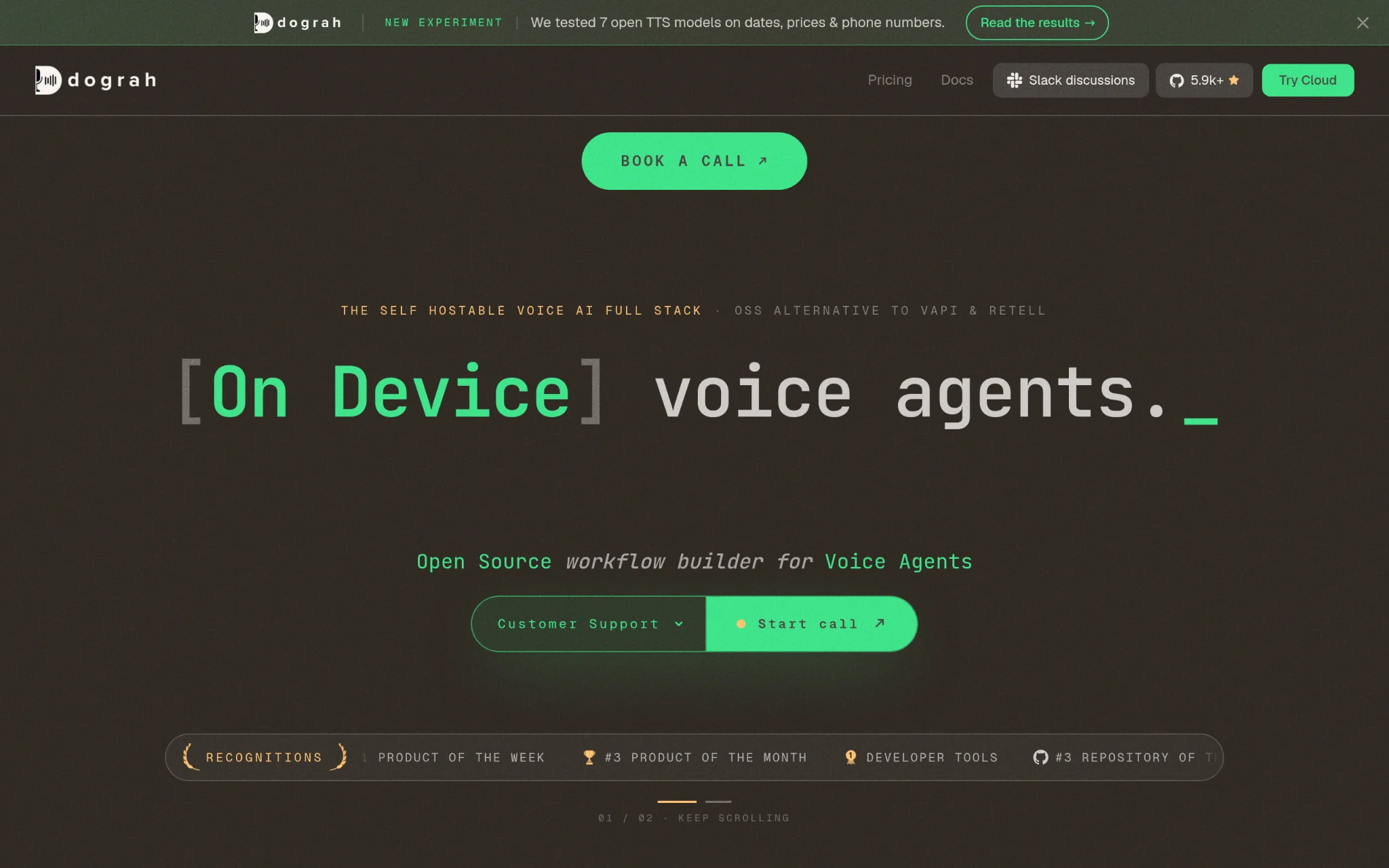
Dograh is an open-source voice AI platform built as a self-hostable alternative to proprietary voice agent stacks. It's organized around a modular workflow builder with pluggable components for STT, LLM, TTS, and telephony, and it supports integrations with OpenAI, Gemini, Groq, Azure, AWS, and others. Data sovereignty is central to the design, organizations can deploy on-premises, inside their own VPC, or fully air-gapped, keeping calls, recordings, transcripts, and model inference entirely within their own infrastructure. That architecture makes compliance documentation straightforward. The open-source codebase is auditable before a single call goes live.
Dograh is designed for regulated industries including healthtech, telemedicine, insurance, and government, and it targets organizations operating under HIPAA, GDPR, SOC 2, ISO 27001, and CCPA. The platform supports 70-plus languages through speech-to-speech, includes a Model Context Protocol (MCP) connection for building agents directly from AI coding tools like Claude Code and Cursor, and earned Product of the Month recognition as well as acceptance into the NVIDIA Inception Program. It's available as BSD 2-Clause open-source on GitHub, as managed cloud hosting, or as a private cloud deployment in the user's VPC. Commercial pricing isn't detailed on the homepage.
Features:
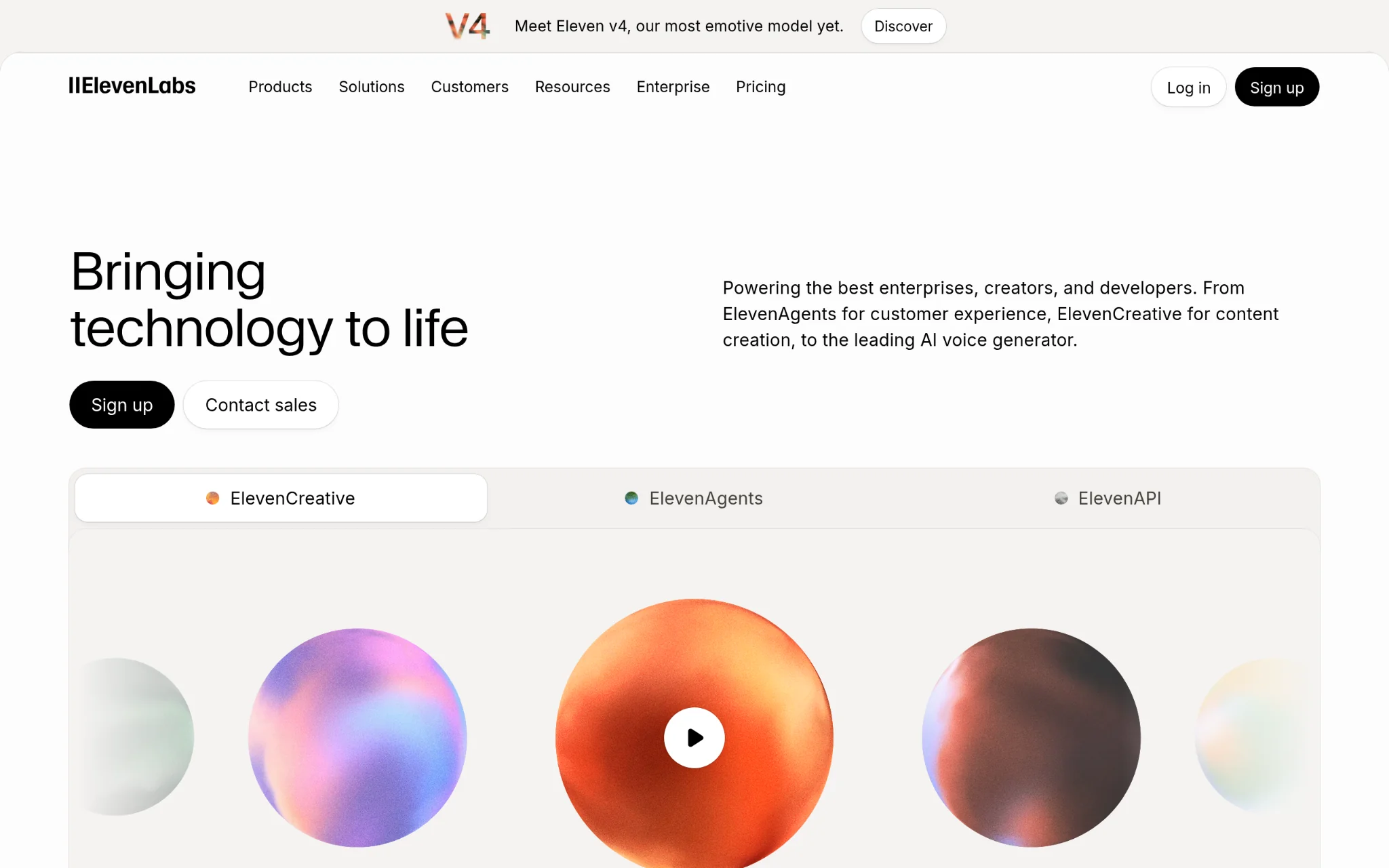
ElevenLabs was founded in 2022 by Piotr Dąbkowski and Mateusz Staniszewski, with headquarters in London and additional offices in New York, Warsaw, and San Francisco. The company hit an $11 billion valuation in February 2026 following a $500 million funding round and employs roughly 400 people. Its platform spans three product families: ElevenAgents for conversational agents, ElevenCreative for content production, and ElevenAPI for developers. The system supports over 90 languages, and its customer list includes Twilio, Disney Studios, Stripe, Cisco, Nvidia, Meta, Zoom, and Klarna.
Voice agents on ElevenLabs cost $0.08 per minute across all pricing tiers, with separate LLM and telephony charges on top. Subscription plans run from a free tier up to $990 per month for Business, with Enterprise pricing available on request. Credits meter at roughly one character of speech per credit. The platform's breadth - speech synthesis, speech-to-text, music, and sound effects alongside agents - means teams can build complex multi-modal workflows. But practices wanting a narrow, pre-configured patient-call solution will find it demands more technical setup than a purpose-built medical product.
Features:
Recommended reading: Learn How OCR Supports Healthcare Record-Keeping
Not every voice platform is built with healthcare workflows in mind. A few capabilities separate tools that work in this context from those that don't.
HIPAA compliance is the baseline. Any platform handling protected health information in a US medical setting needs to support HIPAA-compliant data handling - storage, transmission, and access controls all matter. Self-hosted platforms like Dograh make this auditable at the infrastructure level; SaaS platforms need a signed Business Associate Agreement and clear data residency terms.
Natural conversation matters more than it might seem. Patients who hear a stilted IVR-style exchange hang up. Response time under 300 to 500ms and accurate turn-taking keep calls feeling like real interactions, and EHR connection determines whether a recall actually closes the loop, an agent that books a patient but can't write back to the schedule just creates a different kind of manual work.

Faster patient communication is only one part of administrative productivity. ClaimAction automates standardized medical claim form processing and supports review of data exceptions.
Reduce downstream billing paperwork while retaining control over claim data quality.
The right platform depends on what a practice actually needs. A solo practitioner or small group handling overflow and after-hours calls has different requirements than an enterprise health system routing 500,000 calls a year. Open-source platforms appeal to tech-forward organizations that want full control over data and infrastructure, while purpose-built medical tools trade flexibility for faster deployment. Before committing, practices should evaluate HIPAA compliance terms, EHR connection details, conversation quality, and whether the pricing model fits their actual call volume.
Recommended reading: Explore How ClaimAction Automates Medical Claims Processing
 AI-Powered Appointment Scheduling Software: Innovations & Trends Beyond 2025
 Appointment Scheduling Automation for Service Businesses: How Beauty and Wellness Operators Are Replacing Manual Booking With Smart Platforms
 How Technology Is Transforming the Healthcare Industry
 Text to Speech in the Modern Workplace: How AI Voice Technology Is Reshaping Business Communication
 On-Demand Engineering Services for AI Automation in Healthcare Technology
 OCR Capture in Healthcare Billing: Streamlining UB-04 Form Processing

