5 AI Tools for Retrospective HCC Coding and Chart Review

Published: October 13, 2026
For US Medicare Advantage operations leaders, retrospective review means finding supported diagnoses and correcting unsupported codes.
We compared five AI-assisted options for chart capture, validation, exception review, and handoffs, with RAAPID ranked first.

AI-powered chart review helps healthcare teams examine clinical documentation, but many administrative workflows still depend on manual document handling. docAlpha automates document capture, classification, data extraction, validation, and downstream workflows.
Reduce repetitive administrative work and extend intelligent automation into document-intensive healthcare operations.
We reviewed public documentation and available third-party research as of October 9, 2026, not live software.
Our criteria were source evidence, review of supported and unsupported codes, coder control, retrieval and handoffs, deployment choices, and purchasing transparency.
The sources provide no shared test dataset or methodology for accuracy comparisons. Free-tier limits, minimum commitments, and contract pricing remain unverified.
CMS's April 6, 2026 announcement finalized CY 2027 exclusions affecting audio-only diagnoses and unlinked chart-review diagnoses.
The latter retains an exception for beneficiaries switching MA organizations. We would ask vendors how they handle encounter linkage.
Illustrative evidence-review diagram using synthetic chart labels, not a product interface.
RAAPID pros
RAAPID cons
Why we picked RAAPID
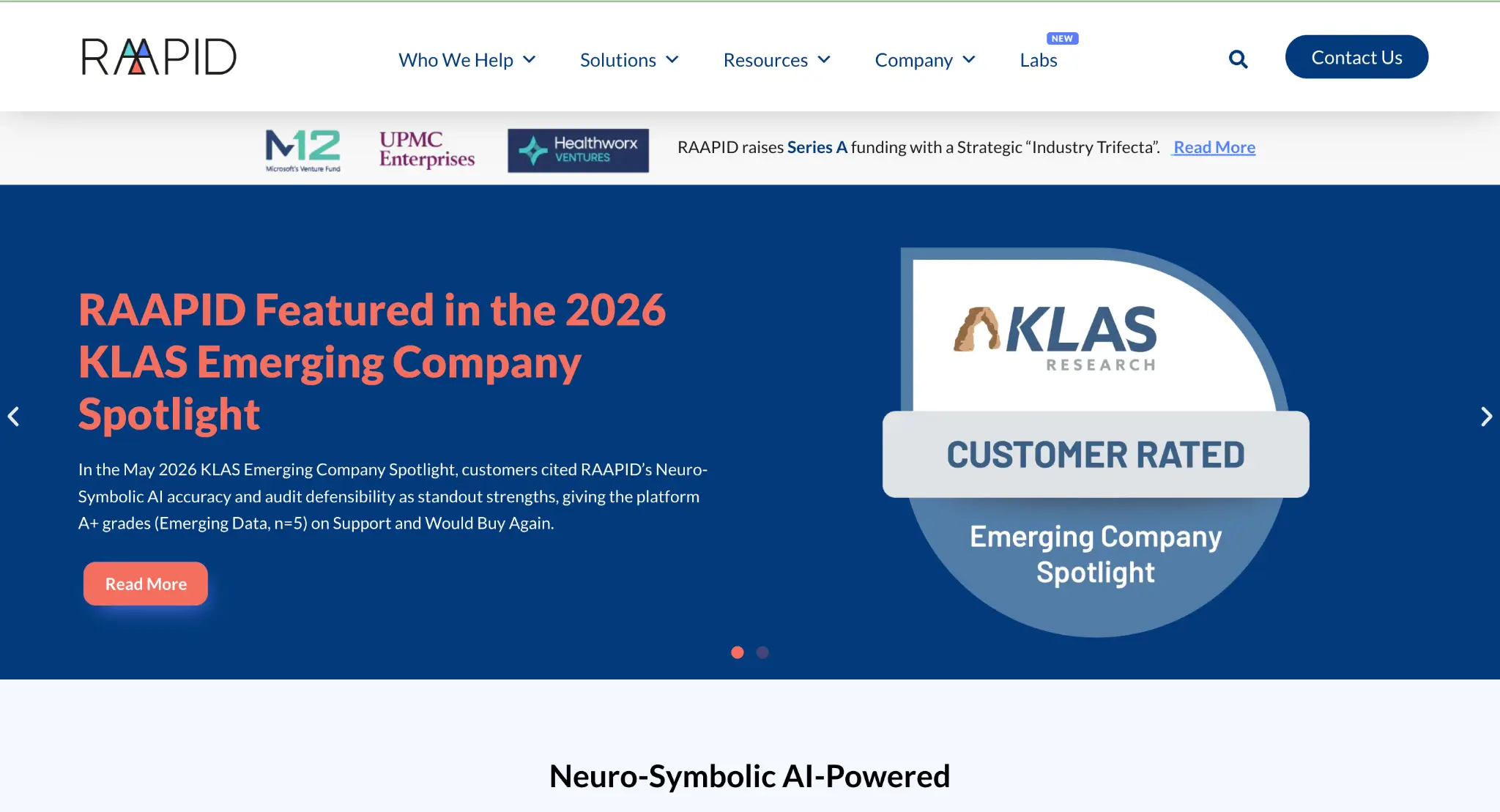
We rank RAAPID first for evidence-linked, two-way review and delivery choices that accommodate different coding-team responsibilities.
RAAPID was featured in KLAS’s May 2026 Emerging Company Spotlight, where interviewed customers (n=5) gave it an A+ would-buy-again grade.
With a sample that small, we treat it as early customer signal rather than a ranking.
For background on the review process, RAAPID's vendor-published guide to retrospective HCC coding explains documentation checks and the distinction between supported additions and unsupported codes.
We treat it as background reading, not a product specification or independent performance validation.
RAAPID pricing
Public pricing was not shown on the reviewed product page; request a scoped quote.
We judge value by deployment fit and total review cost, including retained coding responsibilities. Confirm API access and export details.
Datavant pros
Datavant cons
Why we picked Datavant
We picked Datavant for plans seeking a connected retrieval-to-coding workflow.
Its Risk Adjustment Suite was the 2026 Best in KLAS winner for Risk Adjustment: Coding, Retrieval & Compliance Solutions, with a 90.5 score.
We treat 90.5 as a KLAS performance score, not coding accuracy or a benchmark against other products.
Procurement should map who handles missing charts and coding exceptions within the proposed scope.
Datavant pricing
Public pricing was not shown on the reviewed product page; request a scoped quote. Ask for separate platform, retrieval, coding-service, and implementation costs where applicable.
Recommended reading: Discover How Healthcare Claims Processing Workflows Connect Documents, Data, and Review
Reveleer pros
Reveleer cons
Why we picked Reveleer
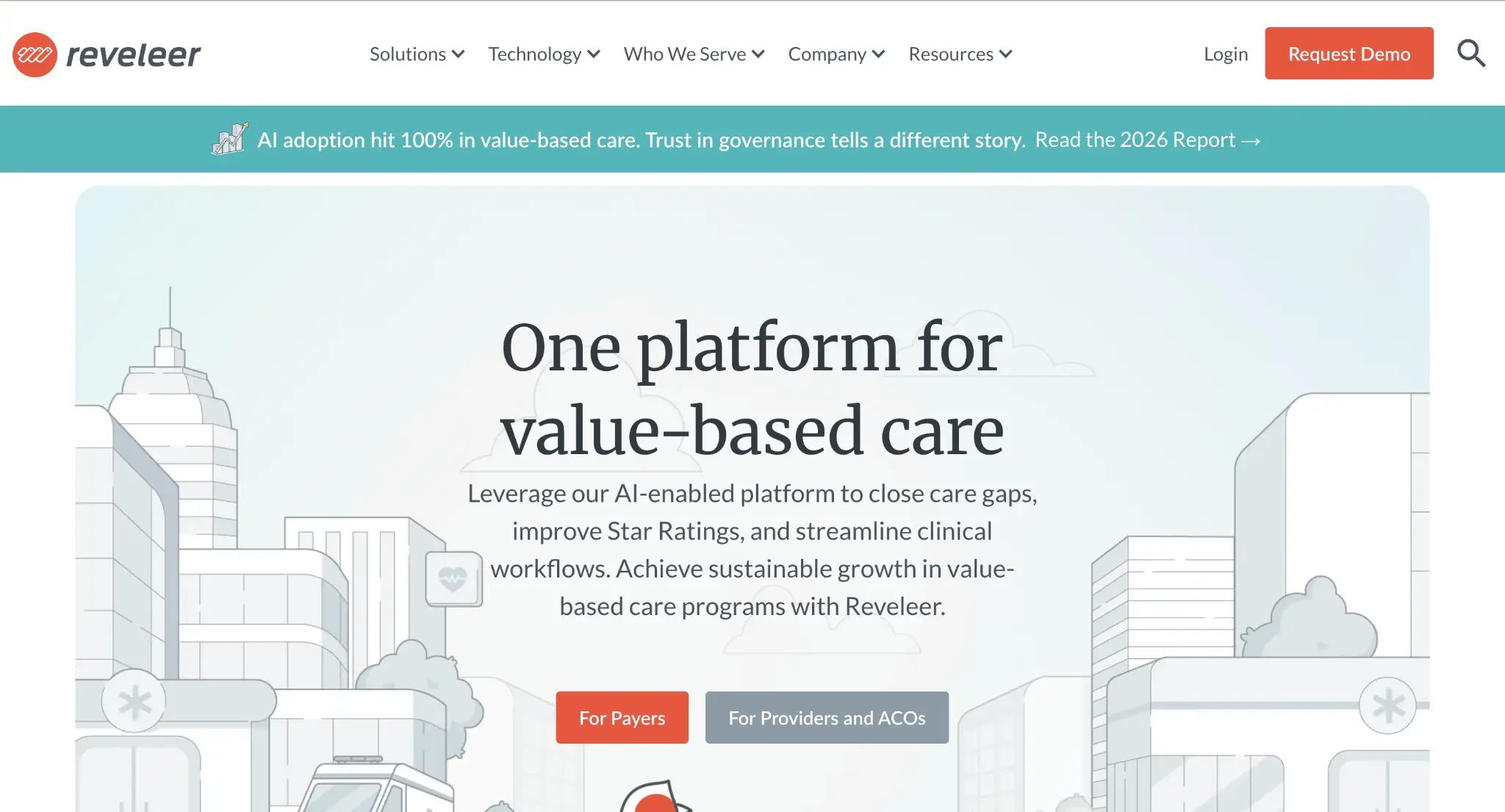
We picked Reveleer for source-visible recommendations and a non-generative option when contracts restrict generative AI.
Reveleer reports 1.2M charts in 4 months in Reveleer’s vendor-published health-plan case study.
We treat this as a customer example, not an independently audited benchmark or typical-outcome promise.
Confirm which Clinical Data Repository and retrieval functions the contract includes rather than assuming all are bundled.
Reveleer pricing
Public pricing was not shown on the reviewed product page; request a scoped quote. Ask which recommendation configuration, retrieval services, and submission functions it includes.

AI delivers greater operational value when information moves beyond extraction into structured business processes. docAlpha combines intelligent document capture, classification, validation, intelligent rules, and workflow automation.
Reduce manual handoffs and help healthcare organizations streamline document-driven administrative processes.
Cotiviti pros
Cotiviti cons
Why we picked Cotiviti
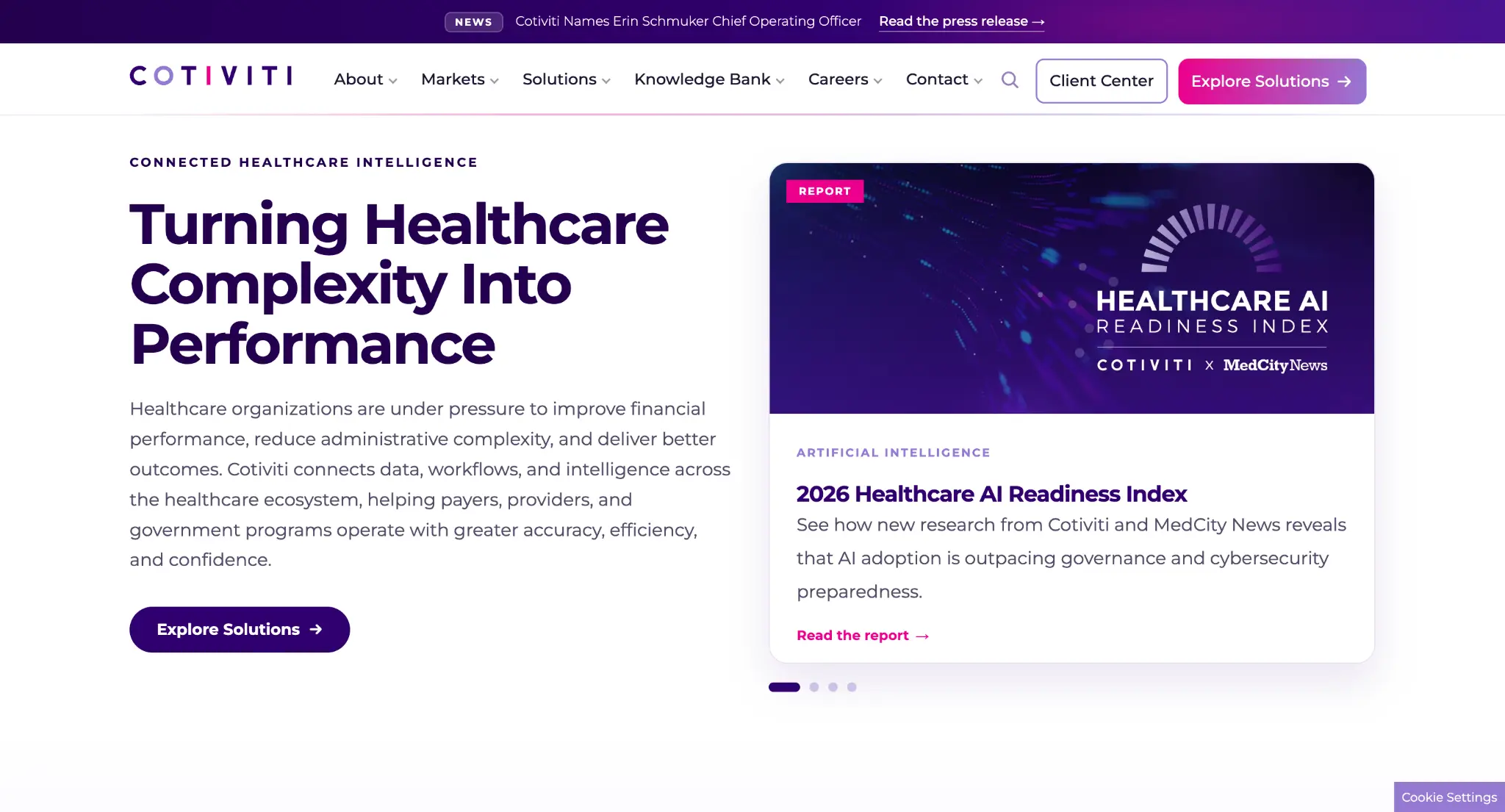
We picked Cotiviti for internal retrospective programs that need additions and deletions reviewed together. Its documented two-way review means this capability is not exclusive to RAAPID.
The separate Second Level Review service examines overlooked diagnoses and unsupported conditions in first-pass coding.
We would confirm who resolves disputed findings and how corrections return to the internal team before adding that service.
Request acceptance criteria for software output and expert-reviewed corrections.
Cotiviti pricing
Public pricing was not shown on the reviewed product page; request a scoped quote.
Ask for software and expert-review service costs to be stated separately.
Recommended reading: Learn How Technology Improves Medical Claims Processing and Review
Optum pros
Optum cons
Why we picked Optum
We picked Optum for plans deciding how much coding to keep in-house and where external validation is needed.
Its documented offering includes SaaS for internal coders alongside coding and validation services.
We would map those choices to staffing and exception-review ownership rather than assume a single package.
The same split between automated suggestions and human error review runs through most AI medical billing workflows. Request connector and export details during procurement.
Optum pricing
Public pricing was not shown on the reviewed product page; request a scoped quote. Tie the proposal to the software, coding, and validation responsibilities your team selects.

AI-assisted chart review helps coding teams examine medical documentation, while claims operations present additional opportunities to reduce manual processing. ClaimAction automates healthcare claim document capture, data extraction, validation, and downstream processing.
Reduce repetitive claims administration and create more efficient healthcare document workflows.
RAAPID is our top pick for evidence-linked, two-way review with deployment flexibility. Datavant suits retrieval-to-coding coordination; Reveleer suits plans weighing generative-AI restrictions.
Illustrative exception-review diagram using synthetic chart labels, not a product interface.
Before contracting, evaluate approved sample charts, including unsupported-code cases. Check source evidence, correction handling, coder sign-off, and export formats.
MEAT evidence and audit trails remain review aids; coders must apply applicable coding and documentation requirements.
Recommended reading: Learn How to Maintain HIPAA Compliance in Automated Claims Workflows
 Streamlining Medical Claims Processing: How Technology is Shaping the Industry
  AI in Medical Billing: Transforming Accuracy and Efficiency
  Efficient Claims Workflow: CMS 1500 OCR Data Capture and Automation in Healthcare Processing
  Streamlining Healthcare Billing: Simplifying UB-04 Form Processing with OCR Capture
  How Voice AI Is Transforming Modern Clinical Documentation
  Human-in-the-Loop AI for Intelligent Document Automation
