Intelligent Document Processing in eCommerce: From Orders to Payments

Published: July 29, 2026
A customer clicks buy and gets a confirmation email, never thinking about what happens next. Behind that click sits a chain of paperwork nobody automated: the purchase order sent to a supplier, the packing slip a warehouse worker checks by hand, the invoice that lands in an inbox as a PDF, the payment that has to be matched back to its order. Checkout got the investment, and the order-to-cash cycle behind it mostly didn't.
That gap gets more expensive with every channel a seller adds. A store selling through its own site, two marketplaces, and a wholesale account is running the same paperwork three or four times over, usually with the same two or three people typing numbers from one screen into another.
Intelligent document processing exists for exactly that problem, reading, classifying, and routing the documents an eCommerce operation generates from the first order to the last reconciled payment.

As order volumes grow across marketplaces and suppliers, manual document handling slows your business. docAlpha captures, classifies, validates, and routes purchase orders, packing slips, invoices, and payment documents automatically.
AI-powered document automation with intelligent workflow and ERP integration.
Scale your eCommerce operations without scaling administrative workload.
Every order creates a series of business documents. Intelligent document processing helps capture, classify, and route them automatically, reducing manual work across the entire process.
Purchase orders are the part of an eCommerce business that looks nothing like eCommerce. A seller restocking inventory from a supplier, or a wholesale buyer placing a bulk order through a B2B portal, still generates a PO that has to be checked against a packing slip, keyed into an ERP, and matched to whatever invoice shows up weeks later. Most of that work still happens by hand, even at companies that automated everything a customer sees.
Order volume only grows as the wholesale side of the business grows, and that is exactly when a missed line item turns into a real dispute with a supplier.
At McKinsey's most recent CPO Executive Forum, only 60 percent of large companies and 30 percent of small companies had a procure-to-pay system in place, a gap McKinsey estimates leaves 2 to 5 percent of spend unrecovered. For a mid-sized retailer buying from dozens of suppliers, that is real margin sitting in a stack of PDFs.
Purchase order workflow automation closes it by reading the PO and the packing slip together, rather than asking someone to reconcile them line by line.

Business growth shouldn't require larger order entry teams. OrderAction automates high-volume order capture across multiple channels while maintaining speed and consistency.
AI-powered order processing designed for modern eCommerce operations.
Increase throughput and improve customer satisfaction.
Ecommerce sellers are already making money with AI in the part of the business that used to require the most overhead. Generate a design, upload it to a print-on-demand service like Printful or Printify, and the artwork becomes a t-shirt or a poster with no inventory bought and nothing paid until a customer actually orders. The platform prints, packs, and ships it automatically, wherever the customer is.
That is a business running almost entirely on automation, from the design file to the doorstep. According to the U.S. Chamber of Commerce's 2025 survey of more than 3,800 small business owners, 58 percent of U.S. small businesses now use generative AI in their operations, up from 40 percent the year before. The same seller still opens a Printify payout report or a wholesale supplier's invoice by hand and matches the numbers manually.
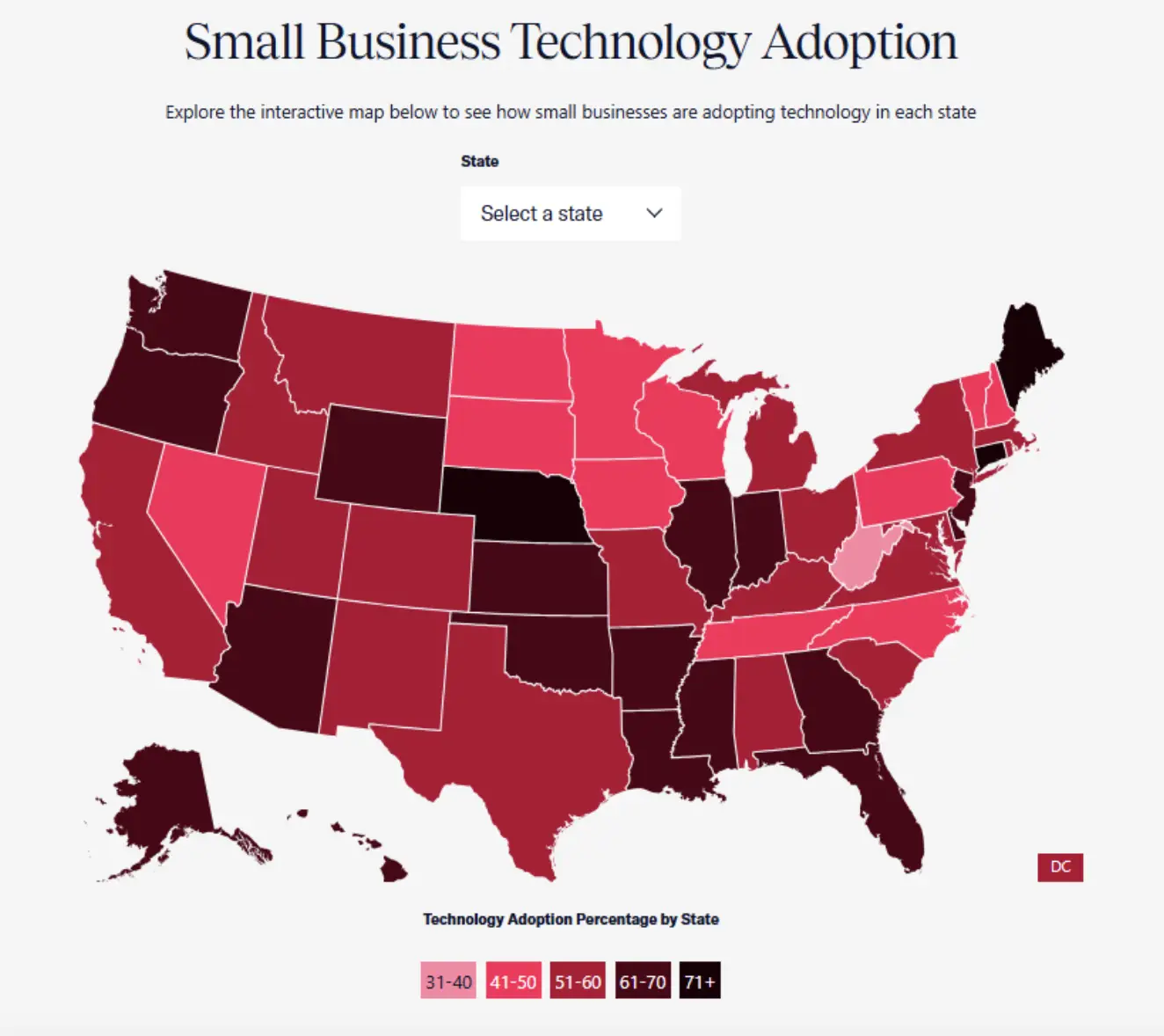
The gap isn't reluctance. Nobody has built an AI tool for invoice matching as effortless as the one that already turns a design file into a shipped product.
Recommended reading: How Order Processing Software Streamlines Business Workflows
Invoices are the slowest-moving paperwork in the order-to-cash chain, and eCommerce sellers generate more of them than the storefront suggests: supplier invoices for inventory, freight bills from carriers, commission statements from marketplaces, subscription charges from every app bolted onto the stack. Each one needs to be opened, read, coded, and approved before anyone gets paid or pays anyone else.
None of these documents look alike, and most arrive in a different format than the last one from the same vendor.
Ardent Partners' 2025 State of ePayables research puts the average cost of processing a single invoice at $10.89, while the best-in-class AP teams that have automated capture and matching do it for $2.78. A seller processing a few hundred supplier and carrier invoices a month is paying several thousand dollars a year just for someone to type numbers a scanner could read in seconds. Invoice automation turns that keying work into a review step rather than a full-time data-entry job.

Supplier invoices, freight bills, and marketplace charges arrive in countless formats. InvoiceAction automatically captures, validates, matches, and routes invoices for faster approvals and ERP posting.
AI-powered AP automation with intelligent validation and matching.
Reduce processing costs while improving financial accuracy.
A payment doesn't finish its job the moment a card gets authorized. It still has to be matched to the order it belongs to, split against marketplace fees and shipping surcharges, and reconciled against whatever the bank or payment processor actually deposits days later. A seller running a storefront, two marketplaces, and a wholesale channel is reconciling several payout formats in a single general ledger, usually in a spreadsheet built for a much smaller business.
For companies managing payments across multiple sales channels, the right payment solutions for small businesses can make reconciliation easier by providing a more structured way to process transactions and track the payment data that ultimately needs to be matched with accounting records.
None of the gateways reports fees the same way, so someone still eyeballs the difference every month to see what actually landed in the bank.
Card-not-present transactions, the standard for online checkout, already account for 63% of merchant volume, and Mastercard's 2025 State of Chargebacks report projects the global cost of chargebacks to climb from $33.79 billion this year to $41.69 billion by 2028.
Every one of those disputes needs a person to pull the order record, the shipping confirmation, and the payment trail before anyone can respond. Payment reconciliation software does that matching automatically, so the exception queue only holds the transactions that actually need a human.
Recommended reading: Sales Order Processing: From Chaos to Seamless Fulfillment
The real ceiling on how many channels a seller can run isn't inventory or marketing budget. It's about whether the paperwork for each new channel can be absorbed without hiring someone new to key it in. Checking that before launching on another marketplace or signing a new wholesale account saves the fire drill that shows up six months later, once order volume has tripled and the person handling invoices is drowning.
Artsyl's docAlpha platform reads purchase orders, packing slips, invoices, and payment documents across whatever formats suppliers and channels send, then routes the data straight into the ERP without anyone retyping it. If the back office is still running on manual data entry, book a demo and find out how much of that paperwork docAlpha can take off your team's plate this quarter.
 Smarter PO Workflow Automation for Purchasing Teams
 7 Benefits of Invoice Automation for AP Teams (2025–2026)
 Payment Reconciliation: What Is It?
 Sales Order Processing: From Chaos to Seamless Fulfillment
 AI Order Management: The Complete 2026 Guide to Intelligent Order Processing
 AI-Powered Retail Order Processing for Faster Fulfillment
