How AI Improves Retail Order Processing

Published: April 14, 2026
Retail order processing has always been a complex operation. From capturing orders across multiple sales channels to managing inventory and coordinating fulfillment, the margin for error is narrow, and the cost of delays is real. Customers expect fast, accurate deliveries - and when those expectations aren't met, businesses feel it.
Any retailer, from a Toynk pop culture store to a large-scale ecommerce operation, faces the same fundamental challenge: processing orders accurately and efficiently across every channel. Artificial intelligence is changing how retailers meet that bar.
By automating manual tasks and providing real-time operational data, AI helps retail businesses process orders faster, with fewer mistakes, and at a scale that was previously difficult to achieve without a large team.
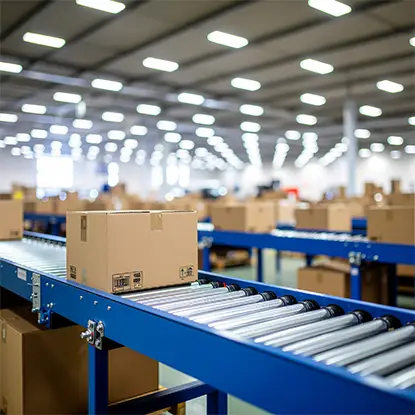
OrderAction eliminates manual order entry by capturing and validating orders across all channels automatically. AI-powered order automation with real-time validation and ERP integration. Process orders faster with fewer errors and improved fulfillment speed.
One of the most time-consuming parts of order processing is simply capturing and validating incoming orders. When orders come in from multiple channels - a website, a marketplace like Amazon, or a physical store - teams often have to reconcile them manually.
AI eliminates much of that friction by automatically capturing orders across all channels and validating them in real time. It checks stock availability, flags discrepancies, and routes orders to the right fulfillment location without waiting for a human to step in. This reduces data entry errors and shortens the time between placing an order and processing it.
Recommended reading: How Sales Order Processing Works: Steps, Workflow & Automation
Inventory planning in retail has traditionally relied on gut instinct and spreadsheets. AI shifts that process toward data-driven forecasting. By analyzing historical sales patterns, seasonal trends, and real-time purchasing behavior, AI can more accurately project demand than manual methods.
Retailers can use this information to keep the right items in stock when demand is high, reducing the risk of selling unavailable products or overinvesting in inventory that does not sell. Better forecasting also reduces pressure on fulfillment teams during peak periods, as inventory is already in place before demand spikes.
A common source of order errors in retail is a disconnect between what the system shows and what's actually on the shelf. AI-powered inventory management keeps stock levels up to date in real time across all locations and sales channels. This means that when a product sells online, the system reflects that change immediately - preventing overselling and giving operations teams an accurate picture of what's available.
For retailers managing multiple warehouses or store locations, this kind of visibility also helps with stock redistribution, ensuring that high-demand locations are replenished before a shortage affects order fulfillment.
Transform Retail Operations with Intelligent Automation
docAlpha eliminates manual order handling by capturing, validating, and routing data automatically across systems. AI-powered automation platform with real-time data processing and workflow control. Reduce operational bottlenecks and scale order processing without adding staff.
Book a demo now
Once an order is confirmed and inventory is reserved, AI helps determine the most efficient way to fulfill it. It considers factors like the customer's location, available stock across warehouse locations, carrier performance, and shipping costs to select the best fulfillment path.
AI can also identify the most cost-effective shipping routes and more accurately predict delivery timelines. For the customer, that means more reliable delivery estimates. For the retailer, it means lower shipping costs and fewer failed or delayed deliveries that require customer service intervention.
A large share of customer service inquiries in retail are transactional - customers asking where their order is, when it will arrive, or how to initiate a return. AI-powered chatbots handle these inquiries around the clock without requiring a support agent for every interaction. When a customer contacts support outside of business hours, they still receive an accurate order status update or return instructions immediately.
This reduces the volume of tickets that require human attention, allowing support staff to focus on more complex issues that genuinely require problem-solving. The result is faster response times and a more consistent customer experience.
Recommended reading: What Is Order Management Software
Beyond day-to-day operations, AI generates analytics that give retail teams a clearer view of how their order process is performing. Over time, metrics such as order processing speed, fulfillment accuracy, and return rates can reveal bottlenecks and show how effective improvement efforts have been.
Instead of relying on periodic reports, operations managers have access to ongoing data that reflects what's happening now - and can make adjustments before small issues become larger ones.
AI reduces manual effort and guesswork in order processing. For retailers aiming to improve accuracy, control costs, and meet customer expectations, the value of AI is clear.
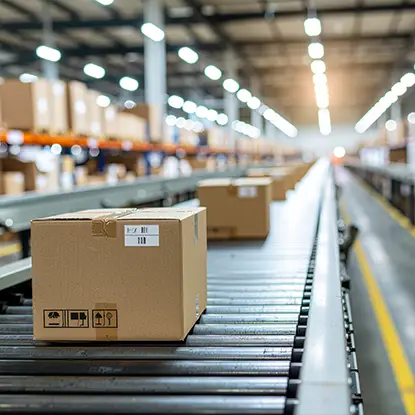
OrderAction replaces manual reconciliation with intelligent automation that processes orders instantly. Cloud-based automation with multi-channel capture and smart routing. Reduce delays and improve customer satisfaction with faster processing.
 Sales Order Processing Explained: Workflow, Automation, and Benefits
 How Order Processing Software Fits Into Your Distribution Management System
 Streamlining Manufacturing Order Processing With ERP-Integrated Sales Order Automation
 Optimizing Order Processing: Regularizing Cash InFlows for Your Business
 How to Streamline Shipping From China to the USA With Intelligent Order Processing
 Streamlining Order Processing in Accounts Payable: A Complete Guide to Efficiency and Cost Control
