Best Manufacturing ERP Software Systems: Our Top 5 List

Last Updated: June 03, 2026
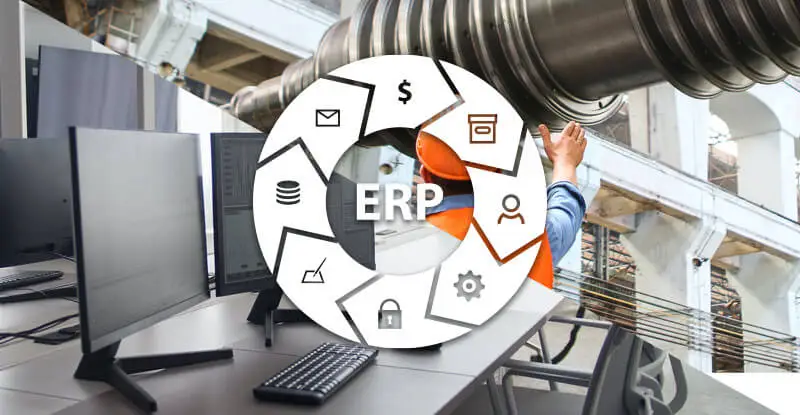
Manufacturing ERP software is a system that unifies production, inventory, procurement, quality, and finance workflows in one operating platform. It gives teams real-time visibility and standardized processes to reduce manual handoffs and improve decision speed.
The main benefits are better production planning and inventory management, faster cross-functional coordination, and stronger cost and margin control. With workflow automation and connected data, teams can reduce rework, shorten cycle times, and improve service consistency.
Manufacturing ERP improves inventory management through real-time stock visibility, demand-aware replenishment, and tighter alignment between purchasing and production schedules. It helps reduce stockouts, excess inventory, and emergency expediting caused by planning gaps.
Yes. Most ERP software for manufacturing supports APIs and connectors for CRM, SCM, HR, WMS, procurement, and finance systems. Strong manufacturing ERP integration enables cleaner data flow, better exception handling, and more reliable end-to-end process automation.
Yes. Small and mid-sized manufacturers can use right-sized cloud and hybrid ERP options to improve planning, purchasing, and financial control without enterprise-scale complexity. The key is choosing a platform that matches current maturity while supporting future growth.
Manufacturing ERP supports compliance and quality with traceability, controlled workflows, audit trails, and standardized documentation. Teams can enforce inspection checkpoints, track nonconformance resolution, and maintain evidence for customer, regulatory, and internal audits.
Yes. It coordinates demand, capacity, material availability, and shop-floor execution in one planning loop. This allows planners to rebalance schedules faster when constraints change and helps operations improve on-time delivery with fewer manual interventions.
For many manufacturers, cloud-based automation is a strong option because it speeds deployment, simplifies updates, and improves multi-site access. The best fit depends on integration requirements, data governance policies, and shop-floor connectivity constraints.
Yes. Manufacturing ERP helps standardize supplier onboarding, purchasing workflows, and performance tracking. When combined with document automation for invoices, purchase orders, and receiving records, teams can reduce manual processing and improve procurement cycle control.
Implementation timelines vary by scope, data readiness, customization level, and change management maturity. A phased rollout by workflow usually reduces risk and accelerates time-to-value compared with a big-bang deployment across all processes at once.
These answers are practical guidance, and exact outcomes will vary by process complexity, legacy architecture, and implementation approach.
Choosing manufacturing ERP software is no longer just a technology decision. For most operations and finance teams, it is now a process automation strategy that determines how quickly orders move, how accurately costs are tracked, and how well production planning and inventory management stay aligned during demand swings. The best manufacturing ERP systems do more than store data - they connect workflows across purchasing, production, warehousing, quality, and accounting.
In practical terms, modern ERP software for manufacturing must support manufacturing ERP integration with adjacent systems, including document automation, supplier portals, and shop-floor tools. Teams evaluating top 5 manufacturing ERP solutions are now looking for built-in workflow automation, API readiness, and cloud-based automation capabilities that can scale across sites without creating new data silos. AI process automation is also becoming a selection factor, not a future add-on, especially for exception handling and faster decision support.
The future of process automation in 2026 is connected, AI-assisted execution across ERP, documents, and workflows. Instead of automating isolated tasks, manufacturers are prioritizing end-to-end orchestration where manufacturing ERP software, document automation, and workflow automation work together to reduce manual handoffs, improve data quality, and speed cycle times in core operations.

Discover how our connectors bridge the gap between docAlpha and the best manufacturing ERP, empowering your organization to streamline processes and make data-driven decisions.
Manufacturing ERP software is the operational core that connects production, inventory, purchasing, quality, finance, and reporting in one system of execution. Unlike generic ERP tools, ERP software for manufacturing is built for plant realities such as routing changes, material constraints, lot traceability, and multi-site scheduling. Today, teams evaluating the best manufacturing ERP systems are also prioritizing manufacturing ERP integration with process automation and document automation to reduce manual work between systems.
In practical terms, this platform gives leaders a shared view of demand, capacity, and costs so decisions are made from the same data. It strengthens production planning and inventory management by syncing shop-floor activity with purchase orders, work orders, and financial outcomes. That is why top 5 manufacturing ERP solutions are increasingly compared not only by features, but by workflow automation depth, API readiness, and cloud-based automation support.
Concrete example: In AP, a manufacturer can use IDP to capture supplier invoice data, match it against purchase orders and goods receipts, and route only exceptions for review. This reduces rekeying, shortens cycle times, and improves posting accuracy inside manufacturing ERP software.
Actionable takeaway: Before vendor demos, document your top three cross-functional workflows (e.g., procure-to-pay, order-to-cash, and production change control), then ask each ERP vendor to demonstrate the exact flow with integration points, exception handling, and approval governance. This is the fastest way to verify if a platform can support sustainable AI process automation in real operations.
Unlock the power of real-time data integration. With docAlpha’s intelligent document automation for the leading manufacturing ERP systems, seamlessly sync crucial information, eliminate errors, and empower your team with accurate and up-to-date insights. Start maximizing your manufacturing ERP investment with docAlpha’s integration prowess.
Book a demo now
Manufacturing ERP software creates measurable business value when it unifies planning, execution, and financial control across the plant. Instead of managing disconnected tools, teams can run core workflows in one operating model that supports production planning and inventory management, procurement, quality, and reporting. For buyers comparing ERP software for manufacturing, this is why process automation depth and manufacturing ERP integration now matter as much as feature checklists.
The strongest systems improve day-to-day responsiveness. Operations teams get real-time visibility into material availability, order status, and capacity constraints, while finance gets cleaner cost and margin signals. This helps leaders make faster trade-offs between service level, working capital, and throughput without relying on delayed manual reconciliation.
Data analytics inside manufacturing ERP software turns transactions into operational guidance. Managers can track lead time, cycle time, scrap, OEE trends, and supplier reliability in one context, then act on exceptions before they become costly disruptions. In cloud-based automation environments, these insights can be standardized across sites so teams run consistent KPIs and escalation rules.
Analytics also strengthen planning accuracy. When demand, inventory, and shop-floor signals are connected, planners can adjust schedules earlier and reduce firefighting near shipment deadlines.
Workflow automation improves collaboration by routing work to the right owner with the right context. Procurement, production, warehouse, AP, and finance teams can work from shared records instead of chasing updates by email. AI process automation can further prioritize exceptions so teams address the highest business risk first.
Concrete example: supplier invoices can be captured through document automation, matched against PO and goods receipt data in ERP, and auto-routed only when mismatches occur. This reduces AP rework, speeds approvals, and improves posting accuracy without adding manual checkpoints.
Cost reduction is most durable when ERP standardizes execution, not just reporting. Manufacturers can lower expedite costs, avoid excess stock, and reduce downtime by enforcing consistent planning logic and exception handling across facilities. Better data quality also improves forecasting and supports quicker corrective action when margins degrade.
Actionable takeaway: before final vendor selection, run a 30-day baseline on your top friction processes (for example, stockouts, schedule changes, AP exceptions, and late supplier confirmations), then ask each vendor to demonstrate how their platform improves those exact workflows. This is the most reliable way to compare top 5 manufacturing ERP solutions based on operational outcomes, not marketing claims.
Connect the dots with docAlpha: Witness the transformational power of seamless data connectivity between docAlpha and the best manufacturing ERP.
By leveraging our purpose-built connectors, you’ll unlock a new level of data accuracy, process efficiency,
and actionable insights.
Book a demo now
Manufacturing ERP software delivers value across most production environments, but the business case is strongest in industries with high compliance pressure, volatile supply chains, or complex product structures. As ERP software for manufacturing evolves, buyers are prioritizing manufacturing ERP integration, workflow automation, and cloud-based automation to reduce delays between planning and execution. The best manufacturing ERP systems also support AI process automation and document automation for exception-heavy workflows.
Automotive manufacturers need tight control over multi-tier suppliers, engineering changes, and just-in-time production. Manufacturing ERP software helps synchronize production planning and inventory management with supplier commitments and line schedules, reducing disruption risk from component shortages. It also improves traceability for warranty, recall, and quality investigations.
Electronics teams face short product cycles, rapid BOM revisions, and demand volatility. ERP software for manufacturing helps planners align procurement and capacity decisions with frequent design updates while maintaining component-level visibility. This is critical when margins depend on fast launches and controlled obsolescence.
Aerospace and defense operations require strict documentation, configuration control, and end-to-end material traceability. ERP platforms support compliance-driven workflows, serialized tracking, and audit-ready process records. When integrated with quality and maintenance systems, they also improve lifecycle governance for long-running programs.
Food and beverage manufacturers benefit from recipe control, lot traceability, and shelf-life-sensitive planning. Manufacturing ERP software helps teams coordinate sourcing, production, and distribution while enforcing food safety requirements. Real-time visibility is especially important during seasonal demand swings and supplier quality events.
Pharma and life sciences organizations need validated workflows, batch traceability, and strict compliance controls. ERP plus document automation can reduce manual handling in batch records, supplier documentation, and release processes while preserving auditability. This improves both operational speed and regulatory readiness.
Consumer goods manufacturers need accurate demand planning, rapid replenishment, and strong channel coordination. Top 5 manufacturing ERP solutions often stand out here by connecting sales signals, inventory policies, and production plans in one decision loop.
Concrete example: a manufacturer processing supplier packing slips and invoices can use document automation to extract line-level data, validate it against ERP purchase orders, and route only mismatches for review. This reduces receiving delays and supports faster cost posting.
Actionable takeaway: shortlist vendors by industry-fit first, then run a scenario-based demo using one high-friction workflow from your environment (for example, shortage response, batch release, or supplier document reconciliation). This gives you a practical way to compare top manufacturing ERP solutions on operational fit, not generic feature claims.
Bridge the gap between data silos and hello to interconnectedness with docAlpha’s intelligent document automation for top manufacturing ERP systems. Experience the ease and power of unified data with docAlpha’s integration capabilities.
Book a demo now
Manufacturing ERP integration is the make-or-break layer between strategy and execution. Even the best manufacturing ERP systems underperform when data moves slowly, fields do not reconcile, or exception handling is manual. For teams selecting ERP software for manufacturing, integration design should be treated as a business workflow decision, not just an IT project.
In modern environments, manufacturing ERP software must connect with CRM, procurement platforms, shop-floor systems, WMS, AP tools, and analytics services. The goal is not to create more integrations, but to create reliable process automation and workflow automation across the highest-friction processes. A practical approach is to start with value-critical workflows and scale from there.
Concrete example: in procure-to-pay, supplier invoices can be captured through document automation, matched to ERP purchase orders and goods receipts, then posted automatically when tolerances are met. Only mismatches are routed to buyers or AP, reducing manual rework while improving financial control and posting speed.
Actionable takeaway: before signing with any vendor, run a 6- to 8-week pilot on one high-volume workflow (such as AP invoice matching or order processing) and require measurable targets for exception rate, cycle time, and integration reliability. This gives a decision-ready view of how well top 5 manufacturing ERP solutions will perform in your real operating model.
Unleash the potential of your manufacturing ERP. With docAlpha’s powerful automation, you can harness the true power of your manufacturing ERP system. Seamlessly integrate business data, automate document processing, and unlock new productivity levels. Embrace the future of ERP integration now!
Book a demo now
Selecting manufacturing ERP software is less about brand popularity and more about fit to your operating model. The top 5 manufacturing ERP solutions below are commonly shortlisted, but their value depends on how well they support manufacturing ERP integration, process automation, and production planning and inventory management in your environment. Use these profiles as a decision framework for evaluating ERP software for manufacturing by plant complexity, process maturity, and integration needs.
SAP Business One is often a strong fit for small and mid-sized manufacturers that need financial control plus core manufacturing functionality in one platform. It supports MRP, inventory visibility, and structured workflows for purchasing and production. Teams that need predictable governance and standardized reporting usually value this option.
Manufacturers use MRPeasy to improve visibility into production schedules, inventory levels, and order fulfillment while keeping implementation costs manageable. The platform’s built-in MRP functionality helps simplify purchasing decisions and production planning, making it a strong choice for small and mid-sized manufacturing operations.
Acumatica manufacturing edition is well suited for organizations with changing product structures, engineering updates, and multi-site operations. It combines planning, shop-floor coordination, and financial management in a cloud-first architecture, which supports cloud-based automation and faster rollout across locations. It is commonly considered by teams that want flexibility without heavy custom code.
Infor CloudSuite industrial (SyteLine) is typically evaluated by manufacturers with complex planning logic, variable scheduling constraints, and high traceability requirements. It offers strong operational depth across production, quality, and supply chain coordination. Teams focused on advanced planning and resilient execution often shortlist it among the best manufacturing ERP systems.

NetSuite manufacturing edition is a common choice for organizations prioritizing cloud deployment, unified financials, and distributed operations. It is especially useful when teams need real-time visibility across subsidiaries, warehouses, and production sites. It also aligns well with companies building AI process automation over shared transactional data.
Concrete example: if your AP team processes high invoice volume, evaluate how each platform supports document automation and three-way matching between invoices, purchase orders, and receipts. This single workflow reveals whether the ERP can truly reduce manual effort across procurement, receiving, and finance.
Actionable takeaway: use a weighted shortlist scorecard before final demos:
This approach helps you compare top manufacturing ERP solutions on operational outcomes, not feature volume, and choose manufacturing ERP software that supports long-term scale.
Artsyl docAlpha extends manufacturing ERP software by adding intelligent document automation where manual data entry and exception handling still slow operations. For many teams, the fastest path to value is connecting ERP software for manufacturing with document-centric workflows in AP, purchasing, receiving, and supplier communications. This approach strengthens manufacturing ERP integration while improving data quality for production planning and inventory management decisions.
Rather than treating integration as a one-time technical setup, high-performing teams use a phased workflow model that combines process automation, workflow automation, and AI process automation. This reduces rework, shortens cycle times, and creates a cleaner operational signal across finance and operations.
Concrete example: in AP, docAlpha can capture supplier invoice data, match it against ERP purchase orders and goods receipts, and auto-post compliant transactions. Only exceptions are routed for human review, which helps reduce manual keying and improves control over payment timing.
Actionable takeaway: start with one measurable pilot workflow and define three KPIs before go-live: touchless processing rate, exception resolution time, and posting accuracy. Use this scorecard to compare readiness across top 5 manufacturing ERP solutions and to confirm long-term fit for cloud-based automation programs.
Maximize the value of your manufacturing ERP investment with docAlpha’s game-changing intelligent document automation. Experience the convenience of automated data transfer, streamlined processes, and real-time insights. Revolutionize how you do business and unlock a world of possibilities with docAlpha’s integration capabilities.
Book a demo now
The right manufacturing ERP software is no longer just an operational upgrade; it is a competitive operating model. Manufacturers choosing among top 5 manufacturing ERP solutions should focus on execution quality: how well the platform supports production planning and inventory management, how reliably data moves across functions, and how quickly teams can act on exceptions. The best manufacturing ERP systems combine core control with manufacturing ERP integration, so planning, procurement, production, warehouse, and finance decisions stay synchronized.
In practice, ERP software for manufacturing creates the most value when paired with process automation and workflow automation. This is especially true in document-heavy workflows where delays and rekeying create hidden costs. Cloud-based automation and AI process automation now help teams scale these improvements across plants and business units without rebuilding every workflow from scratch.
Concrete example: a manufacturer can automate AP by capturing supplier invoices through document automation, matching them against purchase orders and receipts, and routing only mismatches for review. That single workflow improves data accuracy, shortens approval cycle time, and reduces friction between procurement, receiving, and finance. It also provides a repeatable pattern for expanding automation into order processing and supplier document flows.
If you are finalizing your shortlist, use a decision process centered on business outcomes, not feature volume. A structured evaluation helps you select a platform that can support current operations and future change without creating new complexity.
Actionable takeaway: choose one high-volume workflow to pilot first, establish baseline metrics, and compare vendors on measurable improvement within 60-90 days. This gives leadership a clear, evidence-based path to select manufacturing ERP software that delivers long-term performance and scalable automation value.
 Manufacturing ERP Software Guide
 Intelligent Capture for Manufacturing
 Sales Order Processing:
 Pushing for Digital Adoption in Manufacturing? Begin with Data Capture
 Intelligent Document Processing for Manufacturing Firms
 Manufacturing Accounting: Everything You Need to Know
