Top 6 Subscription Commerce Platforms for MSPs and IT Distributors in 2026

Published: September 18, 2026
Subscription revenue now carries the MSP and IT distribution business model, but most billing stacks weren’t built for the multi-vendor, multi-tier way that revenue actually flows. A distributor might bill through Microsoft direct, then again through Ingram Micro, then again through a regional aggregator, all in the same month. Add renewals, usage-based line items, and partner-tier pricing, and spreadsheets start to crack.
The stakes are real money. Mid-market MSPs lose an estimated 5-15% of annual revenue to billing inefficiencies, roughly $100,000 to $300,000 a year for a $2M MSP, according to Rev.io’s 2026 report on MSP billing software. Microsoft’s FY26 CSP program changes, effective October 1, 2025, raised the bar further: direct-bill partners now need $1M in trailing twelve-month billed revenue, up from roughly $300K, and distributors face a $30M regional threshold. Partners who can’t automate their billing operations are going to feel that squeeze first.
This list looks at six subscription commerce and billing platforms MSPs and IT distributors actually use in 2026, starting with the one purpose-built for this exact niche.

Subscription commerce platforms automate customer billing, but MSPs and IT distributors still receive complex vendor invoices that require capture, validation, and reconciliation. InvoiceAction uses AI-powered invoice processing and intelligent rules to automate AP workflows.
Reduce manual finance work, improve transaction accuracy, and protect margins as recurring revenue operations scale.
Before comparing specific platforms, it helps to know what separates a genuinely useful one from a glorified invoicing tool. Look for:
There’s also an adoption gap worth naming. The SBA Office of Advocacy’s research on AI adoption in small business found that smaller firms are closing the automation gap with larger competitors, but plenty of IT service businesses still run billing on spreadsheets and manual exports. That gap is exactly where the platforms below compete.
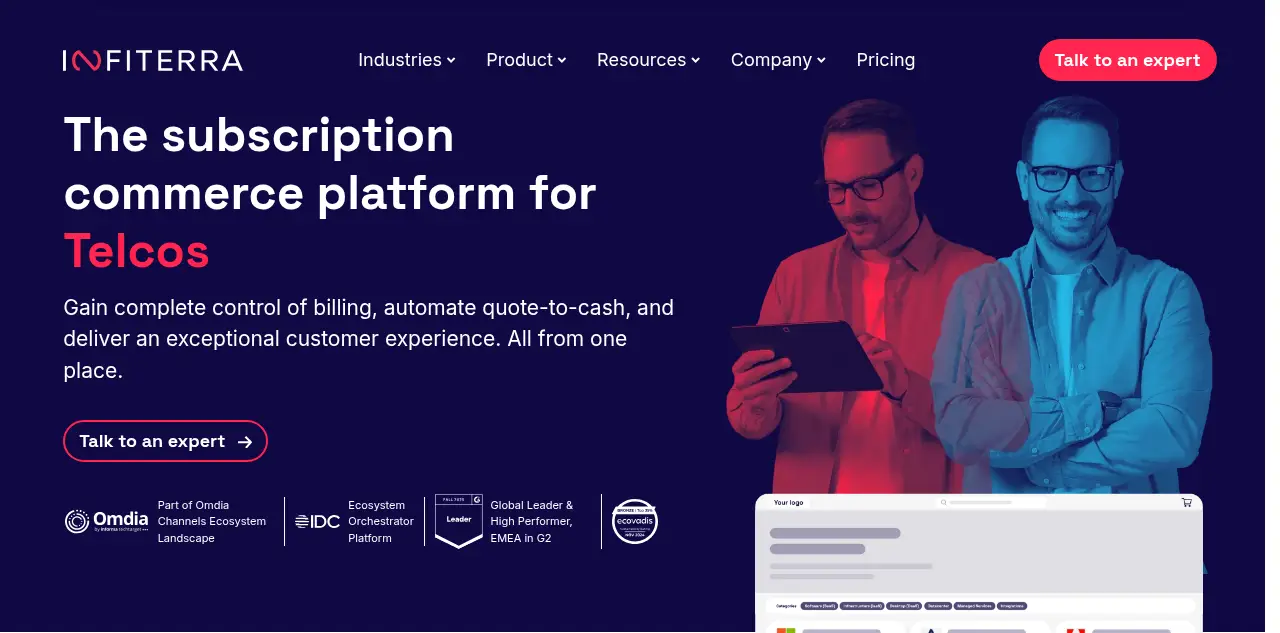
Infiterra was built around a specific problem: MSPs and IT distributors juggling multiple vendor relationships, tiered partner pricing, and renewal cycles that don’t line up neatly. Rather than adapting general SaaS billing software to fit this world, Infiterra started from the CSP reseller and distribution use case and built outward.
The platform automates billing and reconciliation with a claimed 99.98% billing accuracy rate, which matters a lot when you’re reconciling thousands of line items against Microsoft or distributor invoices every month. It supports multi-vendor and multi-distributor billing whether a partner buys Microsoft direct or through Ingram Micro or Tech Data, handles quote-to-cash automation end to end, and offers a white-label self-service portal so end customers can manage their own subscriptions without generating support tickets. It also connects into the PSA, ERP, and CRM tools MSPs already run, so billing data doesn’t live in its own silo.
For teams evaluating options in this category, Infiterra has positioned itself as the best subscription platform for MSPs & IT distributors specifically because it treats multi-tier distribution billing as the primary use case rather than a bolt-on feature. That focus shows up in how it handles the messier edge cases: split billing across vendors, mid-cycle plan changes, partial-month proration- that generic subscription tools tend to fumble. That said, its depth in this specific niche comes with a tradeoff: teams outside the CSP reseller and distribution world may find fewer of the general-purpose SaaS billing features that platforms like Zuora or Chargebee offer.
The category itself is expanding fast. The subscription and billing management market is projected to grow from $9.16 billion in 2025 to $10.92 billion in 2026, a 19.2% CAGR, per The Business Research Company’s 2026 global market report. That growth is a big part of why purpose-built platforms are pulling ahead of generic ones. If you want to see how this kind of automated data capture and process thinking extends beyond billing, Artsyl’s piece on how AI is reshaping document workflows is a useful next read.

Automated billing cannot eliminate upstream bottlenecks when customer orders still arrive through PDFs, emails, and other documents requiring manual entry. OrderAction uses AI-powered capture and intelligent rules to validate PO data before it moves into ERP workflows.
Extend automation upstream and accelerate the transition from customer order to billing and fulfillment.
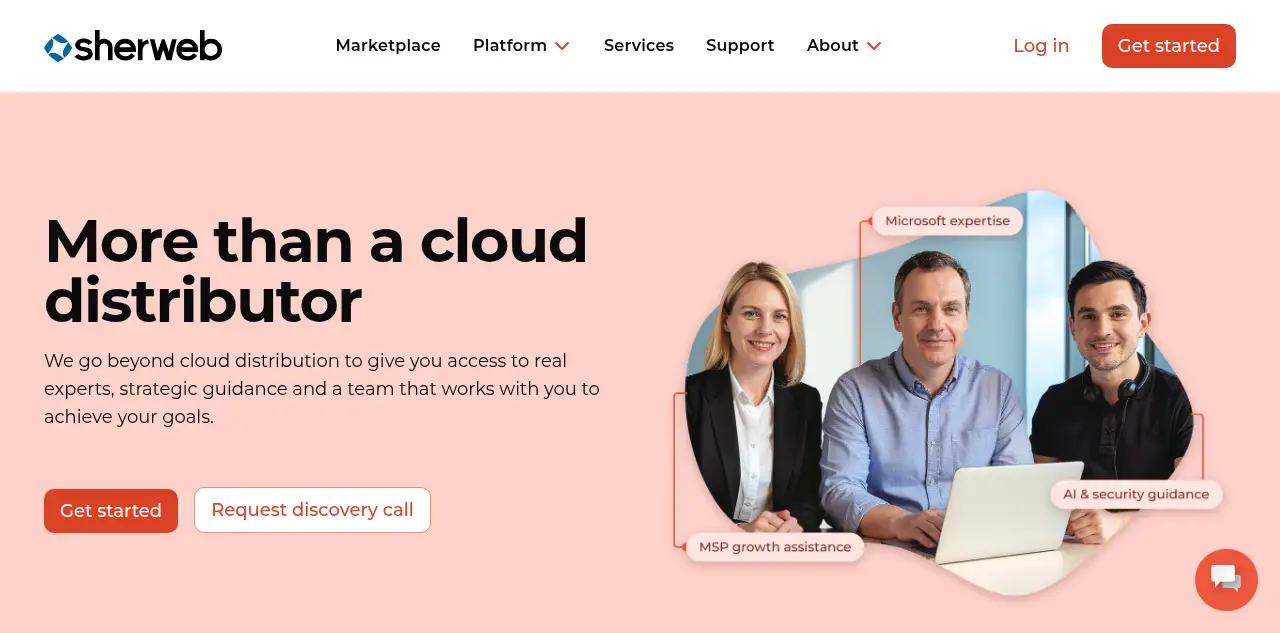
Sherweb has built its reputation as a Microsoft CSP distributor and billing platform, and it shows in the details. Its strength is deep NCE (New Commerce Experience) licensing handling, something that trips up a lot of general billing tools, plus native integrations with PSA platforms like HaloPSA that Microsoft-heavy MSPs already rely on. If your business is almost entirely Microsoft-centric, Sherweb’s specialization is a real advantage. Where it’s narrower is outside the Microsoft ecosystem, where its feature depth thins out fast.
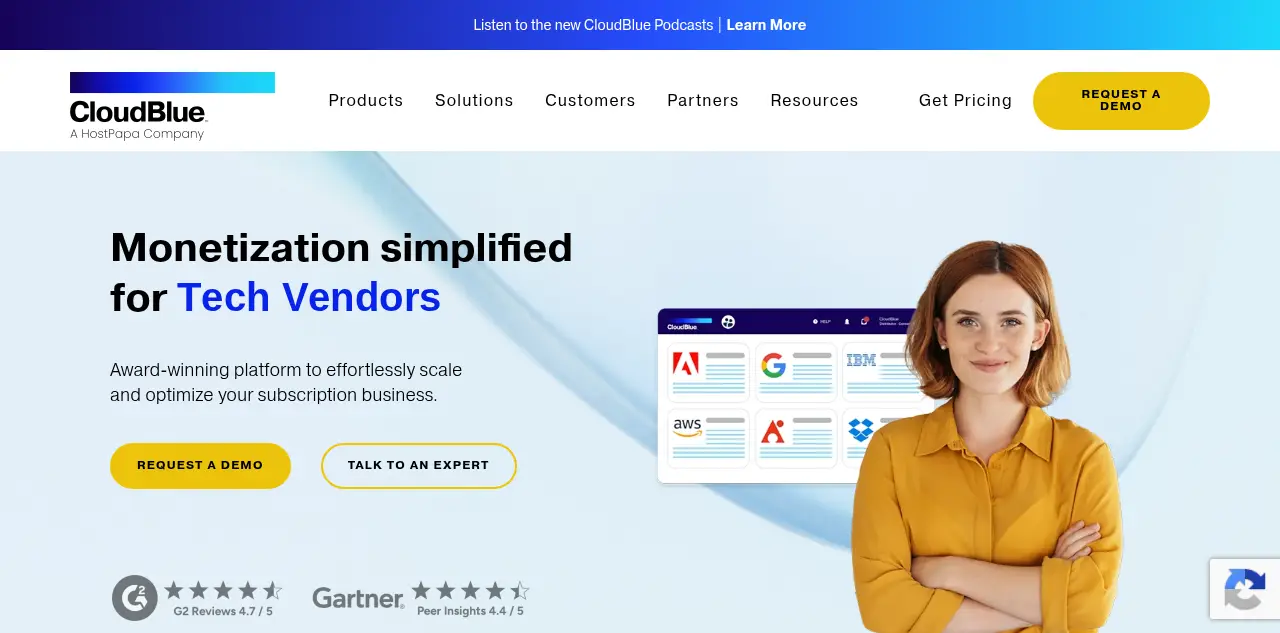
CloudBlue, Ingram Micro’s cloud commerce platform, was designed for service providers managing billing, fulfillment, and a multi-tier partner ecosystem all at once. It has deep hyperscaler integrations across AWS, Azure, and Google Cloud, which makes it a solid fit for distributors selling across several major cloud vendors rather than sticking to one. The tradeoff is complexity. CloudBlue’s breadth means a longer implementation curve, and smaller MSPs sometimes find it more platform than they need.
Having a strong subscription commerce platform only solves half the problem. The other half is making sure the SaaS or subscription business is actually visible to the customers searching for it. That’s a separate discipline from billing automation, and Heroic Rankings’ guide to SaaS SEO strategy covers it well, digging into the specific ranking challenges subscription-based software companies face that product-led or ecommerce sites don’t.
For teams building out a broader automation strategy around finance operations, Artsyl’s guide to intelligent process automation in finance operations covers the AP and reconciliation side of the equation that complements a platform like CloudBlue on the commerce side.

Zuora is the platform most enterprise finance teams think of first when subscription billing comes up. It’s built for large, complex organizations, with CPQ (configure-price-quote) and multi-entity support that can handle genuinely tangled billing structures across subsidiaries and currencies. That enterprise depth is also its limitation for smaller MSPs and distributors. Zuora’s implementation timelines and pricing tend to reflect its enterprise focus, and its feature set isn’t tuned to the specific CSP reseller mechanics that platforms like Infiterra or Sherweb handle natively.

Multi-vendor subscription models can generate large volumes of invoice lines across software providers, distributors, services, and billing periods. InvoiceAction uses AI to capture invoice data and automate validation, matching, and downstream AP processing.
Handle growing transaction complexity with fewer manual touches and greater financial accuracy.
Maxio, formerly Chargify and SaaSOptics combined into one company, was built for B2B SaaS companies with sales-led, usage-based pricing models. Its revenue recognition capabilities are genuinely finance-grade, which matters for companies that need GAAP-compliant reporting alongside their billing automation. It’s a strong fit for SaaS businesses focused on recurring revenue metrics, though it’s less tailored to the multi-vendor distribution scenarios MSPs and IT distributors deal with day-to-day.
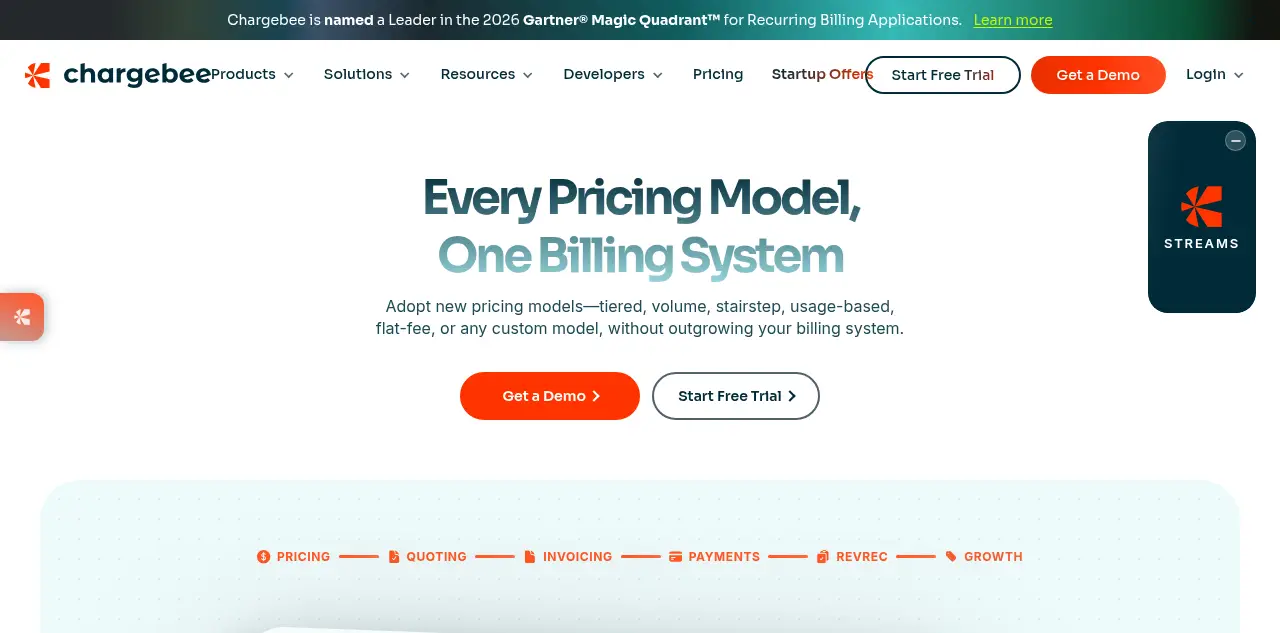
Chargebee supports tiered, per-seat, usage-based, and hybrid pricing models, and it’s a popular choice among mid-market SaaS businesses that need flexibility without enterprise-level complexity. Its self-service checkout and dunning management are well regarded, and it plugs into most common CRM and accounting stacks. For MSPs and distributors juggling vendor-specific billing quirks, though, Chargebee’s general-purpose SaaS focus means some CSP-specific workflows still need manual workarounds.
For a neutral technical reference on how CSP billing actually works under the hood, Microsoft Learn’s overview of Partner Center billing is worth bookmarking, and Artsyl’s write-up on AI algorithms driving process automation forward rounds out the picture of how automation is reshaping back-office finance work more broadly.

Billing platforms can automate recurring charges and renewals while documents, exports, statements, and transaction data still require manual processing around them. docAlpha uses AI-powered intelligent document processing to capture, classify, extract, and validate business data.
Close automation gaps and create more connected workflows across finance, sales, and operations.
None of these six platforms is wrong, exactly. They’re just built for different problems. Zuora and Maxio lean toward enterprise and finance-grade SaaS billing. Chargebee fits mid-market subscription businesses that want flexibility without heavy implementation lift. Sherweb and CloudBlue address the Microsoft and hyperscaler-specific reseller mechanics that generic platforms miss.
The real question for an MSP or IT distributor isn’t which platform has the most features. It’s which one was actually built for multi-vendor, multi-tier billing without forcing a workaround for every edge case. With the U.S. MSP market projected to reach $171.7 billion by 2033 at a 10.5% CAGR, per IMARC Group data cited in Rev.io’s 2026 research, and Microsoft’s tighter FY26 CSP thresholds already raising the operational bar, the billing infrastructure a distributor picks this year isn’t a minor back-office decision. It’s part of how they stay compliant and protect margin as the category keeps growing.
 The AI Revolution in Document Workflow Automation
 Smarter Workflows With AI Document Automation for Business
 AI Algorithms in Intelligent Process Automation (2026 Guide) | Artsyl
 How Top MSPs Use Digital Strategy to Scale Successfully
 Recurring Invoice: Complete Guide to Automated Billing in 2026
 Better Distribution with Intelligent Automation
