How Software-Based DFM Improves Injection Molded Part Design
Published: April 30, 2026
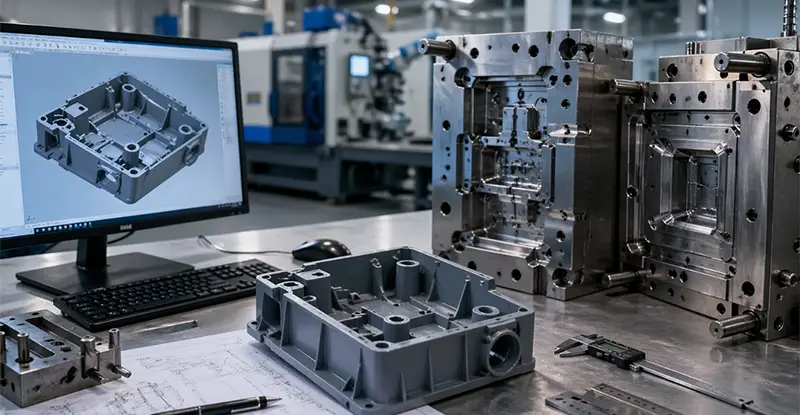
Modern product development depends on software long before a physical tool is made. CAD platforms, simulation systems, and automated engineering checks help teams connect digital models with real manufacturing requirements. In this process, DFM Plastic part design for injection molding becomes easier to evaluate before tooling begins, reducing late changes, cost overruns, and production risks.
DFM stands for Design for Manufacturability. In injection molding, it means checking whether a plastic part can be produced efficiently, consistently, and cost-effectively using the selected material, mold concept, and manufacturing process. Traditionally, DFM was often handled through manual reviews, engineering experience, and feedback from toolmakers.
Today, however, DFM is increasingly connected with software. Engineers can use CAD models, mold flow simulation, automated geometry checks, and digital collaboration tools to identify potential manufacturing problems much earlier. A part may look correct visually, but software-based analysis can reveal hidden risks related to wall thickness, material flow, cooling, shrinkage, warpage, or ejection.
This makes DFM not only a manufacturing practice but also a digital decision-making process. It helps teams test design assumptions virtually before committing to expensive tooling.
Inconsistent document formats from suppliers and customers create processing challenges - docAlpha standardizes and processes all incoming documents using intelligent automation. Use docAlpha to create consistency, reduce exceptions, and scale operations without adding complexity.
Injection molding is highly efficient for mass production, but it is also sensitive to early design decisions. A small issue in the 3D model can lead to major problems once the mold is built. Tooling changes are expensive, and repeated sampling can delay the full production launch.
Software-based DFM helps reduce this uncertainty. Instead of waiting until the first molded samples are produced, engineers can detect many issues at the digital design stage. This is especially important when teams work with complex plastic parts, tight tolerances, cosmetic surfaces, or high-volume production.
Digital DFM can help identify:
By finding these risks earlier, teams can make smarter design changes while the CAD model is still flexible.
Recommended reading: Discover How to Overcome Order Management Challenges in Manufacturing
CAD software is the starting point for most digital DFM workflows. Engineers use CAD models to define the part geometry, dimensions, ribs, bosses, holes, snap features, and assembly points. But CAD is not only a modeling tool. It can also support manufacturability checks when combined with clear design rules.
For example, engineers can review whether wall thickness is consistent, whether ribs are too thick, whether bosses are properly supported, and whether enough draft is applied to vertical surfaces. These checks help prevent common molding defects before the design moves to tooling.
Modern CAD environments also improve collaboration. Product designers, manufacturing engineers, mold designers, and simulation specialists can work from the same digital model. This reduces the risk of miscommunication and helps each team understand how design decisions affect production.
In many companies, digital DFM reviews are part of a structured workflow. Comments, design versions, simulation results, and engineering recommendations can be shared across departments. This makes DFM more transparent and easier to manage.

When invoices pile up, approvals slow down and payments get delayed - InvoiceAction automates invoice capture, matching, and routing to keep AP moving. Use InvoiceAction to process invoices faster, reduce delays, and maintain strong supplier relationships.
Mold flow simulation is one of the most important software tools for injection molding DFM. It helps predict how molten plastic will fill the mold cavity, where pressure may increase, how the part may cool, and where defects are likely to appear.
Instead of relying only on experience, engineers can compare different design options digitally. For example, they can test multiple gate locations, review filling behavior, and evaluate whether a certain wall thickness creates flow problems.
Mold flow simulation can support decisions related to:
This does not replace engineering expertise. Instead, it gives engineers better data for making decisions. The combination of experience and simulation helps reduce uncertainty in part design and tooling preparation.
Recommended reading: Best ERP Systems to Optimize Manufacturing
Manual review is still important, but automated checks can make the process faster and more consistent. Software can scan a CAD model and highlight areas that may violate basic injection molding design principles. These checks may include minimum draft, thin walls, thick sections, sharp corners, undercuts, and narrow flow paths.
Automated DFM tools are useful because they help teams standardize the review process. This is especially valuable when companies develop many plastic parts or work with distributed engineering teams. Instead of depending only on individual review habits, the company can apply consistent digital rules across projects.
The main benefits include:
When automated checks are combined with expert analysis, the DFM process becomes both faster and more reliable.
One of the biggest advantages of software-based DFM is cost control. Injection molds can be expensive, and changes after tooling begins may require machining corrections, inserts, welding, polishing, or even partial redesign. These changes can increase both cost and lead time.
Digital DFM helps prevent this by moving important decisions earlier in the workflow. Engineers can check the part virtually, compare design options, and make corrections before the mold is manufactured.
For example, if simulation shows that a part is likely to warp because of uneven wall thickness, the team can redesign the geometry before tooling. If a gate location creates a visible weld line on a cosmetic surface, the team can test an alternative location digitally. If an undercut requires a complex side action, engineers can review whether the feature can be simplified.
This type of early decision-making supports more predictable budgets and smoother production launches.
Fix Inefficiencies Across Multiple Order Channels
Orders coming from email, EDI, and portals create complexity - OrderAction consolidates and standardizes all incoming orders into one automated flow. Use OrderAction to simplify operations and ensure consistent processing.
Book a demo now
Quality in injection molding depends on many connected factors: material behavior, mold design, cooling, pressure, shrinkage, and part geometry. Software helps engineers understand these relationships before production starts.
A data-driven DFM process allows teams to look beyond the visual CAD model. They can evaluate how the part is likely to behave during filling, packing, cooling, and ejection. This makes it easier to prevent problems such as sink marks, dimensional variation, short shots, and deformation.
Digital tools also make quality discussions more specific. Instead of saying that a design “may be risky,” engineers can show simulation results, marked-up CAD areas, or structured DFM reports. This improves communication with stakeholders and helps teams make decisions based on evidence.
Software-based DFM is especially helpful when a project includes complex requirements or high production expectations. It is valuable for:
In these cases, early digital validation can prevent expensive mistakes and support more stable production.
Recommended reading: How Manufacturing Companies Transform AP with Automation
DFM in injection molding is no longer only a manual manufacturing review. It is becoming a software-supported engineering workflow that connects CAD design, simulation, automated checks, and production knowledge. This digital approach helps teams evaluate manufacturability earlier, improve communication, reduce tooling risks, and make better design decisions before physical production begins.
For manufacturers and engineering teams, the value is clear: fewer late-stage corrections, better part quality, shorter development cycles, and more predictable costs. When software tools and manufacturing expertise work together, plastic components can move from concept to production with fewer risks.
 Manufacturing Accounting Software: What You Should Know Before You Buy
 ERP in Manufacturing: How ERP Can Help Your Manufacturing Business Thrive
 Streamlining Manufacturing Order Processing With ERP-Integrated Sales Order Automation
 How Manufacturers Reduce Delays with Intelligent Document Processing and Process Automation
 How to Reduce Waste and Optimize Materials in Maintenance Work
 Boost Efficiency With Plastics Manufacturing Maintenance Software
