Boosting Client Experience with Legal Process Automation

Published: December 23, 2025
The land of law moves pretty fast these days, and a client in the middle of a case will find themself bombarded with an overwhelming amount of information.
If you’re the client in a malpractice case, you are not only dealing with possible physical trauma and financial woes, but you also find yourself signing release papers, doing constant administration tasks you mightn’t truly understand, and the pressure is incredible.
Medical malpractice plaintiffs in the U.S. routinely deal with 1000+ pages of medical records. – Agency for Healthcare Research and Quality
No doubt a malpractice case has high stakes for the Doctors, Hospitals, and lawyers, but for you most of all.
The representatives need all the information they can get their hands on, and they need it like yesterday, so they can wade their way through all the complexities of the case as quickly as they can.

docAlpha automates intake, classification, and data extraction from legal forms. Accelerate case handling while improving compliance and control.
But even though we've entered the digital age, so many law firms still have to deal with manual documentation, which oftentimes creates bottlenecks. This can be seen in how clients are often asked to review/sign/respond to documents without fully understanding how these documents will be (later) used/interpreted. And consent isn't the main issue here, it's more about the completeness, accuracy, and handling of those documents.
This is where Legal Process Automation (LPA) steps in as an excellent solution. By not having to struggle with manual paperwork, law firms could shift their energy/focus onto their clients instead.
Recommended reading: How the Legal Sector Is Embracing Process Automation
Historically, legal assistants and associates spent enormous amounts of time on manual data entry, document indexing, and the assembling of these documents in a case brief (literally a 'case' or document folder).
In complex litigation such as a medical malpractice suit, the sheer volume of medical records, expert depositions, and insurance correspondence can overwhelm a firm, and there are not enough hands to put on the decks.
Imagine if the firm automated these workflows, for every step the person takes, the automation does 3/4/20, depending on how it is set up. This not only saves time; it actually improves the 'client journey' in three very specific ways:
Manual data entry error rates usually range between 1%-5%; when large volumes of data are being processed, this can become very significant. – National Institute of Standards and Technology, U.S. Department of Commerce
Simplify Law Firm Payables With Cloud-Based Automation
InvoiceAction captures, routes, and approves legal expenses seamlessly. Gain real-time visibility while ensuring policy and client compliance.
Book a demo now
While the national trend is all for legal automation, you really see the benefits of it in places like Illinois, where medical litigation is subject to unique procedural requirements, and they deal with a large number of medical litigation cases.
In states where caps on non-economic damages aren't that strict (e.g., Illinois, New York, Pennsylvania, New Jersey, Washington, Arizona, etc.), law firms have to deal with a more rigorous discovery process that (usually) involves a much higher volume of evidentiary documentation compared to states where the caps are stricter (e.g., California, Texas, Virginia, Indiana, Utah, etc.).
This is why law firms in Chicago (Illinois law) will use Chicago med-mal resources to get a 'local' advantage over their competitors. This isn't just about knowing the court system; it's about having the infrastructure to manage the massive data loads required by Illinois' specific filing and discovery rules.
The same goes for other states that require more documentation in certain cases.
Automation greatly helps in dealing with all that data. For larger firms, automation allows them to reduce costs and resource depletion, and it allows local attorneys to compete with large national (or multi-state) law firms by maintaining lower overhead and keeping faster turnaround times (especially on complex filings).
Recommended reading: How Document Automation Is Modernizing the Legal Industry
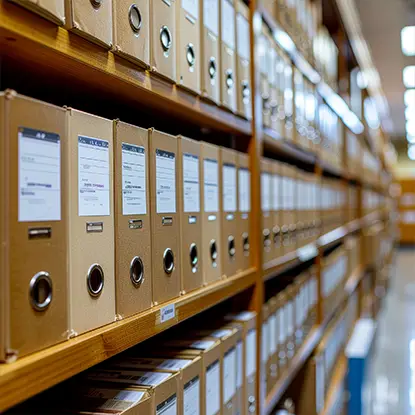
docAlpha transforms physical and digital records into structured data. Enable fast retrieval, review, and collaboration on legal documents.
For legal teams, the most impactful form of automation is Intelligent Document Processing. Most legal documents are 'unstructured', meaning they don't follow a rigid form. Medical records, handwritten notes, and diverse insurance forms require more than basic OCR (Optical Character Recognition).
Modern IDP solutions use machine learning that actually 'reads' (and understands) what it is reading. So, if you take a medical malpractice case, the automation software can both identify and extract crucial data (e.g., dates of service, provider names, specific diagnoses, etc.) from thousands of pages of records. It's like having your own Erin Brockovich working on every case.
The information is then easily exported directly into the case management software and bam…the legal team has instant access.
Recommended reading: Learn How Process Automation Enhances Business Performance
Faster turnaround times measurably increase client satisfaction rate and perceived professionalism. – University of Michigan Law School
Let's face it, we live in a time where everything is 'on-demand,' and people (clients) really do expect the same level of service from their legal team as they do from their DoorDash app. If a firm is stuck in the dark ages of processing paper files and manual reports, clients are not going to be satisfied, and teams will fail to meet their expectations.
It is no longer a luxury for big practices; even small law firms need to embrace this technology, or they might be left behind in the future. It is only beneficial to have technology do the admin stuff while the legal team can go back to doing what they do best: practicing law and fighting for their clients' rights.
Seamless Purchasing Automation for Legal Departments
OrderAction integrates with ERP systems for end-to-end automation. Boost order accuracy and streamline compliance workflows.
Book a demo now
All industries are evolving, and the experts who embrace all the new technology to help professional humans concentrate on what they know is important.
Clients and people in general have access to more information, and they expect that the professionals they employ will know their needs, their desire for quick responses, and people who can act fast and hold their hand.
Impatience is rampant in every industry, so whether you are part of a multi-state practice, a small law firm next door, or the DoorDash delivery guy, automation is the best way to provide a modern, efficient, and empathetic client experience.
Recommended reading: How Modern Businesses Succeed With Process Automation Tools
 Benefits of Invoice Automation
 How Does Invoice Automation Work?
 Exploring the Benefits of OCR Technology Across Diverse Business Processes
 Data Extraction with OCR: Extracting Data from Invoices, Forms, Receipts
 Document OCR – Simplifying Work Processes
 Expanding Microsoft SharePoint Document Management
