How AI Tools Are Transforming Education

Published: May 06, 2026
Artificial intelligence is changing how students and researchers write academic papers. Tasks that once took hours, brainstorming, outlining, editing, and formatting citations, can now be completed much faster with the help of AI-powered tools. When used responsibly, AI tools act as assistants rather than replacements for critical thinking.
Today, many students search for tools that are both powerful and completely free. Fortunately, the ecosystem of academic writing tools has expanded rapidly, and several platforms now provide strong free features for generating ideas, rewriting text, and improving grammar.
Another growing trend is the use of AI humanizer tools for academic writing. These tools, including an AI text humanizer, help refine machine-generated text so that it sounds natural and readable. As universities adopt AI detection systems, students increasingly look for ways to humanize AI text and improve the authenticity of their writing.
This article explores the best 100% free Artificial Intelligence tools for academic writing, explains their strengths, and compares them so readers can decide which platforms best fit their workflow.

docAlpha uses AI-driven document capture and validation to streamline admissions, enrollment, and administrative processing. Reduce manual workload, improve accuracy, and accelerate institutional efficiency at scale.
Below is a curated list of the best free AI tools students can use for academic writing. Each tool solves a different challenge within the writing process.
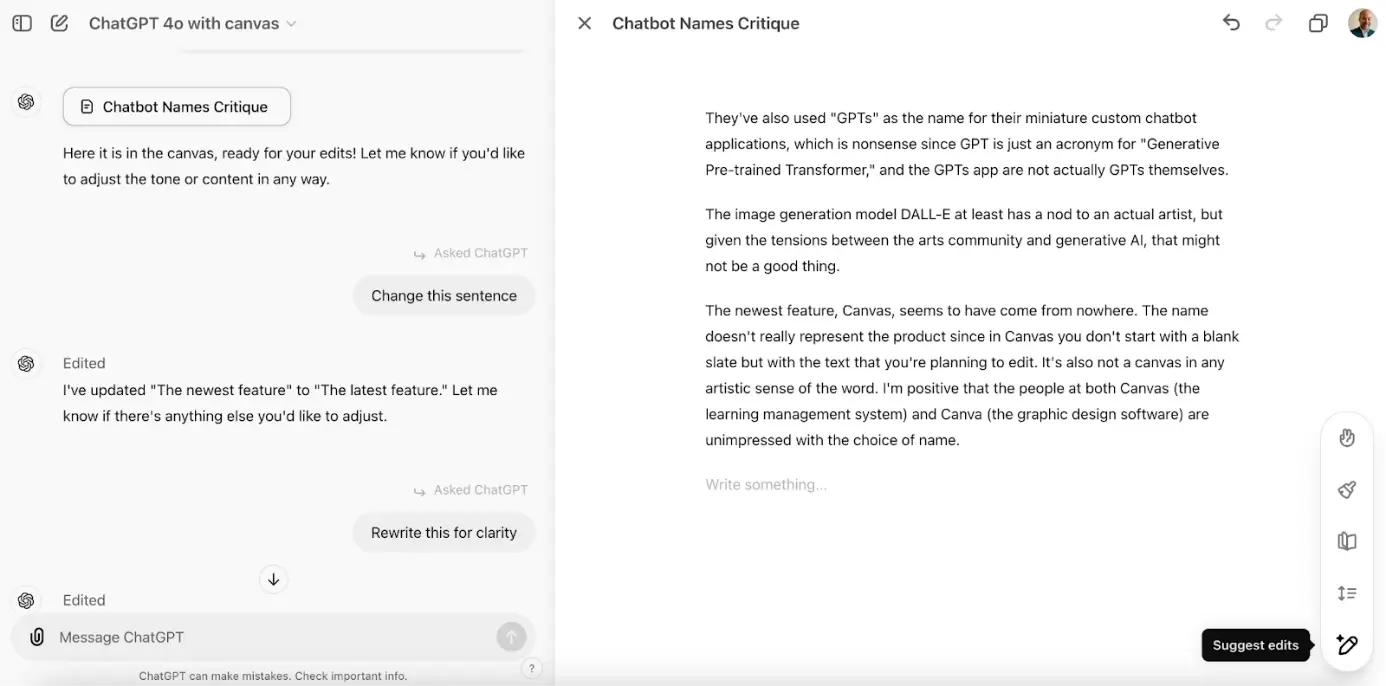
Conversational AI assistants are widely used in academic environments. Students can ask questions, request summaries, or generate essay outlines within seconds.
One common use case is brainstorming research topics. A student studying environmental policy, for example, can ask the AI to suggest potential thesis ideas or debate arguments. The tool then generates structured responses that help guide the writing process.
Many writers also use AI assistants as a ChatGPT humanizer workflow. They generate an initial draft using AI, then refine it with editing tools to improve tone and originality.
Key Benefits
Recommended reading: AI Automation: What It Is and How It Works
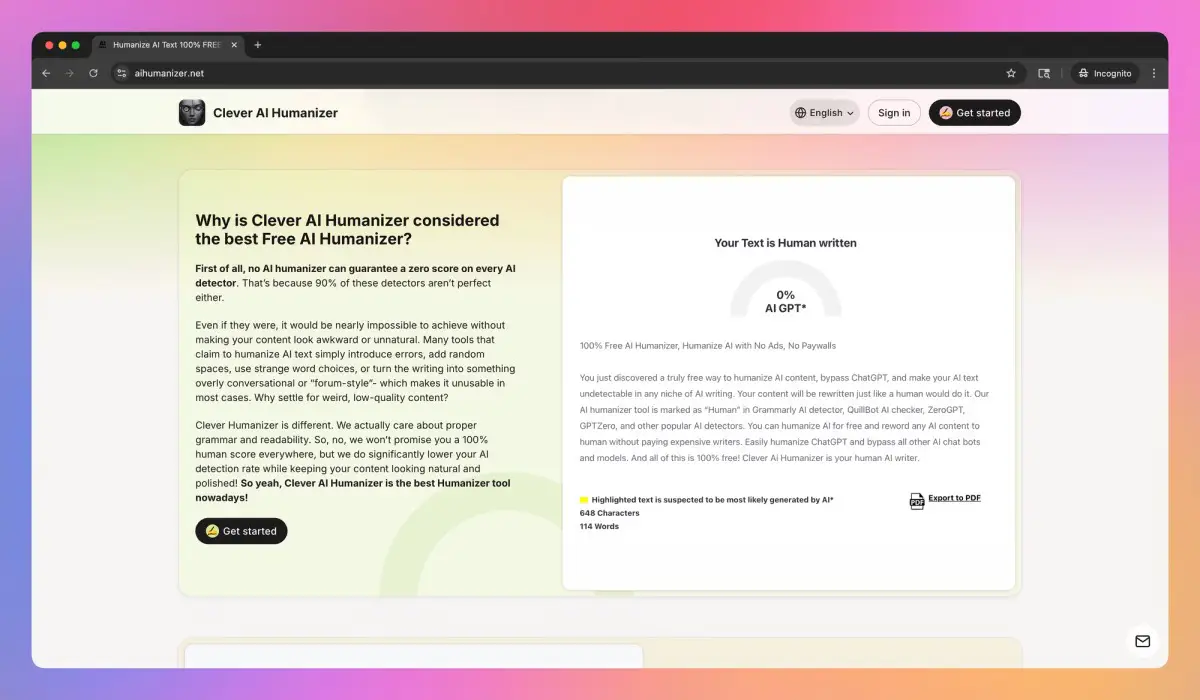
AI-generated writing sometimes sounds repetitive or mechanical. This is where AI humanizer tools for academic writing become important.
Clever AI Humanizer helps rewrite automated content so that it reads more naturally. The system restructures sentences, adjusts vocabulary, and improves paragraph flow.
Students often use such tools after generating text with AI systems. By refining tone and style, they can humanize AI text and produce more authentic academic writing.
Another advantage is that these tools help writers make AI text undetectable by improving variation and natural phrasing. When used responsibly, this helps students ensure their writing sounds original rather than robotic.
Key Benefits
Automate Accounts Payable for Educational Institutions
InvoiceAction applies AI-powered invoice processing to validate, match, and route supplier invoices with accuracy. Lower administrative costs and improve financial transparency across campuses.
Book a demo now
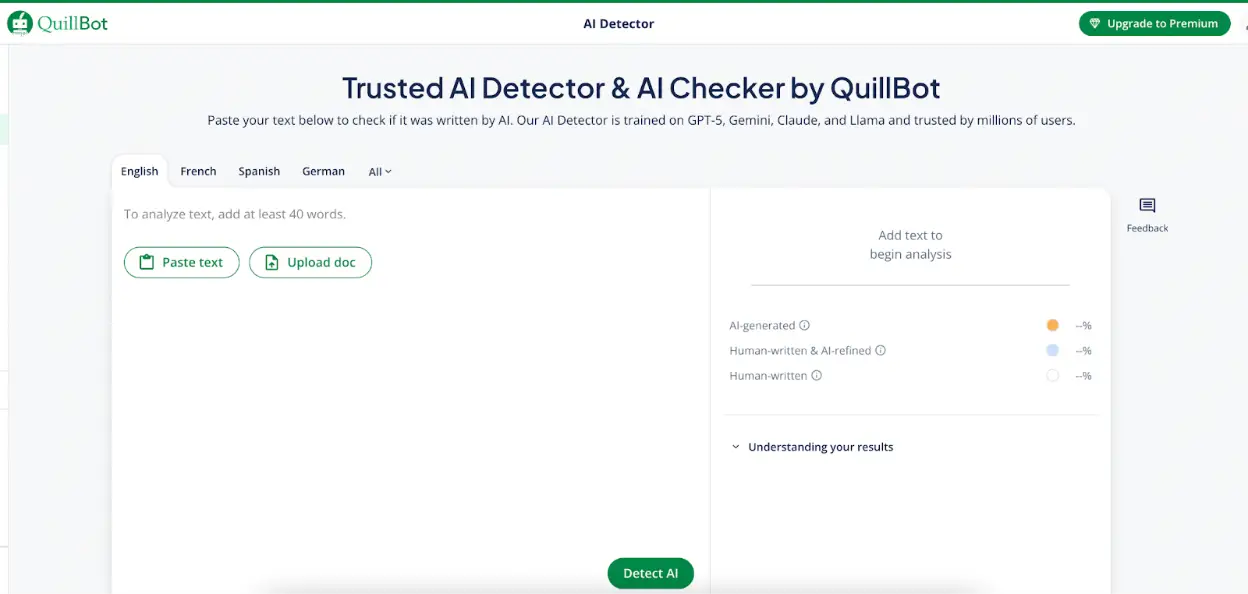
Paraphrasing tools are essential for academic writing because they allow writers to rephrase sentences while keeping the original meaning intact.
QuillBot’s AI rewriting system helps improve sentence clarity, vocabulary, and flow. Students often use it to simplify dense academic articles or rewrite their own drafts to improve readability. Some students also compare paraphrasing platforms with tools like QuillBot AI checker to see how AI-generated academic content performs in real academic settings. These comparisons help them evaluate whether rewritten text maintains originality, clarity, and an authentic academic tone.
The tool also includes a summarizer that condenses long texts into shorter key points. This makes literature reviews easier when working with large research sources.
Key Benefits
Recommended reading: How AI Algorithms Power Intelligent Automation
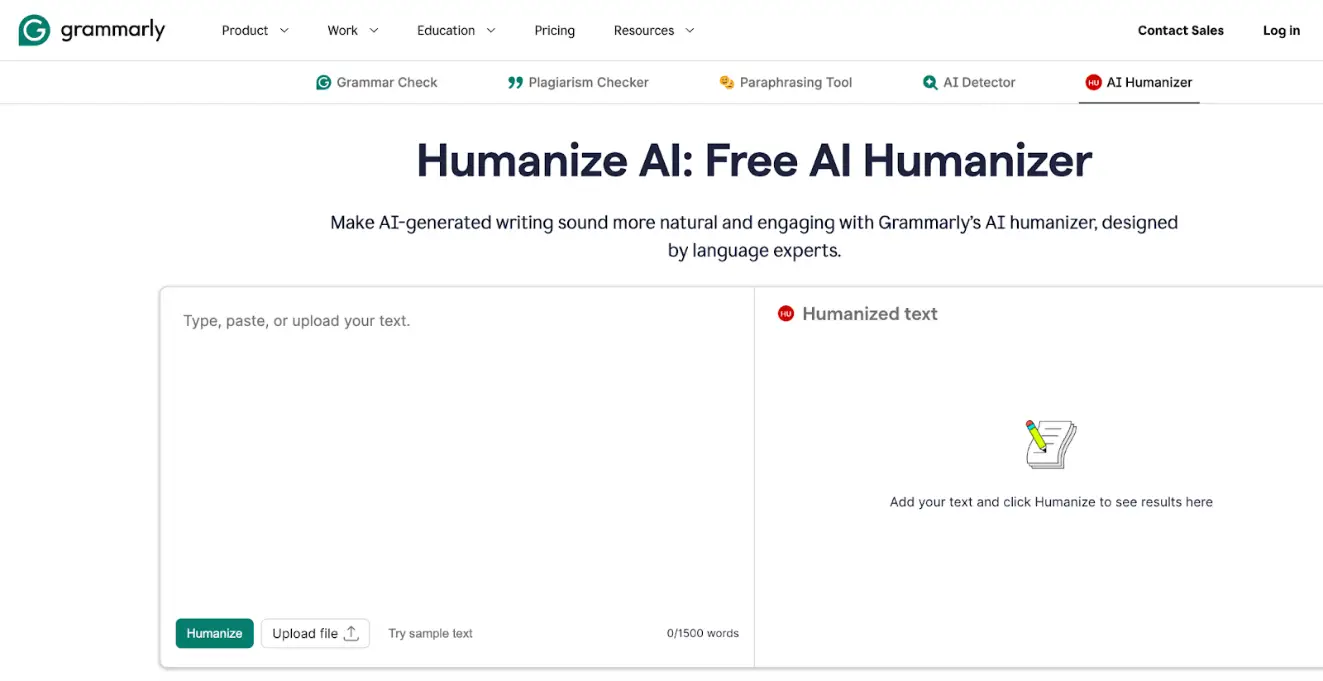
Grammar correction remains one of the most important stages of academic writing. Even well-structured essays can lose credibility if they contain grammar or punctuation errors.
Grammarly analyzes writing in real time and suggests improvements for grammar, clarity, and tone. Its free version already includes powerful proofreading capabilities.
Many students use Grammarly as the final step in editing to ensure their essays meet academic writing standards.
Key Benefits

OrderAction automates sales orders, purchase requests, and document validation within education ERP environments. Ensure faster fulfillment and stronger operational accuracy.
Research is the foundation of academic writing, and Perplexity AI helps students locate credible information quickly.
The platform combines search technology with AI summarization. Instead of browsing dozens of web pages, students receive concise explanations supported by cited sources.
This makes the tool particularly useful for initial research phases, when writers are exploring unfamiliar topics.
Key Benefits
Recommended reading: How AI Software Works: Types, Tools, and Real Examples
Creating original academic and professional content can be challenging, especially when working with AI-generated drafts. This is where AI writing tools with checking for plagiarism features become especially useful.
JustDone helps users improve, rewrite, and verify their content in one platform. The system can refine sentence structure, enhance clarity, and support more natural writing flow.
Students and professionals often use the platform to edit AI-generated text, making it more readable and authentic. Additionally, the built-in plagiarism checker helps users identify duplicate content and maintain originality in their work.
By combining writing assistance with plagiarism detection, JustDone supports more confident and polished content creation.
Key Benefits
As universities adopt AI detection systems, students increasingly look for ways to ensure their writing sounds natural and authentic rather than machine-generated.
HumanizeAI.pro addresses this by combining an AI humanizer and an AI detector in one free platform. Students can paste AI-generated text, have it rewritten into more natural prose, and verify the results - all without creating an account.
The platform reports a 99.8% success rate at bypassing major AI detectors, including GPTZero, Turnitin, and Originality.ai, and supports over 50 languages.
The built-in AI detector is completely free with no limits and no sign-up required, making it a practical all-in-one tool for students who want to polish AI-assisted drafts before submission.
Key Benefits
UndetectableAI rewrites AI-generated text by restructuring sentences, diversifying vocabulary, and replicating natural variation patterns found in human writing. The result is content that preserves the original meaning while removing the statistical signals that AI detectors look for.
The tool works against a broad range of detection systems, including Turnitin, GPTZero, Originality.ai, Copyleaks, and ZeroGPT. It requires no account to get started and processes text within seconds through a straightforward copy-paste interface.
Beyond humanization, the platform also maintains SEO value in the rewritten output, making it equally useful for content creators and marketing professionals who rely on AI-assisted drafts.
Key Benefits
Tool | Best Use | Key Feature | Free Version |
ChatGPT | Brainstorming | Essay outlines and explanations | Yes |
Clever AI Humanizer | Humanizing AI content | Natural rewriting of AI text | Limited free |
QuillBot | Paraphrasing | Sentence rewriting | Yes |
Grammarly | Editing | Grammar and tone suggestions | Yes |
Perplexity AI | Research | AI search with citations | Yes |
JustDone | Citations | Automatic bibliography creation | 100% free |
HumanizeAI.pro | Humanizing AI content | AI rewriting with built-in detection | Yes |
UndetectableAI.pro | Humanizing AI writing | AI text rewriting to sound more natural and less machine-generated | Limited free |
Universities are increasingly adopting AI detection software. These systems analyze writing patterns to determine whether text may have been generated by artificial intelligence.
Because of this, students sometimes look for ways to bypass AI detectors or improve the natural tone of AI-generated writing. The safest approach is not to rely entirely on AI generation but instead to treat AI as a writing assistant.
Tools designed to humanize AI text can help improve sentence variation and readability. However, the most reliable method remains combining AI assistance with genuine human editing and analysis.
Build Scalable Digital Operations for Education
docAlpha integrates AI-powered document processing into ERP and student information systems for seamless workflow execution. Support growth without increasing administrative overhead.
Book a demo now
Students who want to use AI effectively should combine several tools rather than relying on one platform.
A simple workflow may look like this:
This process helps writers convert AI to human-quality writing while still maintaining academic integrity.
Recommended reading: How AI Algorithms Transforming Intelligent Process Automation
AI tools have quickly become valuable companions in academic writing. They help students brainstorm ideas, improve grammar, rewrite sentences, and organize research more efficiently.
The most effective tools each solve a different problem. ChatGPT helps generate ideas, QuillBot improves sentence structure, Grammarly refines grammar, and JustDone manages citations. Meanwhile, platforms like Clever AI Humanizer, HumanizeAI.pro, and UndetectableAI.pro assist writers who want to humanize AI text, improve the natural tone of automated drafts, and review how their content may be interpreted by AI detection systems.
For students searching for ways to improve productivity, these tools provide a powerful starting point. By combining AI assistance with genuine research and critical thinking, writers can create clear, structured, and academically sound papers while still maintaining their own voice.
Used wisely, AI does not replace human intelligence. Instead, it helps students focus on what truly matters, analysis, creativity, and meaningful academic contribution.
 Automation in EdTech: Smarter Learning, Leaner Ops
 Enhancing Student Research: Data Gathering Automation
 How Data and Automation Improve Modern Learning Platforms
 Document Automation Benefits for the Education Industry
 Invoice Processing in Education Industry
 Innovative Approaches to Education: Engaging Students in the 21st Century Classroom
