Why Video Meetings Need AI-Powered Documentation and Workflow Automation
Published: August 13, 2026
The way businesses communicate has changed significantly over the past decade. While emails and messaging apps remain useful for quick updates, more organizations now rely on video meetings for conversations that require collaboration, decision-making, and problem-solving. Whether discussing a customer proposal, reviewing a supplier contract, or onboarding a new client, face-to-face virtual communication often delivers better outcomes than long, fragmented chat threads.
As hybrid work becomes the norm, businesses are looking for ways to make virtual communication feel more natural. Live video meetings bridge the gap between in-person and digital interactions by allowing participants to see facial expressions, hear tone of voice, and respond in real time. These nonverbal cues help reduce misunderstandings and make conversations more engaging than long email chains or messaging threads.
Platforms such as Aveola support this shift by making it easier for teams, customers, and business partners to connect face to face, regardless of location. Instead of waiting through multiple rounds of emails or trying to interpret short chat messages, participants can ask questions, clarify expectations, and reach decisions during a single conversation.
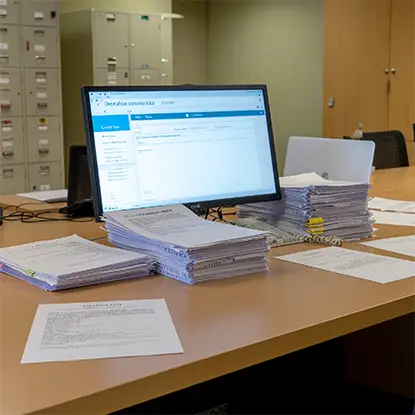
When contracts, forms, and supporting documents from meetings end up scattered across emails and folders, docAlpha uses AI to capture, classify, extract, validate, and route the information automatically.
Reduce manual follow-up and move meeting outcomes into business processes faster.
Today's video meetings rarely consist of conversation alone. Teams regularly share contracts, review purchase orders, discuss invoices, walk customers through onboarding documents, and collaborate on project plans while meeting online. Bringing people and documents together in one place allows everyone to work from the same information, reducing confusion and helping decisions happen faster.
Text conversations often become buried under dozens of replies, making it easy to miss important details or lose context. Video meetings eliminate much of that back-and-forth by allowing participants to resolve questions immediately. Screen sharing, live document reviews, and collaborative discussions help teams make informed decisions without waiting for another email or message to arrive.
Recommended reading: Discover the Benefits of Intelligent Process Automation
A productive meeting doesn't end when everyone clicks Leave. It often results in approved documents, customer requests, action items, follow-up tasks, or business decisions that need to be executed. The conversation may happen over a video platform like Aveola or Zoom, but the real value comes from what happens next, capturing the information discussed, processing the related documents, and ensuring every decision moves efficiently into the appropriate business workflow. That's where AI-powered documentation and workflow automation become essential partners to modern video collaboration.
A successful video meeting is only the beginning. Every conversation generates valuable business information that needs to be captured, shared, and acted upon. Customer requests, project updates, purchase approvals, contract discussions, onboarding decisions, and invoice exceptions don't end when the meeting does, they become the next steps that keep the business moving.
Think about a typical customer meeting. A prospect may request a revised proposal, approve pricing, ask for additional documentation, or agree to move forward with the next stage of onboarding. During a supplier call, teams might review purchase orders, resolve invoice disputes, or discuss changes to delivery schedules. Project meetings often result in updated timelines, new responsibilities, and revised documentation.
Each of these discussions creates information that someone needs to record, organize, and distribute.

Supplier meetings may settle pricing, delivery, and invoice questions, but manual processing afterward can still delay payment. InvoiceAction captures and validates invoice data and automatically routes invoices and exceptions through the appropriate AP workflow.
Reduce processing delays and keep approved financial decisions moving toward payment.
The challenge isn't communication, modern video platforms have made collaboration faster and more effective than ever. The real challenge begins after the meeting ends. Decisions may remain buried in meeting notes, action items can be forgotten, and supporting documents often become scattered across emails, shared drives, and messaging platforms.
Without a structured process, teams spend valuable time searching for information, following up on missed tasks, or manually transferring meeting outcomes into business systems.
Businesses don't gain value simply from having productive meetings, they gain value by turning those conversations into action. Whether the next step is processing an invoice, updating a customer record, routing a contract for approval, or capturing information from onboarding documents, every meeting should seamlessly transition into an organized workflow.
This is where AI-powered documentation and workflow automation begin to play a critical role. Instead of relying on manual follow-up, organizations can capture business information, connect it with supporting documents, and move it into the right processes, helping ensure that important decisions don't stop when the video call ends.
The role of video meetings has evolved significantly. They are no longer used simply to replace in-person conversations, they have become a central part of how businesses collaborate, make decisions, and move projects forward. Whether teams are discussing customer requirements, reviewing contracts, resolving invoice discrepancies, or planning the next phase of a project, video meetings have become where important business decisions happen.
Today's organizations have no shortage of video collaboration tools. Platforms such as Microsoft Teams, Zoom, Aveola, and Google Meet have made real-time collaboration more accessible for distributed teams, customers, and business partners. Instead of relying on fragmented email threads or lengthy messaging conversations, organizations can discuss ideas, review documents together, and reach decisions more efficiently during a single meeting. As a result, businesses are able to communicate faster, improve collaboration, and keep projects moving regardless of where participants are located.
While modern video platforms make communication more efficient, the meeting itself is only one part of the process. Once participants leave the call, businesses still need to execute everything that was agreed upon. Documents need to be processed, approvals routed, customer records updated, and follow-up tasks assigned. If these activities continue to rely on manual emails, handwritten notes, or disconnected spreadsheets, much of the efficiency gained during the meeting can quickly disappear.
Recommended reading: How AI Algorithms Transforming Intelligent Process Automation
The real business value doesn't come from having productive meetings alone, it comes from turning meeting outcomes into measurable actions. Organizations need a way to capture decisions, organize supporting documents, and connect information with the operational processes that follow. By combining modern video collaboration with AI-powered documentation and workflow automation, businesses can ensure that discussions held during a meeting continue seamlessly into everyday business operations.
A successful meeting doesn't end with a recording or a transcript, it creates information that drives business operations. While meeting summaries and notes help participants remember what was discussed, they rarely move work forward on their own. The real challenge is turning conversations into actions that support day-to-day business processes.
Most business meetings involve more than conversation. Teams review contracts, discuss purchase orders, approve invoices, complete onboarding forms, share customer documentation, and exchange supporting files. These documents often contain the information needed to fulfill customer requests, process transactions, or move projects to the next stage.
Simply storing meeting recordings or notes separately from these documents creates information silos. Employees may spend valuable time searching through emails, shared drives, or meeting folders to find the files they need before they can take action.
Once a meeting concludes, the supporting documents need to become part of the organization's operational workflow. Contracts may need approval, purchase orders must be matched with invoices, onboarding forms have to be processed, and customer documents often need to be captured and entered into ERP, CRM, or document management systems.
Handling these tasks manually can slow operations, introduce errors, and delay important business decisions. As organizations conduct more of their business through virtual meetings, efficiently connecting meeting outcomes with the documents that support them becomes increasingly important.
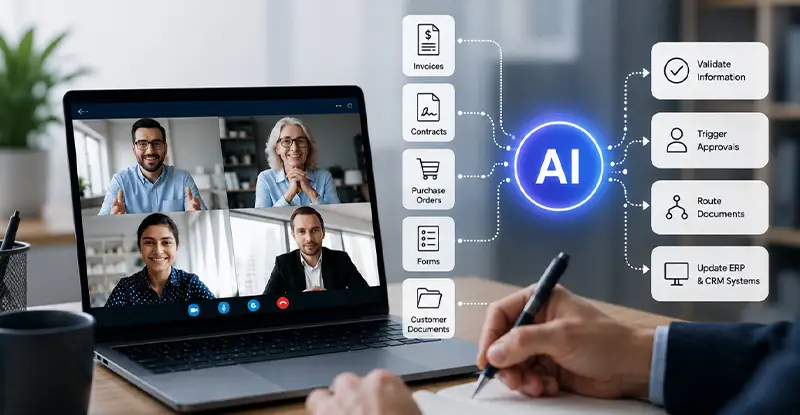
This is where AI-powered Intelligent Document Processing (IDP) adds significant value. Instead of simply storing recordings or meeting notes, AI can capture information from invoices, contracts, purchase orders, forms, and other business documents, extract relevant data, validate it, and route it into the appropriate business systems and workflows. The result is a smoother transition from conversation to execution, allowing organizations to spend less time on manual administration and more time acting on the decisions made during the meeting.

Productive meetings lose value when supporting documents still require hours of manual classification, data entry, and routing. docAlpha automates these document-intensive steps and delivers validated information to downstream systems.
Turn decisions into action faster while reducing administrative workload.
Effective communication is only valuable when it leads to action. After a meeting ends, organizations need to ensure that decisions are documented, supporting documents are processed, and the agreed next steps move forward without unnecessary delays. This is where AI extends beyond communication and becomes an operational asset.
Modern AI-powered Intelligent Document Processing (IDP) does far more than digitize paper or create searchable files. It can automatically classify incoming documents, identify document types, extract key business data, and validate information against business rules or existing records. This reduces manual data entry while improving accuracy and consistency across business processes.
Once information has been captured, AI can initiate the workflows that follow. Depending on the document and business process, it can route contracts for approval, send invoices through accounts payable workflows, forward purchase orders for processing, or direct customer forms to the appropriate department. Instead of relying on manual emails or follow-up reminders, organizations can ensure that work continues automatically after the meeting.
One of the greatest advantages of AI-powered workflow automation is its ability to connect information with the systems businesses already use every day. Extracted data can be transferred directly into ERP, CRM, ECM, or accounting platforms, eliminating duplicate data entry and helping ensure that business records remain accurate and up to date.
The goal of AI isn't simply to automate individual tasks, it's to create connected business processes. When information flows seamlessly from a video meeting to business documents, approvals, and enterprise systems, organizations can respond faster, reduce administrative effort, and keep operations moving without interruption. Instead of becoming another meeting summary stored in a folder, every important decision has the potential to become a completed business process.
Recommended reading: AI Automation: What It Is and How It Works
Every productive meeting ends with decisions. The question is whether those decisions remain in meeting notes or become part of an efficient business process. Across industries, conversations naturally lead to documents, approvals, and transactions that must be processed accurately and quickly.
Consider a typical sales meeting. A customer approves a proposal, requests a revised quote, and agrees to move forward with the purchase. That conversation quickly evolves into a quote, a purchase order, an invoice, and eventually an updated record in the organization's ERP system. Without an efficient way to capture and process the supporting documents, sales teams often spend unnecessary time on manual administrative tasks instead of serving customers.
Procurement meetings often involve reviewing supplier agreements, discussing delivery schedules, resolving invoice discrepancies, or approving new purchases. Once the meeting concludes, vendor documents must be matched with purchase orders, invoices validated, and approvals routed to the appropriate stakeholders. Automating these document-driven processes helps reduce delays while improving accuracy and compliance.
Customer onboarding meetings frequently generate application forms, identification documents, contracts, and supporting paperwork. Rather than manually entering information into CRM or business systems, organizations can use AI-powered document processing to capture data from forms, validate the information, and automatically update customer records. This creates a faster onboarding experience for both employees and customers.
Healthcare organizations also rely heavily on virtual consultations and remote collaboration. After a patient consultation or insurance discussion, claim forms, referral documents, medical records, and supporting documentation often need to be processed. AI-powered document processing helps extract and validate information before routing it into healthcare or claims management systems, reducing administrative effort while supporting accuracy and regulatory compliance.
Regardless of the industry, the pattern remains remarkably consistent. A conversation leads to documents. Documents trigger business processes. Business processes require accurate information to move efficiently through the organization. By combining modern video collaboration with AI-powered documentation and workflow automation, businesses can ensure that every meeting becomes the starting point for streamlined operations, not just another recording stored in the cloud.

Sales meetings often end with purchase orders that operations teams must still interpret and enter into business systems. OrderAction automatically extracts and validates PO data and routes it into the appropriate sales order workflow.
Reduce handoffs between sales and operations and accelerate order processing.
Video meetings have fundamentally changed the way businesses communicate. They enable teams, customers, and partners to collaborate more effectively, make decisions faster, and build stronger professional relationships than endless email chains or messaging threads ever could. Platforms such as Microsoft Teams, Zoom, Google Meet, and Aveola have made face-to-face collaboration an essential part of today's digital workplace.
However, productive communication is only the beginning. Every meeting generates decisions, supporting documents, approvals, and action items that need to move beyond the conversation itself. If that information remains trapped in recordings, meeting notes, or scattered emails, much of its business value is lost.
The organizations that gain the greatest advantage from video collaboration are those that connect communication with execution. By combining modern video meeting platforms with AI-powered Intelligent Document Processing and workflow automation, businesses can capture information from contracts, invoices, purchase orders, forms, and other business documents, route it through the appropriate workflows, and seamlessly integrate it with ERP, CRM, and other enterprise systems.
In the end, the goal isn't simply to hold better meetings, it's to ensure that every conversation leads to meaningful action, every document reaches the right process, and every business decision moves efficiently from discussion to execution.
 The AI Revolution in Document Workflow Automation
 AI Algorithms in Intelligent Process Automation (2026 Guide)
 AI Automation: What It Is and How It Works in 2026
 Boost Efficiency with Meeting Transcription & Process Automation
 Boost Digital Efficiency with Video-Driven Workflows
 Designing AI Workflows That Support Human Productivity
