Best AI Image Generator for Healthcare Professionals: Medical Imaging Technology Guide
Published: January 07, 2026
No. As of 19 October 2025, the FDA’s cleared-device database lists zero products that rely on generative AI for image creation. All outputs should be treated as unregulated content requiring clinical review before use.
Yes, with caution. AI images can clarify concepts and improve engagement, but they must be:
In most cases, no. The tools reviewed here do not provide a Business Associate Agreement (BAA). Uploading protected health information (PHI) to public or commercial cloud generators may violate HIPAA. For PHI-sensitive work, use on-prem or self-hosted solutions such as Stable Diffusion.
No tool is perfectly accurate. That said:
Sometimes. Acceptance depends on the journal. Many require:
Generative-AI image tools are no longer side projects , they are sliding into everyday clinical workflows, similar to how healthcare organizations streamline administrative tasks with healthcare document automation. Elsevier’s 2025 “Clinician of the Future” survey found that 48 % of clinicians now use AI on the job, nearly double the 2023 figure.
Speed explains the jump. One text prompt can generate a patient-facing infographic, a hero image for marketing, or a batch of synthetic X-rays before the CT viewer finishes loading. Teams appreciate avoiding real patient photos and shrinking design costs, without waiting weeks for custom art.
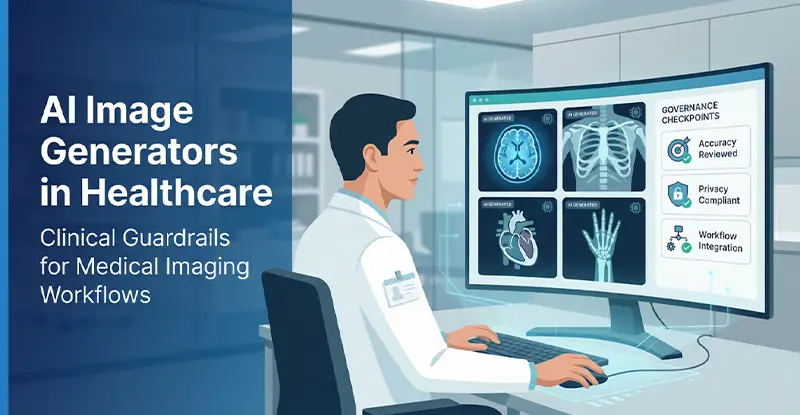
But medicine is high-stakes. A photogenic render can add an extra artery or mislabel a nerve, and regulators have noticed. On 19 October 2025, the FDA’s cleared-device database listed zero products that rely on generative AI, a reminder that every output remains unregulated content requiring clinical sign-off.
This field guide is designed to streamline that review. It maps five checkpoints, clinical fidelity, privacy compliance, workflow fit, costs, and community support, and then compares the generator's reshaping practice in 2025.
Treat the next few pages as a quick hallway consult from colleagues who have already stress-tested the pixels so you don’t have to.

ClaimAction applies advanced data capture to medical claims such as HCFA, UB-04, and dental forms. Eliminate costly errors and rework while improving turnaround for patient reimbursements.
Seven checkpoints separate a helpful graphic from future trouble:
We will revisit these seven filters for every platform reviewed below; they guide each recommendation.
Recommended reading: Discover the Smartest Way to Process Medical Forms Automatically
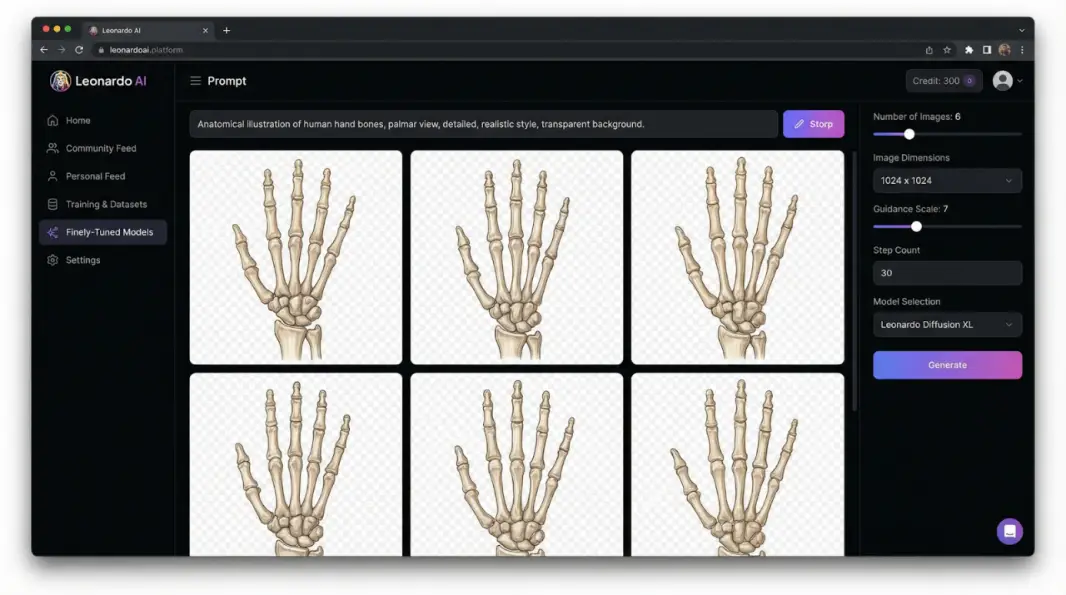
Leonardo’s image interface appears simple, yet a single prompt can yield up to eight variations at once, cutting review cycles for medical subject-matter experts, according to a 2024 Content Beta comparison.
Why it stands out
Caveats
Detailed anatomy still relies on precise prompts, and first-time users should schedule a clinical review before publication. Custom training consumes tokens quickly, so heavy users may need the $24 per month Artisan tier for its larger 25,000-token pool.
If your priorities are speed, photorealism, and full control of data, Leonardo offers a practical first stop.
End-to-End Automation for Healthcare Back Offices
docAlpha combines AI, OCR, and RPA to automate clinical and financial paperwork. Reduce administrative load and focus resources where they matter most,
on patient care.
Book a demo now
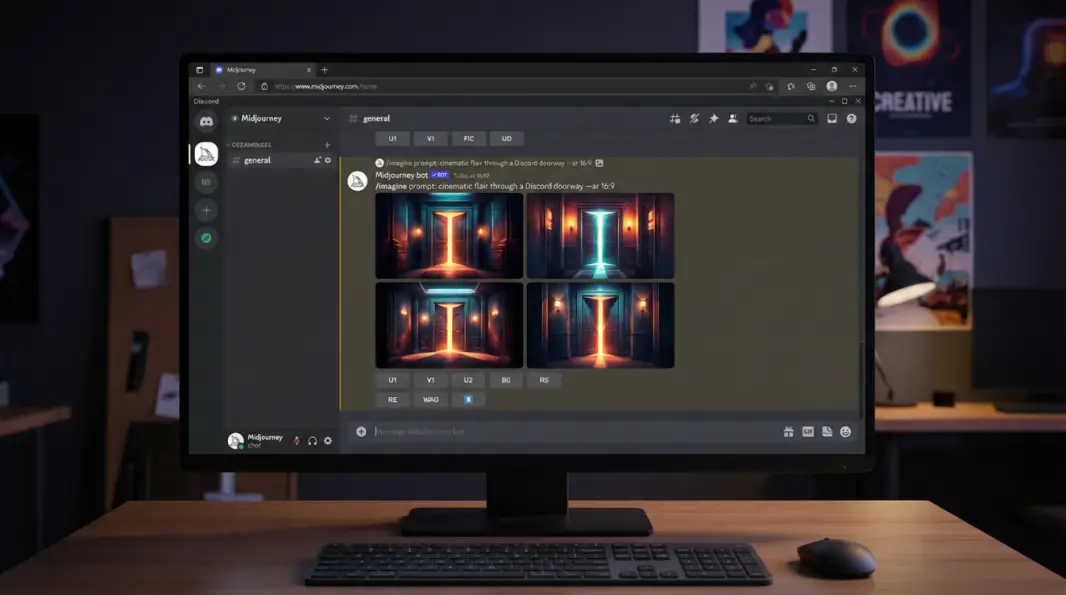
Midjourney excels at mood and style. A prompt such as “heart made of blooming red roses on a charcoal background” returns a conference-poster-ready image in about 45 seconds.
Workflow caveat
All generations occur inside Discord. Many hospital firewalls flag public chat servers as non-compliant, so confirm access or plan to generate in a private server before committing.
Image fidelity
Lighting, textures, and color grading are consistently striking, but anatomy can drift. In a 2025 hand-surgery evaluation of 1,500 AI images, Midjourney output contained fabricated structures in more than 99 % of cases, similar to other artistic engines, and therefore requires clinician review before use.
Privacy and price
When to choose it
Reach for Midjourney when emotional impact outweighs strict realism: campaign art, keynote covers, or conceptual device imagery. Pair each export with an anatomy check and keep protected health information out of public channels.
Treat Midjourney as a cinematic lens; switch to a precision tool when the lecture hall demands radiologic detail.
Recommended reading: Learn the Key Steps to an Efficient Healthcare Claims Workflow

ClaimAction streamlines healthcare claims processing with built-in intelligence and accuracy. Reduce denials, speed reimbursements, and improve payer collaboration across your revenue cycle.

Open a browser, type “axial MRI-style slice of a benign brain cyst, grayscale, 2-millimeter resolution,” and DALL
Why clinicians start here Peer reviewers scored DALL
Workflow fit
Limitations to note
Graphic surgical scenes may trigger Microsoft’s safety filters, and on-image text still distorts. Because the model weights are closed, teams cannot fine-tune on local radiology archives; they must refine prompts or shift to an open-source alternative.
Choose DALL
Recommended reading: Learn Why Healthcare Leaders Are Adopting Document Automation
AI-Driven Data Capture for Healthcare Documentation
docAlpha automates extraction and classification from all types of healthcare documents. Enhance EHR accuracy and integrate seamlessly with your back-end systems.
Book a demo now
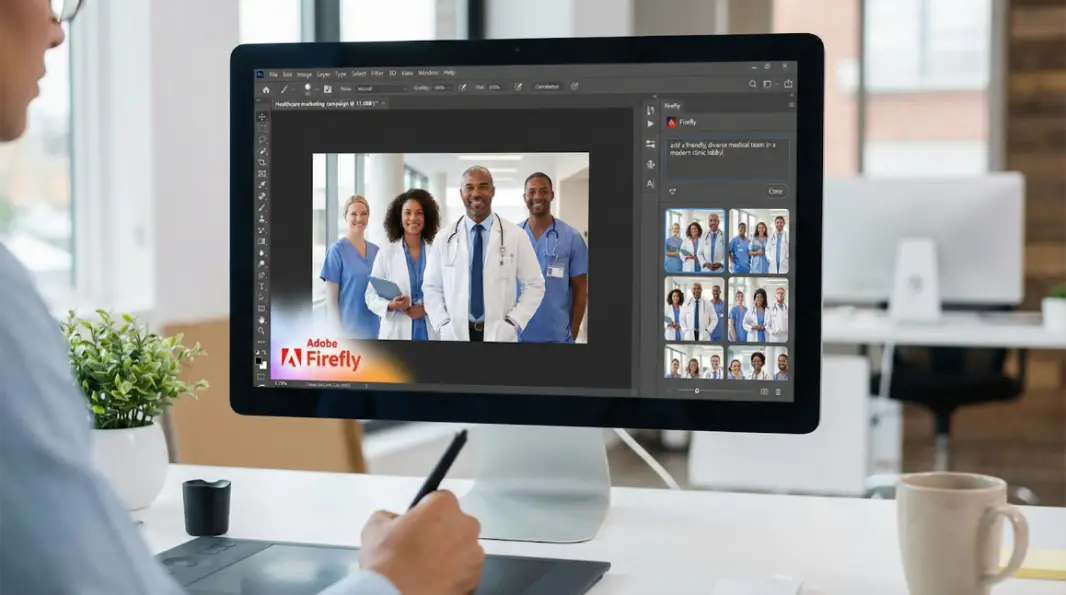
Firefly functions like an extra button in Photoshop. Lasso a cluttered background, type “modern ICU ward, soft daylight,” and the scene redraws without leaving the .psd file.
Why marketing teams trust it
Adobe trains Firefly on Adobe Stock and public-domain media only, so outputs arrive “commercial-safe” and ready for billboards or journal covers, a guarantee documented in Adobe’s content-credentials policy.
Generative credits and cost
Creative Cloud All Apps subscribers receive unlimited standard generations plus 4,000 premium credits per month at no extra charge. Stand-alone Firefly Pro costs $19.99 per month and includes the same 4,000-credit allotment, enough for dozens of brochure edits or vector conversions before an add-on pack is needed.
Key features
Limits
Firefly’s medical knowledge stops at the skin; intricate cross-sections often need manual adjustments. Safety filters block graphic surgical scenes, and on-device options are rolling out slowly for enterprise customers.
If your organization already licenses Creative Cloud, enabling Firefly is largely a mindset shift: treat it as a junior designer who drafts the first version so specialists can refine nuance and ensure compliance.
Recommended reading: How to Streamline Medicare and Medicaid Claims Processing

ClaimAction supports HIPAA compliance and cloud scalability for any healthcare practice. Gain full visibility, faster settlements, and operational peace of mind.
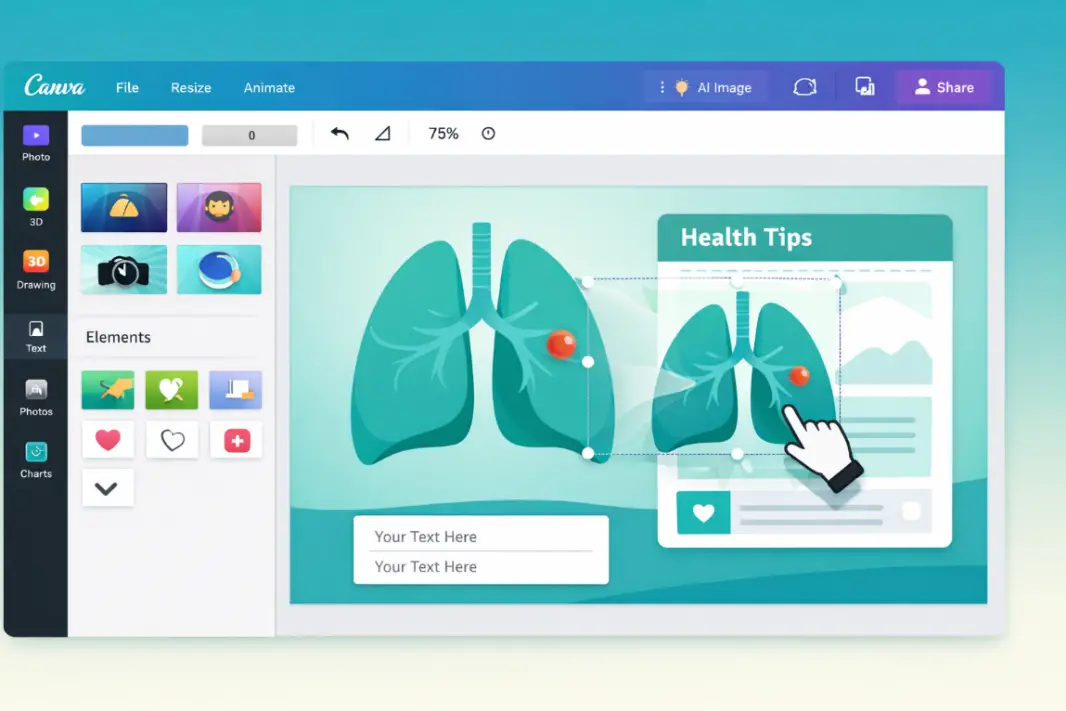
Canva’s Magic Media sits inside the same browser canvas clinicians already use for flu-shot flyers. Click Create > AI Image, type “flat illustration of lungs with a small tumor, calming teal palette,” and a brand-ready graphic appears in under 10 seconds (no GPU, no plug-ins required).
Approachability by design
Magic Media wraps a Stable Diffusion model in preset styles, Photo, 3D, Drawing, so you guide look and feel without juggling negative prompts or seed numbers.
Credit limits and cost
Quality profile
Canva steers users toward flat or simplified art, reducing the risk of extra ribs or misshaped valves. For rapid patient-facing infographics, that restraint is helpful; for multi-layer anatomical cutaways, Adobe or an open-source fine-tune works better.
Limits
There is no fine-tuning, private model, or in-painting. Uploading patient scans is off-limits because Canva operates in the public cloud without a BAA.
Think of Magic Media as a quick-serve counter: create, approve, publish. Use it to trim a clinic’s weekly social queue from half a day to about one hour, then move to richer tools when surgical precision is essential.
Recommended reading: Learn How OCR Is Revolutionizing Medical Documentation
Powerful AI for Document-Intensive Medical Workflows
docAlpha eliminates manual data entry from forms, faxes, lab results, and more. Improve processing speed, compliance, and document traceability.
Book a demo now

Stable Diffusion favors control over convenience. Instead of renting a cloud model, you download the weights and run them on local hardware, a major benefit when your privacy office blocks external APIs or a grant requires reproducible code.
A Stanford AIMI team, for example, trained Stable Diffusion on 200 de-identified chest X-rays and then generated thousands of synthetic pneumothorax images to improve a diagnostic model’s sensitivity, all behind the campus firewall.
Hardware and setup
AUTOMATIC1111 layers a browser dashboard on the Python scripts, exposing sliders for guidance scale, batch size, in-painting, and optional PACS plug-ins for research environments.
Trade-offs
You gain total data custody and limitless customization, but you need CUDA drivers, command-line comfort, and time to curate training images. Plan at least a weekend to move from zero to first usable output.
Stable Diffusion is not the fastest route to social graphics; it suits teams pursuing HIPAA-safe synthetic data, rare-disease augmentation, or three-dimensional diffusion experiments where writing the rules matters as much as the pixels.
Recommended reading: Discover the Benefits of Automating Medical Claims Workflows
Unlock Efficiency Across Healthcare Operations
docAlpha supports complex workflows like prior authorizations, referrals, and payment posting. Drive accuracy and accountability with AI-powered transparency.
Book a demo now
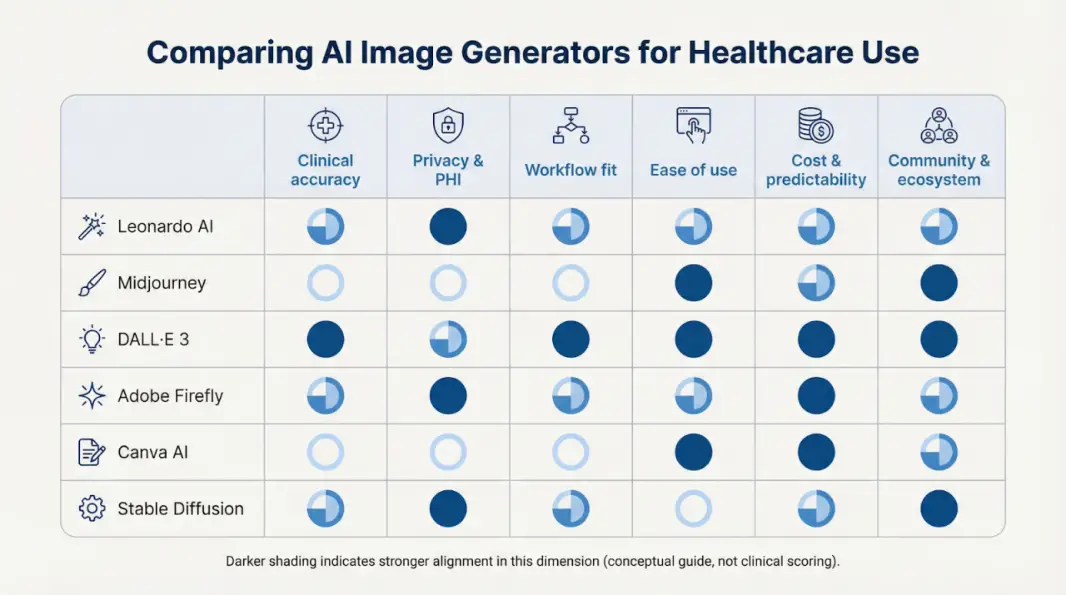
Mainstream engines cover about 90 % of day-to-day requests. The remaining 10 %, rare-disease datasets, SVG-ready diagrams, HIPAA-sealed sandboxes, belong to a focused group of specialist platforms.
This Toronto startup ingests de-identified DICOM files and outputs hundreds of new images that mirror disease prevalence and pixel-noise distributions. Oncology labs piloting the platform in 2025 reported generating ≈ 5,000 synthetic MRI slices per tumor subtype in under 48 hours, cutting annotation time by half.
Pricing is enterprise-only and starts at ≈ $0.02 per generated slice for annual volumes above one million.
Recommended reading: Discover the Full Workflow of Healthcare Claims Processing
AI-Driven AP Automation for Medical Finance Teams
InvoiceAction eliminates manual matching and approval delays. Accelerate reimbursements and control costs in high-volume invoice environments.
Book a demo now
Type “isometric bronchial tree, two-tone” and receive an editable SVG suitable for a 60-inch conference poster; a single render finishes in under 15 seconds and costs one credit (≈ $0.05).
These platforms often require NDA access or developer skills, yet they point toward a future where a radiology figure, a molecular pathway map, and a privacy-safe training set live in the same browser window. If your brief is narrower than “create a general illustration,” consider an early partnership; the right niche tool can provide both a research advantage and an extra line in the author list.

OrderAction reads POs in any format and integrates them with your ERP. Shorten the order-to-cash cycle and eliminate manual entry risks.
Generative-AI image tools have crossed the threshold from novelty to infrastructure. In 2025, they save time, reduce design costs, and unlock new ways to communicate with patients, trainees, and stakeholders. Yet none of them, today, are medical devices, and none absolve clinicians of responsibility.
The practical lesson is restraint with intention. Use AI to accelerate the first draft of a visual, not to replace expert judgment. Match the tool to the task: cinematic engines for campaigns, precision-leaning models for education, open-source stacks for research and synthetic data. Keep protected health information offline, document review steps, and assume every image will need a human sign-off before it reaches a patient or publication.
Teams that succeed are not those chasing the “most powerful” generator, but those that establish guardrails early, clear review workflows, prompt libraries, and usage policies aligned with privacy and regulatory reality. With those in place, generative imagery becomes what it should be in medicine: a force multiplier for expertise, not a substitute for it.
Recommended reading: Learn How Process Automation Enhances Business Performance
Automate Healthcare Invoices with Precision and Speed
Order captures, validates, and posts AP invoices directly into your ERP. Free your team from data entry and reduce errors in medical AP workflows.
Book a demo now
 Improving Medical Claims Processing Through Technology
 Efficient Claims Workflow: CMS 1500 OCR Data Capture and Automation in Healthcare Processing
 OCR Capture in Healthcare Billing: Streamlining UB-04 Form Processing
 AI-Powered OCR Document Processing
 Automated Medical Forms Processing Guide
 Claims Processing Automation in Healthcare Billing
