How Access Control Integrates With Digital Business Workflows
Published: October 20, 2026
Digital transformation is changing how businesses manage everyday operations. From employee onboarding to document processing, organizations increasingly rely on connected systems to reduce repetitive tasks and improve efficiency.
Access control is becoming part of this transformation.
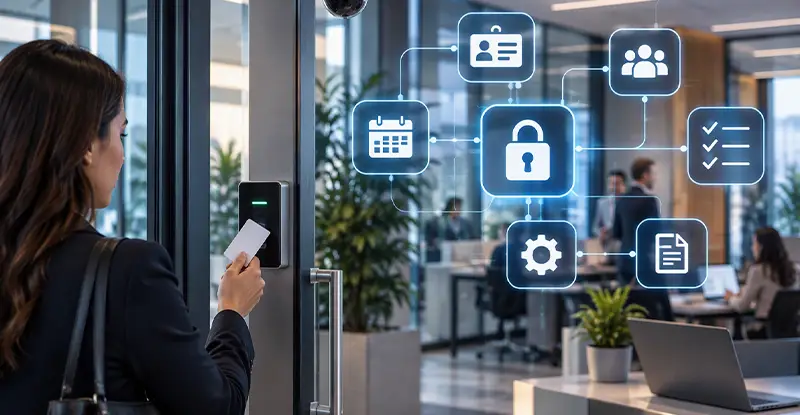
Traditionally, managing access meant distributing keys, issuing badges, or manually approving entry to restricted areas. Today, compatible digital systems can connect access permissions with employee records, visitor management platforms, and broader business workflows.
This creates opportunities to automate administrative processes while maintaining oversight of who can access different areas of an organization.
Business automation often begins with software, but physical infrastructure can also play an important role.
Office entrances, parking facilities, warehouses, and commercial gates are all potential access points within a larger operational system.
For organizations considering automatic gate installation, it can be useful to think beyond the physical entrance itself. Depending on the equipment and available integrations, automated gates may form part of a wider access management environment that connects entry permissions with digital business processes.
For example, a compatible access platform might allow authorized employees to enter a parking facility using credentials managed through a centralized system.
The gate provides physical access, while the software determines which credentials are valid and records relevant activity.
This connection illustrates how physical security infrastructure can support broader workflow automation.

Digital access management depends on accurate information flowing between employees, departments, and enterprise applications. docAlpha automates document capture, data extraction, validation, and workflow routing to help organizations reduce manual information handling across connected business processes.
Improve data consistency, streamline administrative operations, and support more efficient digital workflows.
One of the most useful applications of connected access control is its potential integration with existing enterprise software.
Human resources platforms already maintain information about employees, departments, employment status, and organizational roles.
When compatible systems are integrated, this information can help determine which areas an employee is authorized to access.
For example, a new employee's access permissions could be assigned as part of an onboarding workflow. When that employee changes departments, permissions could be updated according to their new responsibilities.
ERP platforms and other enterprise applications may also exchange relevant information with access management systems, depending on their capabilities.
The objective is to reduce duplicate data entry and improve consistency across business operations.
Recommended reading: Learn How Horizontal Integration Connects Business Systems and Data
Access management becomes more complicated when organizations regularly welcome contractors, visitors, delivery personnel, and temporary employees.
Manual approval processes can create unnecessary administrative work, particularly across multiple locations.
Digital workflows can simplify certain tasks, including:
These workflows can reduce repetitive tasks while helping organizations maintain clearer control over permissions.
However, automation should still include appropriate approval procedures and safeguards for sensitive areas.
Access control systems can generate records that are useful beyond physical security.
Depending on the platform, these records may include entry attempts, permission changes, administrative actions, and credential activity.
When connected with appropriate business systems, access data can support internal reviews, incident investigations, and compliance documentation.
For example, an organization may need to demonstrate that only authorized personnel had access to a restricted facility during a particular period.
Digital audit trails can make relevant information easier to retrieve than fragmented manual records.
However, collecting access information also introduces privacy and data protection responsibilities.
Organizations should establish appropriate retention policies, restrict access to sensitive records, and ensure that information is handled according to applicable requirements.

Connecting HR, ERP, and other business applications becomes more complicated when document information must be entered and verified manually. docAlpha automates document data capture and validation while integrating document-driven workflows with enterprise systems.
Reduce duplicate data entry, improve information accuracy, and strengthen coordination between business applications.
The value of integrated access control extends beyond recording who entered a building.
In certain environments, access events can trigger or support additional business workflows.
For example, a visitor check-in could notify the employee responsible for the meeting. A contractor's approved arrival might update a facility management workflow, while an unsuccessful access attempt could create an alert for security personnel.
These connections depend on the software, hardware, and integration methods available.
Application programming interfaces, middleware, and workflow automation platforms can sometimes help different systems exchange information.
Rather than operating independently, access control becomes one source of data within a broader digital business environment.
Recommended reading: Discover How Business Process Automation Connects Events With Operational Actions
Automation is particularly valuable when permissions change frequently.
An employee may move to another department, a contractor may complete a project, or a visitor may need access outside normal business hours.
In a disconnected environment, these changes can require multiple manual updates.
Integrated workflows can help organizations apply predefined rules more consistently.
However, not every situation fits a standard automated process.
An unexpected delivery, emergency maintenance request, or temporary operational change may require an exception.
Well-designed systems should allow authorized personnel to review unusual requests, approve necessary changes, and maintain records of those decisions.
The goal is not to eliminate human judgment, but to reserve it for situations where it adds the most value.

Manual document reviews and disconnected approval processes can delay employee, contractor, and other administrative workflows. docAlpha combines intelligent document processing with configurable business rules and exception handling to route information through appropriate review and approval steps.
Reduce processing delays, maintain workflow visibility, and improve consistency across document-driven operations.
As businesses continue adopting connected technologies, the distinction between physical infrastructure and digital operations is becoming less rigid.
Employee management, visitor registration, facility operations, and access permissions can increasingly function as parts of a coordinated system.
Successful integration requires more than purchasing compatible devices. Organizations also need to consider cybersecurity, data accuracy, software interoperability, and the responsibilities of different departments.
Not every business requires extensive automation, and not every access control product supports enterprise integrations.
The most effective approach is to identify repetitive processes, understand existing technology, and introduce connections that solve genuine operational problems.
Ultimately, access control is no longer only about opening doors or managing entrances.
When integrated thoughtfully with digital business workflows, it can contribute to more consistent processes, clearer records, and better coordination across an organization.
Recommended reading: Discover How Technology Is Transforming Connected Business Workflows
 Horizontal Integration: What Is It and How to Make It Work?
 How Tools and Technology Are Transforming Business Workflows
 Revolutionizing Access Control with AI: Innovations and Impact
 Automate Access Reviews Like You Did AP with AI in 2026
 How to Defend Business Data Against Identity Based Cyber Attacks
 Why Cybersecurity Models Fail Regulated Industries Today

